
 Nami, a Japanese club hostess, becomes involved in gambling, the mob, and personal vengeance in Kazuhiko Yamaguchi’s Wandering Ginza Butterfly duology, now on Blu-ray via Arrow Films.
The Films
Both released in 1972, Wandering Ginza Butterfly and its sequel WGB 2: She-Cat Gambler are incredibly interesting and great watches. Per the commentaries, the Wandering Ginza Butterfly movies are reflective and related to other films of the era, mixing popular genres of gambling, revenge, action, and violence. Still, for me, and likely for many Americans fifty years later, the duology comes fresh. They hit a specific sweet spot of knowing awareness in what they are, driven dramas of the era, with some great action beats, led by a ferocious, icy performance by Japanese Superstar Meiko Kaji.
The pair, both written and direced by Kazuhiko Yamaguchi, with co-writting by Isao Matsamoto, share a similar set-up: Nomi, released from prison (first for murdering a gangster, and then implied for the results from the first film) works in a few clubs (“Wandering”) as a “butterfly,” a hostess (which duties can be wide ranging but fall generally into what you’re thinking; though some don’t go as far as direct sex work) in the red-light distrct of “Ginza” (all three parts of the title are satisfied in that sentence as unwieldy as it might be). She gambles and plays billiards (the first film started life as a Japanese Hustler riff), gets in bad with mobsters who don’t like her agency/hold past grudges, want to take over clubs like her Uncle’s in the first, or know people who need help. There’s a back and forth of the sides, gaining footing, losing from attrition, leading into increasingly violent sequences coming to a head to finales that no doubt inspired Tarantino for Kill Bill (um… spoilers). Even with the similarities, She-Cat Gambler isn’t “same thing just a little different”. Both films have their own focuses, styles, and desires, even with the same logline plot. With the type of movie determined from the get-go, it’s more stylish and knowing; I enjoyed the more wrinkly nature, leaning into the genre mishmash. It’s funnier, while more personally driven, as she looks for her father’s killer.
While Meiko Kaji, playing the lead Nami, was clear she felt like she was tricked into a set of movies that were different than what she was sold on, she does an amazing job. The cold sneer, the focused anger, she’s a sharp steel sword of a woman. Utterly fascinating. She’s not happy she was typecast in this type of role, as this was taken as a way to break the casting, and avoid pinkie movies, but she was so good in Lady Snowblood and Female Prisoner films that it became her thing, well into a long career as a one of Japan’s biggest stars of the 70s; and these films turn toward pinkie, so oops. Sorry Kaji. But one can see why she was the highest-paid actress of her time. She’s absolutely commanding of every eye in every scene.
Asian action cinema mainstay Sonny Chiba (although the last time I wrote about him was in the straight drama Japanese Godfather trilogy) joins in the second film as an originally unwanted but accepted ally to Nami. His charismatic exuberance is a nice balance to the serious Kaji. They have a great dynamic. Interesting, it’s clear they were meant to spearhead a new series of films. Sadly, Wandering Ginza Butterfly stopped at two entries.
The Wandering Ginza Butterfly series is a solid set, a fine example of 70s Japanese cinema. Mixtures of popular styles at the time give an interesting touch, and they are both incredibly interesting to watch. The lead of Kaji is astounding, and she pairs very well with Sonny Chiba in the second. Strong drama, great characters, and both eventually spill plenty of blood for the more action-heavy fans. Check them out.
The Package
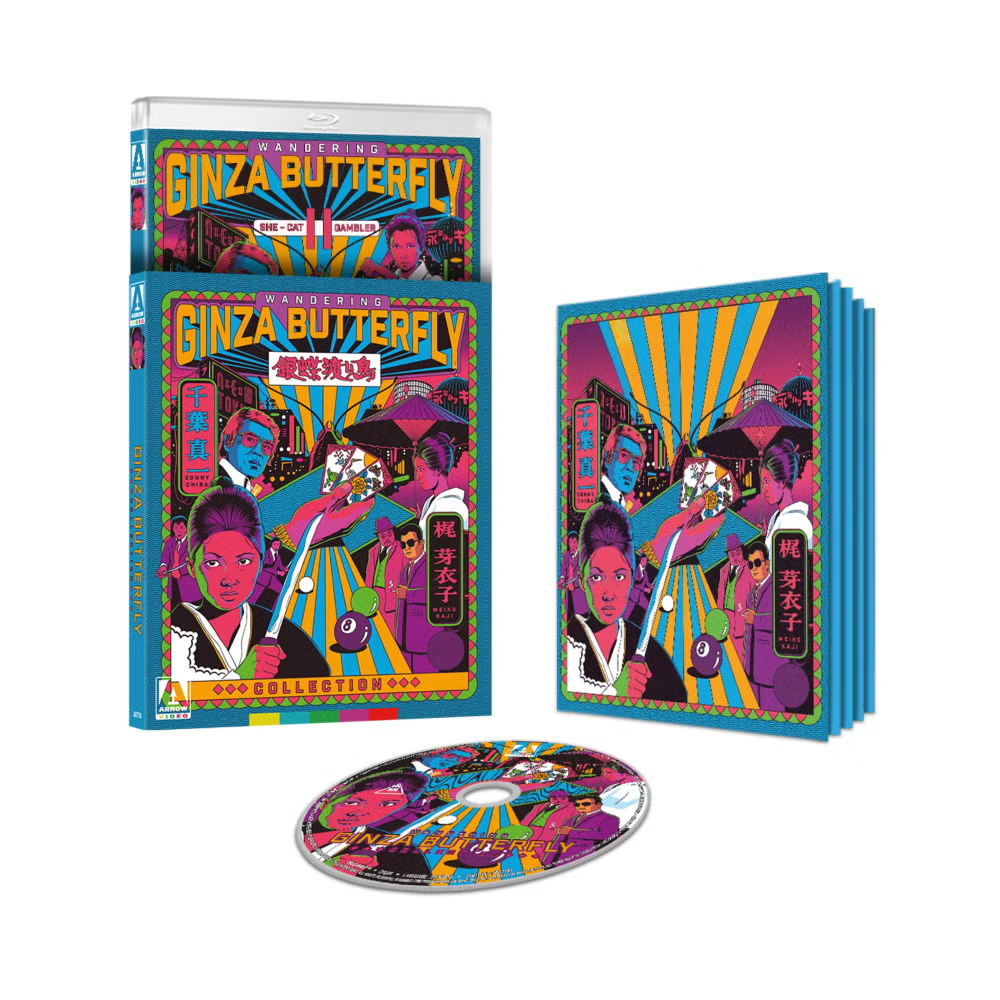
Arrow puts both films and all the supplementary material on a single Blu-Ray disc. Go them. The disc fits in the case, emblazoned with the art from the front of the collection, a mixture of the awesomely colored psychedelic reversible sleeves by Andy Bourne, one for each film. A booklet fits within, with an O-Ring slipcover of the mixed art.
The Presentation
The new transfer does well. These weren’t highly visual films to start, though they have a stylistic take, especially the second. Nothing is popping, but by no means a bad look. Clear and artifact-free. The original Japanese Mono sounds good, nice and clear. Both are in Japanese with new English subtitles.
The Features
Arrow puts together a solid mix of new and archival.
Commentaries
The plural there would make you think one per film, but both are for film one. However, they both talk about both films as a whole; setting up the cinematic and real-world surriounding the films, the whos and hows, and all the standard. The first, new to this release with the pair of Japanese cinema experts Patrick Macias and Matt Alt, is more energetic and plays off another well with total enjoyment. The second, archival with Japanese film expert Chris D. working alone, is drier but interesting, more technical.
Back to Back in the Yakuza Multiverse (new)
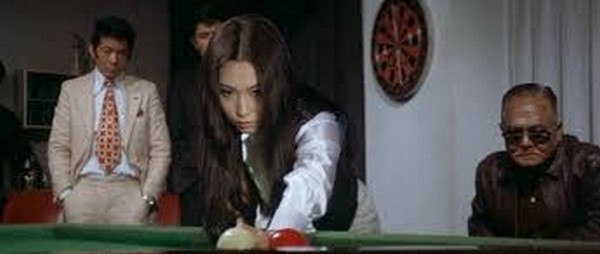
The pair from the first commentary return to talk more specifically about the second film and how different it is, but also give a ton of love to both their star. Seems like fun guys to listen to, and you can do just that on their Pure TokyoScope podcast. (20m)
Genre Mill Memories (archival)
Writer-director Kazuhiko Yamaguchi gives a wide-ranging interview about working in Japanese cinema, specifically these types of films in th 60s and 70s. A great look at the whole process, studio thoughts (he worked for Toei and Toho mostly, with others), the stars, and the whole system. Incredibly informative, and he gives good stories. Maybe a little misogynistic at points, but that’s the time, I guess? Japanese with English subtitles.(37m)
Butterfly and Scorpion (archival)
An appreciation of Meiko Kaji, looking at the career of the star, especially when she was huge. From action and pink film expert J-Taro Sugisaku. In Japanese with English subtitles (11m).
Trailers: one for each film.
Booklet
A nice 30-page bound book with the writings “Yakuza Women” by Camille Zourin, an in-depth discussion of women in 60s/70s Japanese cinema, along with a wider view of the period of film.
Final Thoughts
The Wandering Ginza Butterfly Collection is another great release from Arrow. Two very interesting films with great performances and a fantastic sense of self. The extras are solid with the commentaries and more. Now on Blu-Ray from Arrow.