

Margaret Atwood’s The Handmaid’s Tale (1985) was brought to television by Bruce Miller, with directorial contributions from Reed Morano and others.
The series has garnered significant critical acclaim since its release in 2017. The Handmaid’s Tale thrusts viewers into a chillingly plausible near-future dystopia, Gilead, where a totalitarian, religiously fundamentalist regime has seized control of what was formerly part of the United States. At the heart of this oppressive society is June Osborne, portrayed by Elisabeth Moss, whose life is brutally uprooted. She is forced into the role of a Handmaid, a woman whose sole purpose is to bear children for the ruling elite, the Commanders, due to widespread infertility. As June Osborne, Elisabeth Moss delivers a stellar performance, capturing the character’s vulnerability, rage, and determination. Moss also serves as an executive producer and has directed several episodes, shaping the show’s tone and emotional depth. Her portrayal has earned widespread acclaim, further cementing The Handmaid’s Tale as a standout series in television history.
The series, spanning 5 seasons with the last one starting in April 2025, meticulously dissects the horrifying reality of a world where women are systematically dehumanized, stripped of their identities, and reduced to reproductive vessels. It powerfully explores universal themes of resistance against tyranny, the primal instinct for survival in the face of unimaginable cruelty, and the relentless pursuit of personal autonomy. June’s arc is a complex story of personal and political struggles. Her journey is not a linear progression of rebellion; it’s a harrowing exploration of the psychological and emotional cost of resistance. Each season intricately layers her relationships, highlighting shifting alliances and betrayals under oppression. As June’s defiance intensifies, so does the series’ exploration of the insidious nature of power and the human spirit’s resilience. Additionally, the show delves into the systemic vulnerabilities of Gilead itself, revealing the internal conflicts, power struggles, and moral decay that threaten to dismantle its carefully constructed façade of order. It also confronts the audience with the profound psychological trauma inflicted upon those who dare to resist, illustrating the enduring scars of oppression and the difficult path towards healing and justice. Ultimately, the narrative delves into the harsh realities of pursuing freedom, both individually and communally, juxtaposed with the persistent, powerful force of hope in the face of utter desolation.
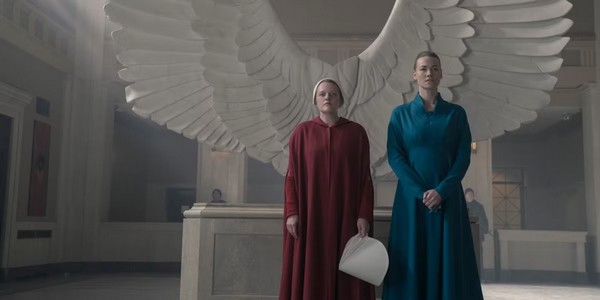
Due to its profound portrayal of power, control, and resilience, The Handmaid’s Tale has become a landmark television series, deeply impacting contemporary culture. The show’s visual power, coupled with Elisabeth Moss’s exceptional acting, has fueled vital conversations about feminism, bodily autonomy, and resistance, reflecting real-world concerns regarding women’s rights and authoritarianism and serving as both a cautionary narrative and a rallying point. With the final season approaching, The Handmaid’s Tale remains a gripping, thought-provoking series that continues to push boundaries and challenge its audience.
The concluding season of The Handmaid’s Tale will examine the ripple effects of the resistance movement, both within and beyond Gilead’s borders, and determine the fates of key characters like Serena Joy, Luke, Nick, and June, whose complex moral positions have driven the narrative. Given the series’ significant socio-political commentary over the past decade, this final season carries the burden of providing a resonant conclusion that honors its core themes of oppression, resilience, and resistance.