
post

My Father’s House: A Journey of Love and Memory (2017)

Hannah Reimann’s nonfiction short is a video diary of the final four years in the life of her father, Dr. Peter Reimann, whose life was slowly weakened by dementia.

The German-born Dr. Reimann served as a medic in the German Army during World War II – the film briefly states he was anti-Nazi, but never goes into depth on his war record. He married Korean psychoanalyst Dr. Myunghee Kim in 1957, eventually settling in New Jersey. Dr. Kim’s death in a car accident during a 1996 vacation in Chile was an emotional loss from which Dr. Reimann never truly recovered, and the sense of melancholy resonates throughout his on-camera footage. When asked during a birthday what it means to turn 89, he responds, “You didn’t die at the right time.”

Continue reading →

post

The Bootleg Files: Jack Benny’s First Farewell Special

BOOTLEG FILES 601: “Jack Benny’s First Farewell Special” (1973 television production featuring Bob Hope, Johnny Carson and Dean Martin).

LAST SEEN: It can be found on YouTube.

AMERICAN HOME VIDEO: None.

REASON FOR BOOTLEG STATUS: No one wants to put it out on commercial DVD.

CHANCES OF SEEING A COMMERCIAL DVD RELEASE: There is no great push to get this released.

I don’t know who came up with the term “special” to define the one-shot variety productions that pockmarked television broadcasting from the 1950s through the mid-1980s. For the most part, these offerings were anything but special – most were forgettable, some were dreadful, but only a handful possessed the emotional or artistic quality that truly deserved to be called special.

Continue reading →

post

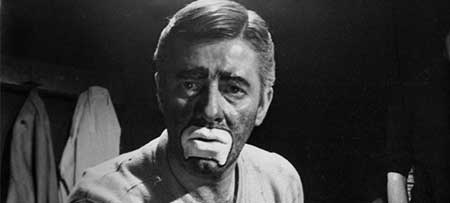
Jerry Lewis: The Man Behind the Clown (2017)

Gregory Monro’s documentary offers a scattershot overview of Jerry Lewis’ life and career, with a heavy emphasis on the funnyman’s peaks while carefully avoiding the controversies and failures that he generated. Lewis was the son of entertainers who put their careers before his childhood needs, and an emotional low point occurred when his parents managed to miss his bar mitzvah because they had stage engagements. The film notes that Lewis’ meteoric success in the late 1940s when he was barely out of his twenties created friction with his father Danny Lewis, a singer who never achieved stardom.

Continue reading →

post

Starless Dreams (2016)

This entry in Mehrdad Oskouei’s trilogy on Iranian youth in their nation’s justice system – following It’s Always Late for Freedom (2007) and The Last Days of Winter (2011) – focuses on teenage girls at a rehabilitation and correction center. This facility looks nothing like the stereotypical Iranian prison: the girls enjoy pizza parties, play Truth or Dare and engage in playful snowball fights. Indeed, at times the facility feels like a happy sorority rather than a hijab-clad version of Orange is the New Black.

Continue reading →

post

Forbidden: Undocumented and Queer in Rural America (2016)

Tiffany Rhynard’s documentary focuses on Moises Serrano, who came to the U.S. at the age of 18 months with his illegal immigrant Mexican parents. The Serrano family settled in rural North Carolina and lived without legal problems until 2007, when state laws began to crack down on the ability of illegal immigrants to have a driver’s license or obtain college scholarship funds.

Continue reading →

post

Red Gringo (2016)

During the early 1960s, singer Dean Reed tried and failed to achieve stardom in the U.S. music scene. But he found a surprising level of popularity in South America, particularly in Chile, and for most of the 1960s he was a ubiquitous figure in the continent’s entertainment industry. Miguel Angel Viduarre’s documentary traces Reed’s unlikely stellar rise in South America, with rare recordings and film and television appearances that show the handsome performer perfectly at ease with Spanish-language lyrics.

Continue reading →

post

When Knighthood Was in Flower (1922)

Barely seen since its 1922 theatrical release, this silent epic is a major surprise: a charming, entertaining adventure that contradicts the long-held prejudices by film scholars against the costume dramas starring the much-maligned Marion Davies and produced by her lover, publishing mogul William Randolph Hearst.

Continue reading →