post

Law Not War: Ben Ferencz’s Fight for Justice (2015)

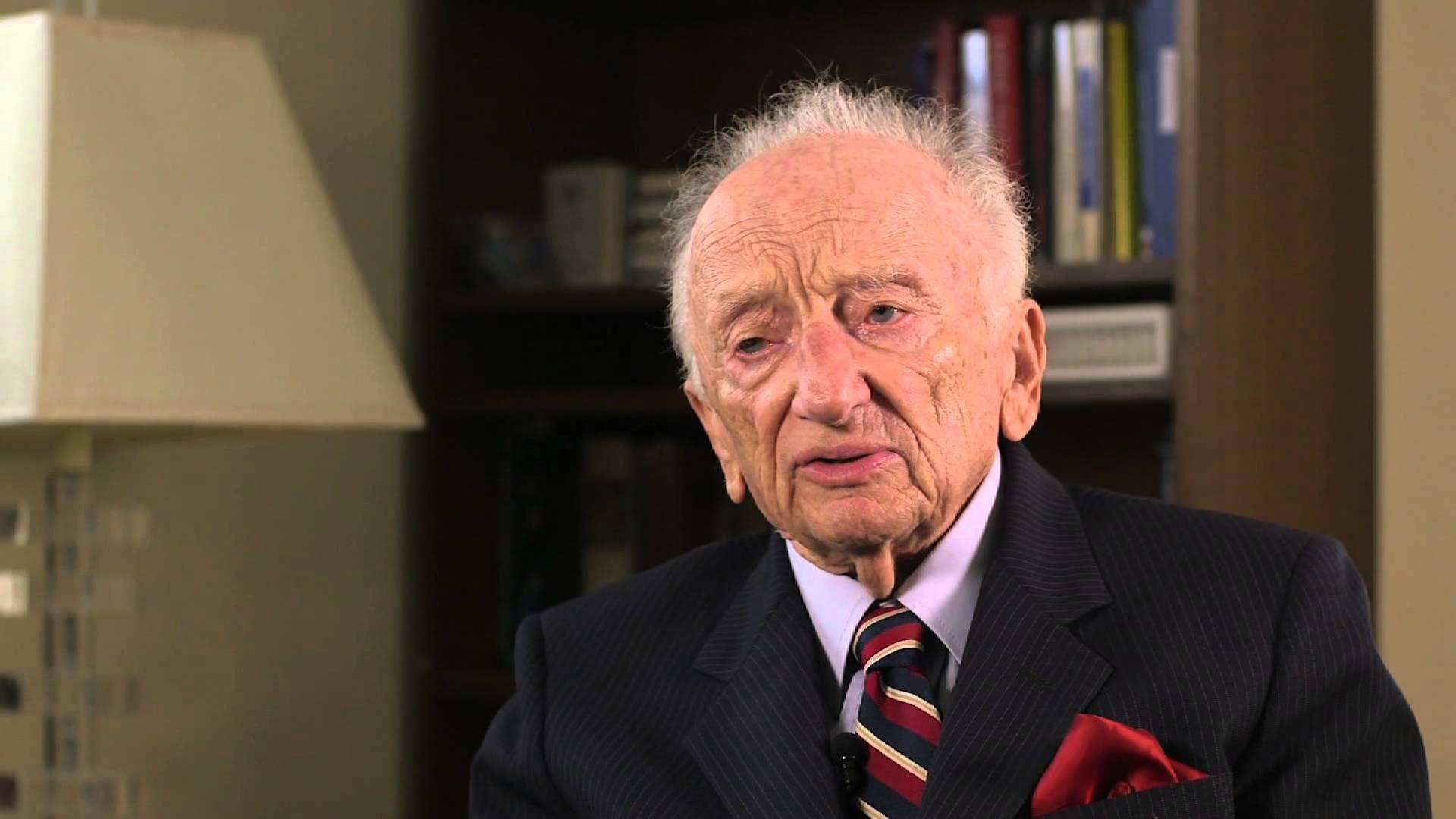
In the realm of jurisprudence, Benjamin Ferencz is truly an icon. He is the last surviving Chief Prosecutor of the Nuremberg Trials and a primary force in the establishment of the International Criminal Court (ICC). And at 95, he shows no signs of slowing down – at least, not in Ullabritt Horn’s documentary on his remarkable life and career.

Continue reading →

post

Out of the Woods (2016)

The new film from underground film icon Antero Alli offers a challenging consideration of identity.  It is a provocative endeavor that mixes mysticism with sharp satire and rueful emotional drama, and the result is a profound statement on how we see ourselves and how we want to be perceived by others.

Continue reading →

In the Street (1948)

Screen capture from the 1948 "In the Street"

Screen capture from the 1948 “In the Street”

When “In the Street” was first screened in 1948, it was unusual in several ways: it was a silent film created two decades after Hollywood jettisoned the silent format for talkies, it was a view of New York’s Spanish Harlem at a time when mainstream movies ignored the growing urban Hispanic population, and it offered an unprecedented view of daily life without the benefit of a preconceived screenplay.

Continue reading →

post

Changing Face of Harlem (2016)

Among New York City’s neighborhoods, Harlem has seen the most dramatic highs and harrowing lows: it was a cultural epicenter during the 1920s and a beacon for African-Americans seeking an escape from the Jim Crow South, but economic deprivations during the Great Depression and acute social inequalities in the post-World War II years saw the community’s standard of living rapidly decline.

Continue reading →

post

Fireworks (1947)

In post-World War II America, homosexuality was being addressed with various degrees of maturity and artistry in literature and theater – but not in cinema, thanks to the restrictive Production Code censorship that governed Hollywood. Far removed from the movie industry, 17-year-old Kenneth Anger used cinema to consider homoeroticism with the 14-minute “Fireworks,” which was certainly the most daring film of 1947 – and is still among the most astonishing productions ever made.

For this experimental work, Anger cast himself as a young man whose sex-fueled fantasies become a violent reality. From its opening, Anger immediately breaks taboos by suggesting the dream of the youth being held in the arms of a hunky sailor. The youth awakes and it appears that he has an erection – but the pulling back of the blanket reveals he was holding a statuette to simulate his phallic tower. Slipping through a door marked “Gents,” he winds up in a bar where a bodybuilder sailor shows off his muscles – but when the youth offers the sailor a cigarette, the sailor slaps him in the face and twists his arm behind his back. The sailor later lights the youth’s cigarette with a flame burning at the end of a bundle of sticks – or, to be crude, using a faggot to light up a faggot.

Then, more sailors show up, with their leader holding a large chain. They surround the youth, who sinks to the ground. The youth is framed in tight close-up, screaming with blood being splattered across his face, as sailors beat him with chains and cut open his chest to find a gas gauge in his heart. This assault is followed by white liquid being poured on the youth’s face and body. One of the sailors is seen with a lit Roman candle dangling from his fly. But it turns out to have just been a sadomasochistic dream as the youth shares his bed with another man (although this partner’s face is scratched out of the print in a manner that gives his head a cartoonish sunshine glow).

Not unlike many experimental films, there is a degree of artistic wobbling going on – a Christmas tree is trotted out for no clear reason and a few shots are not in focus. But the sheer audacity of the film’s most visceral images and its unapologetic consideration that the orgy of sexual violence was little more than a dream – that ultimate storytelling cliché, played for a big gay laugh here – were far ahead of its time. And, maybe, with its willingness to jettison aesthetic safety for sheer carnal outrageousness, “Fireworks” is also ahead of our time.

post

Oklahoma! (1955)

The decision to hire Fred Zinnemann as the director of the film version of the Rodgers & Hammerstein musical “Oklahoma!” was peculiar – the director never helmed a musical before and was best known for his intensely riveting dramas such as “The Search,” “The Men,” “High Noon,” “The Member of the Wedding” and the Oscar-winning “From Here to Eternity.” One would imagine that bringing in a veteran musical director such as Stanley Donen or Vincente Minnelli would seem more logical for a vehicle like “Oklahoma!” – this would seem to be the job for an expert in the light and breezy, not in doom and gloom.

But Zinnemann’s predilection for the dramatic gave the frothy “Oklahoma!” a sense of complex gravitas that was absent from other mid-1950s musicals – not to mention the original Broadway production – and when viewing it today, it seems more modern when many of the other musicals of the decade seem badly dated. Part of this was achieved in the off-beat casting of Rod Steiger (who transformed the character Jud Fry from a stock villain into an emotionally tortured untouchable) and film noir diva Gloria Grahame (who played the comic relief Ado Annie without a trace of wink-and-nudge farce, thus making her character’s sexual cluelessness more humorously invigorating). Zinnemann might have taken the film into even darker territory, as witnessed in his unusual eagerness to audition non-musical young Method actors Paul Newman and James Dean for the Curly role. But under Zinnemann’s direction, Gordon MacRae, a usually bland musical-comedy performer, tapped into hitherto unknown dramatic abilities as he plumbed Curly to find an insouciant malevolence that clouded the character’s personality and motivation.

Still, “Oklahoma!” is a musical and not a melodrama, and Zinnemann responded to the material with an imaginative style that took full advantage of the widescreen format (the film was simultaneously filmed in the Todd-AO and CinemaScope processes) and vibrant rural locations (in Arizona, as Oklahoma proved oddly incompatible for the production). The classic score was wonderfully enhanced with boldly conceived outdoor sequences – “Oh, What a Beautiful Mornin’” and “The Surrey with the Fringe on Top” are playfully visualized while the complicated “Kansas City” dance number was staged with a large ensemble in an open air train depot. Zinnemann also provided expert framing for Agnes de Mille’s groundbreaking dream ballet, which offered an astonishing avant-garde sequence laced with psychosexual menace.

It also helped that the film brought in reliable performers to inhabit the broad roles with unapologetic hamming – Eddie Albert’s oleaginous Persian peddler, Gene Nelson as the handsome but dim cowboy and the sublime Charlotte Greenwood as the earthy Aunt Eller offer a jolly presence to keep Zinnemann’s edgier elements in check, creating the cinematic equivalent of a yin-yang balance. The biggest surprise was the film’s greatest gamble: putting unknown Shirley Jones in the central role of Laurey. The young actress was not lacking in photogenic charms and a fine voice, and Zinnemann carefully guided her through the role’s light comedy and difficult emotional turns, which resulted in one of the most startlingly effective film debuts.