post

The 10 Unlikeliest Achievements in Clothing-Free Cinema

This year marks the 50th anniversary of the release of “3 AM.” What, you never heard of “3 AM”? Well, if you’re an Orson Welles fan, you’ll recall that film was directed by Gary Graver, the cinematographer on Welles’ “The Other Side of the Wind” – Graver needed to take on the skin flick job to because he couldn’t cover his bills working on Welles’ on-again/off-again project. As a favor to Graver, the Big O did uncredited work in editing a steamy masturbatory shower in “3 AM.”
Continue reading →

post

Ten Little Indians (1965)

You must admire the audacity of filmmakers who try to remake classic films – after all, it takes a lot of guts to attempt a production that exists solely to one-up its heralded predecessor. But that’s not to say that it cannot be done – after all, William Wyler’s “Ben-Hur” and Martin Scorsese’s “The Departed” were remakes that won the Best Picture Oscar, while John Huston’s “The Maltese Falcon” and “Moby Dick” and Franco Zeffirelli’s “Romeo and Juliet” were superior to earlier film adaptations of those beloved works.
Continue reading →

post

The Shining (1980)

My problem with “The Shining” is that it was made at the wrong time by the wrong people. It should have been made by the Columbia Pictures short subjects department in the mid-1940s with Shemp Howard as Jack Torrance, Vera Vague as Wendy Torrance, Dudley Dickerson as Dick Halloran, and (in a loan-out from Hal Roach) Billy “Froggy” Laughlin as Danny Torrance. And behind the camera, Jules White would direct the film by filling the Overlook Hotel with a gorilla throwing pies and skeletons operating on clearly visible wires.
Continue reading →

post

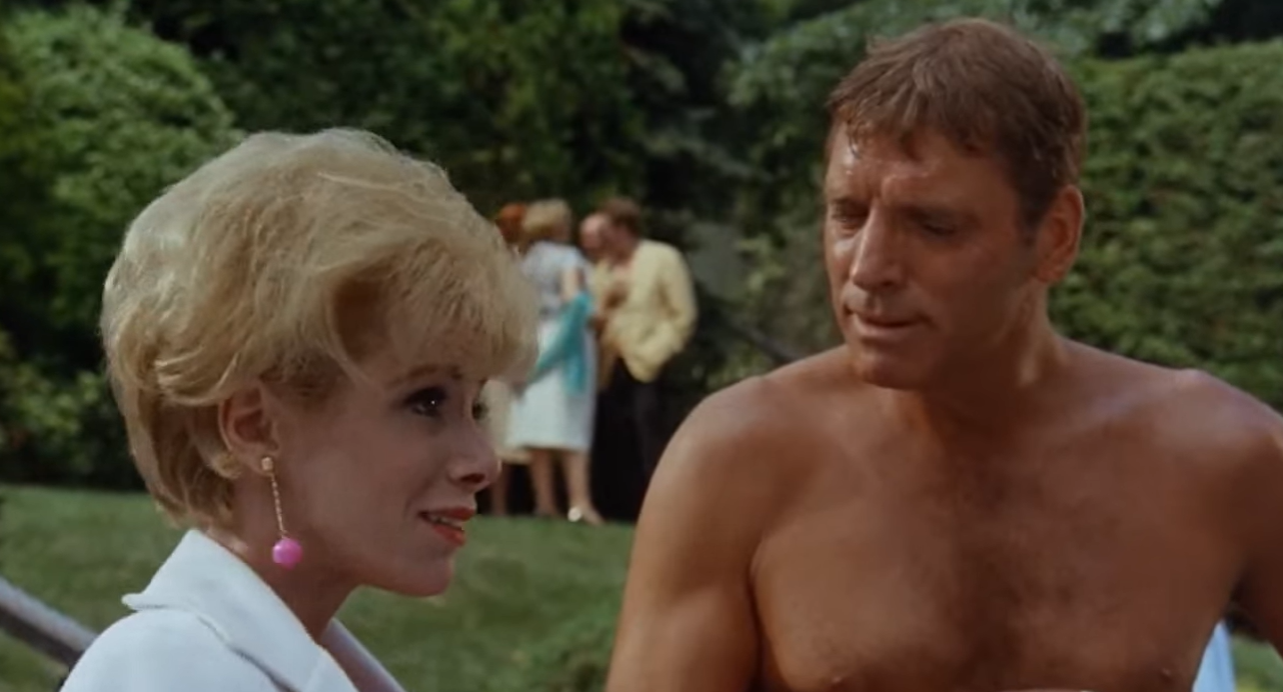
The Swimmer (1968)

It’s a shame that “The Twilight Zone” ended its television run just before John Cheever’s short story “The Swimmer” appeared in The New Yorker – Rod Serling’s half-hour anthology drama would have been a perfect environment for adapting Cheever’s surreal and disturbing 12-page tale. Instead, the husband-and-wife team of Frank and Eleanor Perry opted to greatly expand the Cheever story into a feature-length film. The result was the cinematic equivalent of building a three-story home on a one-story foundation.
Continue reading →

post

The Passion of the Christ (2004)

In 2004, the faith-based film genre received a jolt from an unlikely source. Mel Gibson, who secured his international movie stardom in the “Mad Max” and “Lethal Weapon” franchises, had proven his worth as a filmmaker with the 1995 “Braveheart,” winning Academy Awards for Best Picture and Best Director. Gibson was no stranger to Jesus-centric films – his Icon Productions was one of the companies that backed the animated feature “The Miracle Maker” – and the financial success he secured from his movies enabled him to independently finance his own feature on Jesus.

Continue reading →

post

The King of Kings (1927)

The last major Jesus-focused film of the silent cinema era was Cecil B. DeMille’s 1927 release “The King of Kings.” The production offered heaping servings of DeMille’s vices and virtues as a filmmaker: an astonishing sense of visual spectacle and the uncanny ability to make an epic move at a swift pace, coupled with a bizarre sense of dramatic puerility laced with the obsessive need to improve upon holy source material with old-fashioned vulgarity.
Continue reading →

post

The Rogue Song (1930)

MGM’s 1930 film “The Rogue Song,” an adaptation of the Robert Bodansky-A. M. Willner operetta “Gypsy Love,” was the only sound-era production included on the American Film Institute’s 1980 list of the ten most wanted lost films. The inclusion of this title on the list was peculiar at many levels. For starters, its presence as the sole post-silent era entry, it inadvertently gave the wrong impression that few sound-era films were lost.
Continue reading →