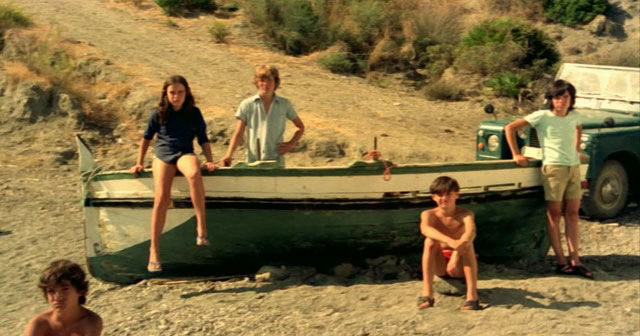
You Have to See This! Nightmare Sisters (1987)

nightmare-sisters-2

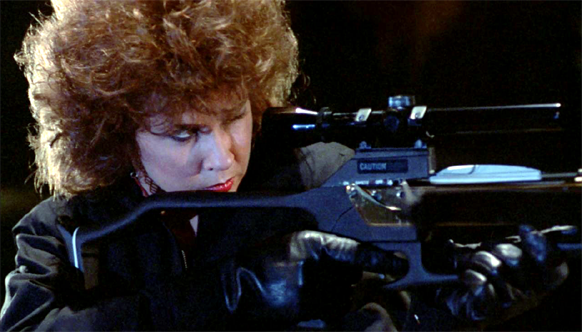
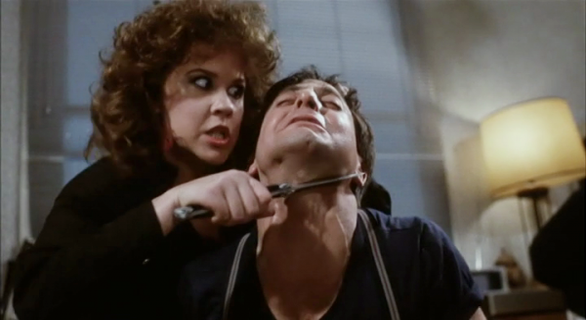
Watching so many independent movies over the years, you can tell when a movie was made on a limited budget, and “Nightmare Sisters” shows big time. That’s not a caveat, but it is blatantly obvious that director David DeCoteau made this film as a quick shoot in a set the studio could actually afford. That only really adds to the charm of “Nightmare Sisters,” and the enduring cult appeal of the film that teamed the horror scream queen heavyweights Linnea Quigley, Brinke Stevens, and Michelle Bauer together. It’s no shock that allegedly DeCoteau made “Nightmare Sisters” with left over film and money from “Sorority Babes in the Slime Ball Bowl O Rama.”

You could literally watch the pair as a double feature and never miss a beat as their premises are similar, as are their darkly comic tones. Nerdy Melody, Marci and Mickey spend their days wiling the time away on their goofy hobbies. Anxious to go on dates, they invite the three pledges from the local frat over for a fun night, and despite their reservations the three geeky gentlemen oblige hoping to get laid. After a boring night, antique collector Marci brings out her magic orb for a fun séance. The nerdy threesome are turned in to voracious nude sex starved vixens. Little do the three frat boys know, the girls are hungry, but it’s not for sex.

“Nightmare Sisters” doesn’t take itself seriously and approaches the entire material with a stern tongue in cheek, but that doesn’t mean it doesn’t supply a darn good premise with oodles of potential for a wider scope. It would have been entertaining to see the trio of vixens walking around the local college in the buff feasting on men and seducing literally everyone in to a state of amorous paralysis. But you make due with what you can and you’re thankful to see three insanely sexy and charismatic women taking the roles so over the top, they’re never afraid to be goofy.

nightmare-sisters-1

Quigley, Stevens, and Bauer even play nerds well, especially when the costumes and effects falter. Quigley dons a goofy set of fate buck teeth and walks hunched over awkwardly for most of the movie, Stevens dons thick glasses and primarily relies on being utterly boring, while Bauer’s shtick is the funniest, and most Politically Incorrect. “Nightmare Sisters” relies on the classic eighties device of fat shaming, as Bauer’s character is the heavy of the trio, spending her time gorging over food. It becomes comical in its horrible effect, as Bauer simply doesn’t look overweight. It’s clear the producers merely put thick clothing on Bauer and layered them atop one another to give off the impression Bauer’s character Mickey is obese.

It becomes blatantly ridiculous when we see her “fat” body over her very thin set face. But then again “Nightmare Sisters” thrives on the eighties stereotypes and never apologizes for it. Much of the first half of the movie revolves around exposition and setting up a lot of the scenarios for the future, exploring how unpopular the girls are and their discussions on how boring Marci has a fetish for collecting mysterious antiques from every corner of the country. This comes in to play in the second half when the magic ball is introduced, allowing at least some foreshadowing rather than the character just pulling the plot device out of thin air.

It’s also good to note the comedic peeks at how dull she can be when Stevens shows up dressed as a schoolgirl. There’s a heavy emphasis on Micki eating for a great reason as when she finally becomes an insanely sexy vixen, she shoves a peeled banana down her mouth and deep throats it without even missing a beat. I’m not sure if it’s great editing or if Bauer can actually pull off the trick, but it’s a damn memorable scene, and Bauer’s sex appeal increases every second she’s on screen in her home made cave girl outfit.

It also becomes plainly obvious that the comedic focus on Quigley’s character’s tone deafness will transform in to an inevitable musical number where she can suddenly belt out a tune and look amazing doing so. As predicted, Quigley commits to a performance of the excellent rock tune “Santa Monica Blvd. Boys,” which she often sang with her band The Skirts. Quigley is a born performer, and though the song has almost nothing to do with the movie’s narrative, it’s a fun diversion.

nightmare-sisters-3

DeCoteau knows exactly what kind of people he’s working with, so once the women transform in to deadly vixens, there are endless moments of them scampering around and desperately trying to seduce the unsuspecting frat boys that came to their party. Things take a twist when more popular frat boys kidnap the original male guests and take their place as sexual partners. This series of events goes painfully awry, as they immediately become food for the trio of succubi.

When protagonist Kevin and their friends do everything in their power to resist the sexual allure of the trio of vixens, we meet the Exorcist, a priest played by Jim Culver who also pulls off resisting their feminine wiles and adds some comic levity to the already silly events. The women make good use of their partners by feasting on their essence through their testicles, making for some of the funnier moments of terror. Just think of being with someone like Michelle Bauer only to have her dig in to you with a mouth full of sharp teeth. “Nightmare Sisters” takes from the formula of “Sorority Babes in the Slime Ball Bowl O Rama” and offers up a new kind of wish granting in the form of succubi, and there are no better people to exemplify the ideal image and allure of succubus than Michelle Bauer, Brinke Stevens, and Linnea Quigley.

Over the years, “Nightmare Sisters” has gained a cult following thanks to its rarity, but is really a testament to low budget film making. It works on a slim narrative, low budget, and little resources, but still works as a goofy, silly, and entertaining bit of horror comedy. It also has the privilege of featuring the top scream queens of the eighties starring, offering up their prime assets for the camera and devouring unsuspecting men.
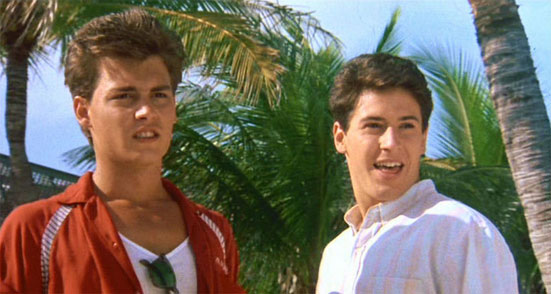
You Have to See This! Private Resort (1985)

Well it just goes to show all the aspiring actors out there hoping for success. Most times you have to earn your stripes by being in junk you think is awful, all for the sake of an inevitable break out role. The two stars of the piece are Rob Morrow and post – “Nightmare on Elm Street” Johnny Depp at very young ages, and starring in what was one of maybe two hundred teen sex comedies released in the eighties. Ben and Jack crash a Jamaican resort club during Spring Break intent on causing trouble with the colorful variety of guests, and scoping out babes for the sake of getting laid.

In the process they run afoul hotel security, a weird spiritualist, her goofy wealthy grandmother, a jewel thief, an abusive waiter, a meat head hotel patron and his drunken girlfriend, and a sexy Southern Belle. While “Private Resort” is often pure nonsense, Morrow eventually went on to a long interesting career in television and film. As for Johnny Depp, after this he went on to a break out role in “Platoon” and then from then on, I think he worked in other films and TV, who knows? Did we ever hear from Johnny Depp after “Platoon”? That said, Depp and Morrow allegedly despise “Private Resort” and who can blame them?

private-resort1

I often bash some movies for having absolutely no narrative, but hot damn does “Private Resort” have no story. It’s like one giant punch line to a joke without the initial set up and build up. Yet another entry in the shockingly popular sub-genre from the eighties that began with films like “Last American Virgin” and “Porky’s,” George Bowers “Private Resort” embraces the sub-genre without any of the finesse of classics like “Revenge of the Nerds.” It’s just eighty five minutes of stock comedy tropes running in to one another and clashing for the sake of hopefully grabbing a laugh from the audience.

Ben and Jack are two teens that break in to a local resort in Jamaica during Spring Break, and begin walking around harassing guests, causing trouble, and looking to get laid. That’s literally the entire movie. There’s no explanation how they got their room, who they’re staying with, or why they’re at the resort originally. Most of their time is spent walking around the lounges and pool side hitting on women and trying to lure them back to their suite for the sake of having sex with them. On occasion, their wacky misadventures spiral out of control and they end up getting in to a sexual scenario.

private-resort2

During one scene Ben and Jack meet Leslie Easterbrook’s incredibly sexy Bobby Sue, who is sun bathing pool side, and despite their flirtations, she rebuffs their advances. Accidentally leaving her room key behind, they think it’s a hint, and break in to her room. Bobby Sue has a very viciously jealous husband, of course. He’s called the Maestro and is played by Hector Elizondo for reasons I’m sure involved an easy payday. He’s the obligatory villain of the comedy mistaking Morrow’s character Ben for the hotel barber prompting Ben to mangle his precious doo while Jack is in Bobby Sue’s room nude and trying to find an escape.

Like one long episode of “Three’s Company,” there’s a ton of goofy physical double takes, Depp trying his damndest to be wacky, and many scenes involving the pair of pals running around the halls of the hotel outrunning someone who rightfully wants to arrest them or beat them up. And wouldn’t you know it? Despite this hotel being a high priced swanky vacation spot, every room has a lion share of wacky and outrageous residents. For some odd reason during the big chase scene in the finale, Maestro crashes in to a room where two sumo wrestlers are apparently standing around preparing to fight? I think?

private-resort3

Like every teen sex comedy, Ben and Jack eventually run across women they want to have sex with but end up in potentially meaningful relationships and given the opportunities to redeem themselves. For Ben his form of redemption involves getting potential girlfriend Patti out of an abusive relationship with a waiter as she refuses to stand up for herself afraid of losing her job. Obviously the complicated problem is solved by a comical punch in the face, and a declaration of love, because why add some characterization to what is unsalvageable dreck by the time the second half rolls around.

Elizondo is seemingly in the movie for no reason, so he’s given a half assed sub-plot mid-way where he plans to romance wealthy woman Mrs. Rawlings for the sake of stealing her precious diamond. That proves disastrous thanks to Ben and Jack when they accidentally interfere with his attempts to seduce her constantly. Every cast member is so ill fitted for the movie that if there is a laugh or two, it will be entirely accidental. To show how utterly inept the movie tends to be, even at the standards of a forgettable cash in, “Private Resort” actually steals a running joke from “Airplane!” involving a taxi and its running meter as Bobby Sue waits in the car.

If none of “Private Resort” appeals to you, then you have to at least sit through it for the sake of Leslie Easterbrook. If you ever sat through any of the “Police Academy” movies wondering what she looked like underneath the uniform, Easterbook is an absolute bombshell here who flashes skin as character Bobby Sue. She appears constantly in skimpy clothing and bathing suits, and even wears a see through robe that reveals her amazing bare body underneath.

private-resort4

Easterbrook is one of the most underrated sex symbols of the eighties, and she shows here why she deserves to be the reigning queen above everyone else. One scene finds hotel security harassing a woman for wearing a skimpy bathing suit and she teases him by making it shorter and wiggling her back side. There’s also the insanely hot Lisa London who plays the drunken girlfriend of Andrew Dice Clay’s character. While she’s mostly on the floor, she shows off her curves without hesitation and looks incredible.

Meanwhile while her husband is involved in all sorts of running around, getting in to fights and inevitably getting the crap kicked out of him by Dody Goodman. It then simply ends on a freeze frame of Morrow. There’s no resolution, no climax, it just ends so swiftly. Almost like tearing a band aid off. Is there any wonder there was never a Private Resort 2″? Everyone starts somewhere, and for good inspiration on how major actors also have to pay their dues, “Private Resort” is a prime example. Rob Morrow, Johnny Depp, Hector Elizondo, and yes, even Leslie Easterbrook who went on to cult fame with the “Police Academy” film series, are all here slumming it up with a sub-genre milked way beyond its threshold in the 1980’s. It’s not at all the worst of its kind, but it is definitely a low point for teen sex comedies of the decade.

You Have to See This! Savage Streets (1984)

savage-streets-2

Brenda is the leader of a pack of young girls in her town who spend their free time making trouble and raising hell. When they cross a male gang while partying and decide to wreck their car, they strike at Brenda by raping and violating her sister, Heather. Out of spite, they also murder her best friend. Having had enough, Brenda unleashes street justice on the bastards, with a slew of weapons, including her crossbow, switch blade and her street know how. Sure, Sure, Linda Blair. “The Exorcist” is a family drama, not a horror movie. No, we believe you. And “Repossessed” was a relevant Mel Brooks throwback. And “Chained Heat” was an indictment on the prison system. And “Savage Streets”? An honest look at the peril of American youths! What? Just because “The Exorcist” is my favorite horror film ever made doesn’t mean I’m at all bitter.

In either case, if you’re one of the few people that wondered what became of Linda Blair after “The Exorcist,” you’d be surprised to know that Blair became a B movie actress, and a bonafide grindhouse goddess. Once Blair went from adorable young kid to legitimately legal, Blair was a busty bombshell who could really dominate the screen with her curves and her fierce performances. Not to mention whenever she was on-screen, her gorgeous breasts seemed to act independently from Blair’s body. It’s shocking how much Blair’s bust seems to be their own character in “Savage Streets” as well as other noted films of hers like “Chained Heat.” Not that it’s much of a revelation, I mean I’m sure everyone seemed to notice this increase in bust size around “The Exorcist II: Heretic.” It just didn’t become kosher to point it out and enjoy it until Linda Blair began shedding her clothing and bathing with other women in grade A grindhouse fare. Her yaboes were only rivaled by the great Pam Grier. But enough about breasts for a while,

I digress. “Savage Streets” is that great youth gone wild film that would have been filmed in the fifties with a disclaimer in the finale, except it goes whole hog in to the dramatic revenge tale rather than calling attention to its ludicrous trappings. The film is inherently goofy, but you just have to love how Linda Blair takes charge in the finale.

savage-streets-1

Blair works very hard to own the role of Brenda, the alpha female of her school who runs a gang and gets in to spontaneous fights in the school showers in the near nude. Blair, with her cherubic face and warm smile struggles to convince audiences she’s this hard boiled no nonsense female hood, and likely spent hours in front of a mirror practicing her scowls and holding her cigarettes. But god help her, she just can’t pull it off. Granted, the woman is gorgeous, but not quite the street wise chick who leads a pack of young girls in to trouble and mayhem. Compared to the more realistic femme fatales in “The Switchblade Sisters,” Blair and co. are somewhat laughable. Her only salvation is her younger sister Heather, an innocent mute teenager who follows Brenda on her overnight adventures cruising stores and breaking laws.

Heather is played by the gorgeous Linnea Quigley in one of her earliest roles, where she is pretty much propped to be an angelic young girl who keeps Brenda from going over the edge in to full on criminal mode. Imagine the switch when Quigley would play the iconic punk goddess Trash in “Return of the Living Dead” years later. After crossing a group of guys in town by hijacking their ride and trashing it, they seek revenge by gang raping Heather in the lockers. Brenda of course was too wrapped up in a shower fight to notice her sister being tortured and sexually violated the entire time. And Heather is a mute, so she very well couldn’t scream for help. Angered and enraged, Brenda sets out on a path of violence, systematically eliminating the men that took her sister’s life, while the men retaliate by murdering Brenda’s friend. All of which culminates in a final showdown between Brenda–in full black leather regalia–and leader of the male gang that almost seems to be for a sequel.

Sadly, there was never a “Savage Streets II” and Blair went on to better–well–other things. No, but I kid Blair. All things considered Blair in her prime was a gorgeous curvaceous sight for the movies, and “Savage Streets” is a fine installment in the later repertoire of Blair’s career, where she embraced grindhouse and exploitation at every turn and looked for any excuse to show skin. And I thank her for that. Linda Blair never really could convince anyone that she was a hardcore gangster woman, but “Savage Streets” is still a tasty bit of eighties exploitation with a fun premise, and a one two punch of the almighty Blair and Quigley.

You Have to See This! Reefer Madness (1936)

Reefer! Pot! Hash! Dope! Ganja! Weed! It may be in our country! It may be in our city! It may be in our backyard! Your backyard! It might be raping your dog right now! What? Rape jokes are over the line? Well, what will happen when marijuana becomes the downfall of western civilization? It won’t seem so ludicrous then, now will it? We as good American citizens must snuff out this epidemic destroying our world before it’s too late.  Women cry for it–men die for it! Part of the “Youth Gone Wild” sub-genre of cautionary melodramas from the fifties, this is the woeful story of one young man’s entanglement with the dreaded drug known as reefer, and how it spelled a life of crime for him. After being preyed upon by a married couple that live their lives dealing drugs to teenagers, eventually murder and crime rear their heads.

Tell Your Kids.

“Reefer Madness” came at a time where Hollywood was now enforcing a lot of strict rules and codes for films. And before that film was then like it pretty much is today. There featured drug use, and sexual content, most of which has been observed and collected on DVD thanks to Turner Classic Movies. After 1934, Hollywood had strict rules for movies. One of the most hilarious rules was that no matter what or how contrived, the villain in a movie couldn’t win. In the end, they’d either have to die, or learn their lesson and turn over a new leaf. That’s why in “Public Enemy” James Cagney is suddenly killed in the finale, and it’s why in “The Bad Seed” the film ends on a very contrived note with young Rhoda being struck by lightning and the entire cast coming out to greet the audience and relieve the tension.

reefermadness2

In a perfect world, the movie would have ended on Rhoda’s mother dying in the hospital after the failed suicide attempts, and Rhoda eventually murdering her kind aunt for her precious bird. But alas, “Reefer Madness” is part of the wave. Initially made by a church group to warn of the dangers of reefer and inform god fearing parents about how this odd drug would ruin the world. It begins with a lawyer lecturing a group of concerned parents, urging them to strike down the epidemic, and then leads in to the central narrative device. Director Dwain Esper purchased the film and tailored it to a more exploitative audience, including trashier scenes of young teens using cannabis and partying in to the night eventually giving way to heavily suggestive sexual encounters, thanks to the influence of weed.

“Reefer Madness” is only one of dozens of exploited youth’s movies that were released in the forties to the sixties, which featured horrific tales about young teens giving in to the temptations of sex, drug use, crime, and abortion. Many of those films are also available on DVD releases from companies like VCI, but you can pretty much see them corrupt major releases, as mentioned above. “Reefer Madness” is the vicious tale of a young happy man named Jimmy who gets involved with a dame named Mae and a guy named Jack who happens to be embroiled with a sinister mobster. Mae and Jack, of course, “Lives in sin” since they’re not married, but they’re also conservative enough to sleep in separate beds. Man, these people should be in hell.

reefermadness3

Jack wants to sell to teenagers, while Mae prefers her own crowd. Defiant, Jack uses his connections with the young crowd to hold a reefer party, and Jimmy gets involved with young Blanche, while submitting to the allure of marijuana. When Jimmy’s sister comes looking for him, she is tricked in to smoking reefer and is almost raped. Jimmy, thanks to the weed, hallucinates she is stripping for her attacker and after the two fight to the death, Jimmy kills her attacker, and is pinned for the crimes including the weed dealings, while Jack and Mae attempt to make out like bandits. “Reefer Madness” is not known for its high quality story as most of the writing is anxious to convey a hard lesson about life and the scum that are drug dealers.

While it’s true drug dealers are in fact scum, the notion of reefer being the downfall of humanity is the basis for hilarity, as the filmmakers exaggerate the effects of the drug, and do so with so much laughter that it’s almost embarrassing to consider that anyone took this seriously, even concerned parents. Kids can tell when they’re being lied to and talked down to. The smart kids anyway. I can’t believe anyone, but the most repressed and controlled of Christian youths, took this seriously. That doesn’t mean it lacks cult clout, though. It’s still one of the most entertaining shock movies ever made, and one that exploits the nature of drug abuse rather than warn you of its ill effects.

It will surely garner some healthy laughter from its audience. Ironically, from the ones that love to watch bad movies while stoned. “Reefer Madness” is a film that has cult and kitsch appeal, and is a guaranteed good time for movie geeks who love alternative movies that try to shock the viewer in to believing ridiculous falsehoods that would become a trend later in to the forties and fifties with Youths Run Amok films. It’s a gaff and a half.

You Have to See This! Faster, Pussycat! Kill! Kill! (1965)

Russ Meyer was a man who loved breasts. He surely enjoyed the female form, but mostly he loved breasts. He fetishized them, worshipped them, and centered his entire career making films that idolized them in some form or another. Russ Meyer is one of the last directors who cast and adored curvy busty women, and though he’s written off sometimes as an exploitation director, Meyer definitely was a dying breed of male. Sure, breasts are still worshipped in today’s society, but not many directors have the guts to reveal them so much in their films.

Continue reading

You Have to See This! Who Can Kill a Child? (1976)

2012 saw the remake of “Who Can Kill a Child?” hit many movie festivals under the new title “Come Out and Play.” And while that movie has been, from what I’ve seen, met with mixed reviews on a mostly negative arena (one worst of 2012 list included the remake in its worst ten), there’s no denying that “Who Can Kill a Child?” will never actually be replaced.

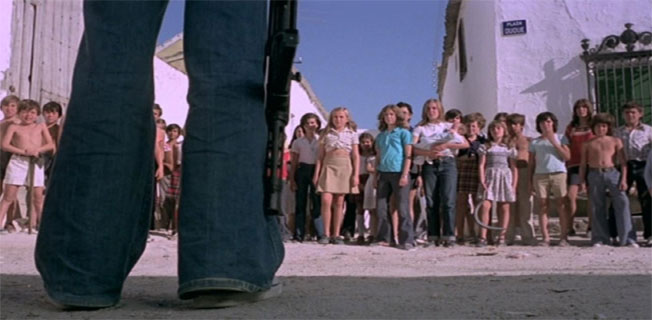
When Tom and Evelyn seek to vacation in Spain, even in spite of reports of adult bodies washing ashore mutilated beyond repair, they go to a local tourist island for food, dance, and laughs only to discover the island has been taken over by children. And these almost infinite groups of prepubescent terrors are intent on viciously murdering anyone and everyone who isn’t a child. Can Tom and Evelyn survive long enough to make it off the island and back to shore to warn civilization?

While folks often cite “Village of the Damned” and or “Children of the Corn” as downright horrifying examples of children run amok and transformed in to monsters of terror, there’s often the omission of the 1976 Spanish horror film “Who Can Kill a Child?” An often shocking and absolutely disturbing film, director Narciso Ibáñez Serrador’s has been very misunderstood and gone through a lot of phases during its life. It’s been banned in certain countries and has been re-titled almost a dozen times.

who-can-kill-a-child

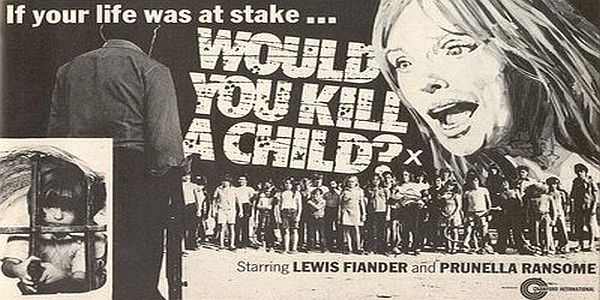
It goes by its original moniker “¿Quién puede matar a un niño?” as well as “Island of the Damned,” “The Hex Massacre,” “Death is Child’s Play,” “Island of Death,” “The Killer’s Playground,” “Trapped,” and “Would You Kill a Child?” Not to mention it’s been edited down from its original form splicing out many of the murders in the film that revolve around children. In 2007, Dark Sky Films released a special edition unrated DVD of the film in its uncut glory, positing the film as something of an inexplicable turning of the tide in regards to man against nature, while Hitchcock’s “The Birds” showed what would happen if nature’s inexplicably turned man into its number one enemy.

“Who Can Kill a Child?” shows what would happen if children suddenly decided that they simply have had enough of the adult population and became murderous, merciless monsters. The dilemma posed by the film is could you really kill a child? More on point, if your sweet seven year old daughter suddenly started attacking you with a machete intent on murdering you and bathing in your blood, could you murder her in self defense? “Who Can Kill a Child?” is an unnerving and calculated horror film that shows what happens when children just flip a switch and decide that friend or foe, they’re massacring every adult in the general vicinity. In one very horrifying instance, a mother screams at her son and daughter to go outside and even smacks them on the behind to get them moving.

The brother and sister are greeted by the swarm of psychotic ankle biters who approach the siblings, softly whispering in their ears in an almost inaudible string of words. Suddenly the looks of innocence and smiles on the siblings inexplicably transform in to sheer gleams of blood lust. When their mother greets them outside demanding they get to work her offspring are unresponsive, and behind her groups of children trickle down from the rocks preparing to unleash ungodly acts of pain on her.

who-can-kill-a-child2

Director Narciso Ibáñez Serrador doesn’t really display much exposition behind the source of this evil; he just shows the audience that this turn of events was inevitable with footage of children being massacred during various wars, and young kids starving to death in villages. All of whom are casualties of the violent conflicts. When Tom and his pregnant wife Evelyn arrive at the local island prepared to relax during their vacation, they’re disturbed to discover that all of the adults on the island are nowhere to be found, and what civilization there are consists of children that run around seemingly innocent and committed to their own secret doings in the darkness.

When Tom and Evelyn discover that the children have not only slaughtered every adult on the island, but have made a game out of mutilating an old man in the village square, the fight for their lives become ever more harrowing, as the angelic monsters will stop at nothing to kill the duo. Narciso Ibáñez Serrador is never above tugging at the heart strings of audiences giving them some material to cringe at. Save for the ghastly prologue, there’s a moment where a male survivor is lured to his death by his bawling daughter who begs for her dad to bring her home after she’s injured herself, only for him to meet immediate death. And in one of the most creative death scenes I’ve ever witnessed in a horror film, wife Evelyn meets her fate in a manner you’ll never see coming.

“Who Can Kill a Child?” is a grueling and very harrowing horror masterpiece with a thick sense of urgency and an atmosphere that signals this sudden transformation is definitely in the favor of the cherubic moppets with the inability to show quarter toward their adult counterparts. It’s a gem that vastly outweighs “Village of the Damned” as an evil children feature.

You Have to See This! Leon: The Professional (1994)

shot0034kLeon is a hit man, the best hit man working for Tony.  He kills without a sound, without any emotion, he has only one rule “no woman, no child”, he’s the perfect hit man.  Leon lives in the same building as Mathilda and her dysfunctional family.  Mathilda’s father is a drug-dealer who does not care much, her stepmom does not seem to like her much, and her big sister seems to hate her.  Mathilda’s sole solace is her younger brother, whom she loves very dearly.  Comes in New York City’s crooked DEA, Norman Stansfield, who hired Mathilda’s father as a drug dealer.  After the drugs are found to have been cut, Stansfield demands an answer as to how this has happened by 12 noon the next day.

Continue reading