Brie Larson has remained one of the most subtle and hard working character actors in modern film, sometimes taking seemingly missed turns in great indies (The Spectacular Now), and often blowing people away with supporting performances (Scott Pilgrim vs. The World). In “Short Term 12,” Larson proves she’s capable of being a lead and should often play the leading character in films that can show she’s a performer of beauty and immense vulnerability.
Tag Archives: Arthouse
Inside Llewyn Davis (2013)
Llewyn Davis has just come to a startling realization. The only reason why anyone even knew him was because he was apart of a two man folk group. His partner, who committed suicide, is much more of a well known musical figure than Llewyn ever was, and now Llewyn is facing a life where the art form her cherishes the most will only be able to offer him fame or heart ache. What happens when a second tier musical performer has to carve out his own identity without a partner? Can you achieve fame and wealth without selling out your principles in the end? Does selling out destroy your value as a serious artist?
Our Top 10 Best Films of 2013
2013 is probably one of the best years for film I can think of since 2010. There was a great surge in dramatic fare, indie fare, and so many great horror films arrived in to theaters for fans to savor and consume.
Surely, there were flops, and really bad films, but there were so many really great films, which is refreshing when you consider the state of Hollywood and cinema’s entire transformation from a theatrical presence and home media in to a digital realm where physical media is slowly disappearing.
It was a tough task to take our favorites of the year and decide on ten of our favorite, but in the end these ten won out as our favorite of 2013.
12 Years a Slave (2013)
Director Steve McQueen’s adaptation of the chronicle of Solomon Northup’s kidnapping and forcing into slavery for over a decade is extraordinary. It’s absolutely excellent from the opening shot of a group of slaves, Solomon in the middle, right down to the tear soaked finale. “12 Years a Slave” ends up becoming an education for all audiences, and a form of unjust punishment for Northup who was just beginning to soak up his freedom, and found himself imprisoned back in to a personal hell of slavery, torture, and humiliation. I’ve been a fan of Chiwetel Ejiofor’s work since “Melinda and Melinda,” and in “12 Years a Slave” is performance is absolutely astounding.
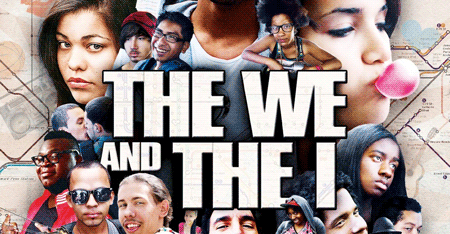
The We and the I (2012)
What Michel Gondry does is take some of the most realistic and unique teenagers from the South Bronx, plants them on a public bus, and creates what is basically his own “The Breakfast Club” with the aimlessness of “Dazed and Confused.” Every character is put on to the bus by circumstance and come to some sense of realization by the end of the ride that will likely have no effect on their personal lives. In the end, every character in “The We and the I” are victims of peer pressure and their home lives, and are just ships passing in to the night. Filled with a cast of young actors that were cast right out of the South Bronx and honed to work with Gondry for their characters, “The We and the I” is a pretty excellent dramedy about the modern teenager that never sugarcoats their dynamics.
Violet & Daisy (2011)
One thing about “Violet & Daisy” that bugged me most, was that it pretends to be about something. When really, it isn’t. We don’t get to meet or know Violet & Daisy long enough to understand their characters or motivation. With the writing and short run time, “Violet & Daisy” portrays the titular duo as two moronic teenagers that happen to be assassins for some kind of gang or mafia organization.
The Wind Rises (Kaze Tachinu) (2013)
“The Wind Rises” is such a beautiful note for Hayao Miyazaki to leave us on. It’s a bittersweet affair as a film and an animated feature, mainly because Miyazaki hasn’t lost his ability to tell stories. He’s the most incredible animator working today, and his retirement is heartbreaking because the man has many more years left to deliver lucid, entertaining and thought provoking stories to his fan base. “The Wind Rises” is not an explosive, fantastical exit for Miyazaki, but a respectful and quiet bow out. One that really does stick with you long after the credits have ended.