
 Catherine Sweeney wants to make her first fiction feature film, a zombie romantic comedy, but to do so; she must find people to finance her and help produce the film. After everyone she meets in the industry is telling her to put a speaking dog in her film as it will sell it like crazy. After first resisting this idea, she eventually gives in, losing her integrity and possibly her sanity in the process. This film about the plight of the filmmaker, particularly of the female horror filmmaker, is written and directed by Kate Shenton whose first feature film this is. The lead she creates here feels like a woman some of have met in the industry, possibly a little bit or a lot of Shenton herself as she has to have seen a lot of what Sweeney sees in her own career.
Mother’s Day (2016)
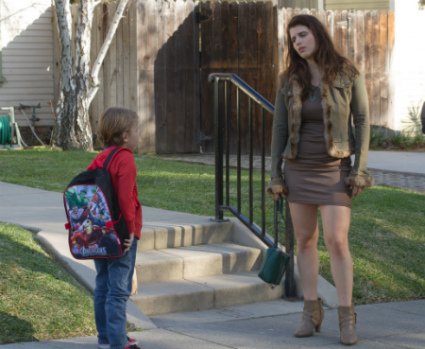 I’ll admit I wish I’d known more about filmmaker Nico Raineau sooner, as he’s managed to deliver some really interesting short films lately. “Mother’s Day” is a complete departure from the bone crunching action drama of “Brix and the Bitch” and it’s a fine drama comedy that I wanted more from. And you know you’re watching a great short film when you could have sat through two hours of the characters barely noticing the time pass. Lauren Schacher (who co-writes with Raineau) plays Mara, a young clubber who awakens in the house of the man she spent the night with one morning.
Bloodrayne (2006)

Look at those… sharp swords…?
Crushing every bit of potential for a great movie under the weight of his own abysmal vision, “Bloodrayne” is yet another video game adaptation that fails to deliver to its audience. “Bloodrayne” doesn’t attempt to appease the intelligent movie-goers, yet Boll aims for the young teenagers and utter dimwits by transforming his adaptation from a horror fantasy about a female heroine in to pure exploitation. Prepare for a ton of blatant nudity and sex that has no relevance to the narrative, or any real point, for that matter. Bloodrayne is yet another leather-clad fetishized Goth whose character emphases is based on her line “I have no family, I am an orphan.”
Dead Body (2015) [Philadelphia Unnamed Film Festival 2016]
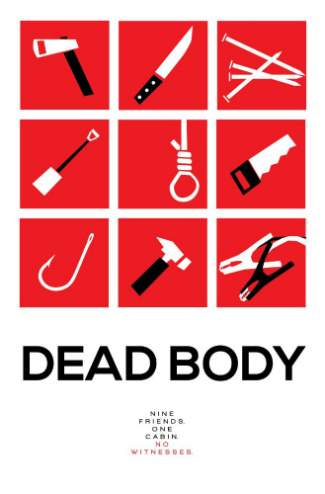 Post-graduation, a group of high school friends meet up at one of the guys’ father’s cabin in the woods. There they hang out, drink, argue, and play a game called Dead Body. As they start dying off one by one, they must figure out who is the real killer and try to survive. Directed by Bobbin Ramsey and written by Ian Bell and Ramon Isao, the film boasts nine teenage characters that are all fairly generic stereotypes of teenagers and how they should act. What makes the film interesting is not as much who they are or how they act but the whodunit angle to the story. Of course red herrings and false red herrings are thrown left and right from the beginning.
Black Christmas (2006)
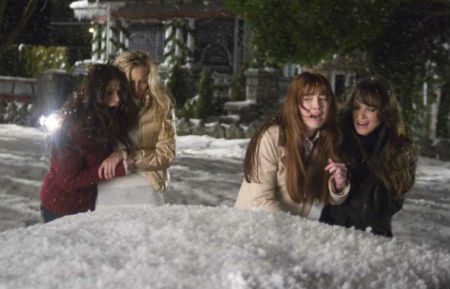 Glenn Morgan’s remake of the Bob Clark 1974 slasher film is one of most preposterous, blatantly awful films I’ve seen in the last two years. As a remake and as its own film, it’s awful. Director-Writer Morgan seems to aim for the exact opposite effect the original established, and does so through often hilarious methods of murders, and vague characterization. All the characters are loud, one-dimensional, and despicable, none of the actors give stand out performances, there’s an awfully predictable plot twist involving our killer, gross out gore for the sake of gross out gore. Of course, Billy uses every element of Christmas as a method of murder for his victims.
Supernatural Horrors Shorts Block Part 1 [Horrible Imaginings Film Festival 2016]
 Mona (Kosovo) (2016)
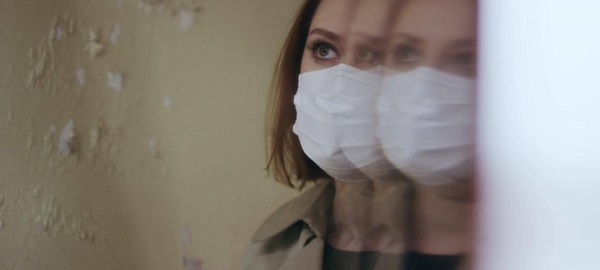
This interpretive dance short by Lorena Sopi is a beautiful haunting piece about a dance reflecting on life and the accident that changed it. This short has fantastic, dreamy lighting and makes good use of Christmas lights and snow fall. The acting is soft and appropriate while the dancing is fascinating to watch.
Bad Blood: The Movie (2016) [Philadelphia Unnamed Film Festival 2016]
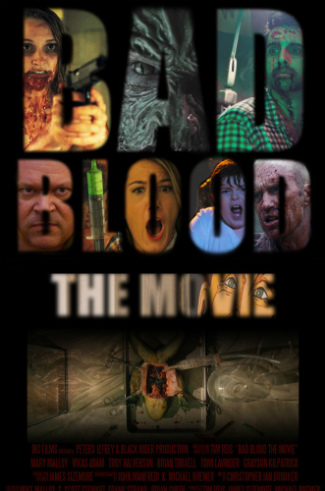 In a small town, a girl gets attacked by something near a gas station. The station attendant saves her life and explains her new situation to her, leaving out crucial details. Writer/director Tim Reis takes the usual werewolf tropes and applies them to an amphibious being which turns things on their heads a bit. His film is semi-serious and has plenty fun in store for fans of slightly over the top horror. His characters are fairly typical but this does not take away from the fun. This is not a film made to make you think a ton or to be philosophical, it’s made for entertainment and it does that very well. The films premise is fairly simple but it works and the characters involved work in an odd group of people forced together.