
 I, for one, quite loved the big screen reboot of “Casper” with Christina Ricci. As a kid I loved its human elements and fun atmosphere. And then they kind of ruined it with a bunch of direct to video sequels and prequels that stunk. “A Spirited Beginning” is one of many that completely copies the formula of the original movie, with performances that are oh so much worse.
Tag Archives: Drama
Ghost Stories (2017) [Blu-Ray]
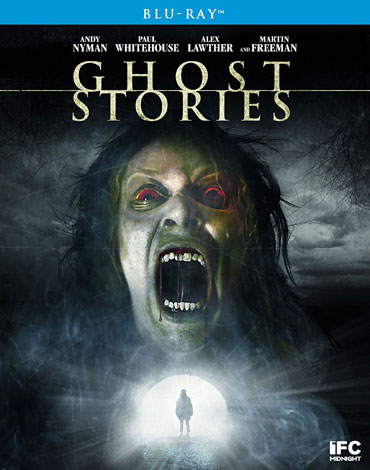 I have to admit that “Ghost Stories” was something of a surprise this year, because I’m shocked so many people liked it, while I just didn’t. Surely, “Ghost Stories” is a beautifully directed film but it builds on a momentum that it can’t deliver. It seems to be leading up to one big bang, and in the end when that big bang finally arrives, it’s more like a trick gun with the flag that reads “Bam!” The message is also pretty heavy handed and feels tacked on. Jeremy Dyson and Andy Nyman’s “Ghost Stories” is a beautifully directed film with excellent cinematography, and brilliant sound design, it’s just all glimmer and no substance.
Malevolent (2018)
 Netflix’s penchant for premiering “original” movies on their platform is typically hit or miss, and I’m glad that “Malevolent” for the most part is a hit. It’s kind of taken a well worn premise but adds a bit of heart to it, thanks to the very good performances, and atmosphere. “Malevolent” has a very subtle sense of terror behind it, and while it does rely on jump scares every now and then, what keeps the film consistently creepy are the quieter moments, the instances when we’re never quite sure what’s going to pop up behind a door. Director Olaf de Fleur has every chance to fall in to the trap of delivering shock after shock, but “Malevolent” ends up as so much more.
Hold the Dark (2018)
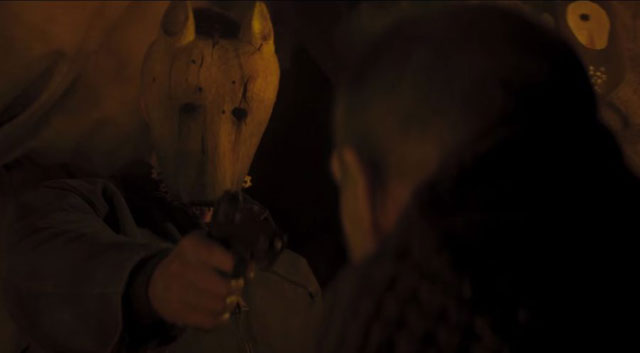 With a Jeremy Saulnier movie there’s always the feeling of hopelessness and existential dread. Saulnier is a man who doesn’t let his characters or his audience off easily, opting for narratives that explore the bleakness of life, and how remorseless human beings can be. With “Blue Ruin” and “Green Room,” Saulnier kept the audience in a choke hold and didn’t relent until the end credits, and he continues that tradition with “Hold The Dark” a flawed but stellar thriller about the darkness in the human soul and how it easily connects with the darkness of the wild. “Hold the Dark” is about the darkest and bleakest film Saulnier has yet to deliver to fans, because his new cinematic offering relies on slow mounting terror and inherent menace.
Ride (2018)
 It’s saying a lot when you finish with a movie and the best thing you can say is “Well, at least it was a short movie.” At seventy six minutes in length, “Ride” is never quite sure what it wants to be. It tries to be this thriller about a villain kind of bringing two people out of their shells with violence, and then other times it feels like some goofy drama with a thriller bent injected in for the sake of broader appeal. Really it just feels like writer and director Jeremy Ungar loves that segment from “Fight Club” with the convenience store worker and decided to extend it in to a feature film.
One Wild Moment (Un moment d’égarement) (2015)
 Two old friends bring their daughters to the coastal house they grew up around. Once there, one of them ends up sleeping with the daughter of the other and things get complicated.
5 Ways “Fear the Walking Dead” Redeemed Itself in Season Four
 “Fear The Walking Dead” is to “The Walking Dead” what “Law & Order: SVU” is to “Law & Order.” It’s another series in the same universe but with its own scenarios and characters. It’s unfortunately taken three years to find its footing, despite its very good ratings. It packed with it a great cast of Cliff Curtis, Kim Dickens, Ruben Blades, as well as a ton of diverse side characters, but still never quite took off as a strong tale about the apocalypse. Now with its soft reboot and a new cast the series is better than ever, in spite of the audience kind of dropping it by the wayside. Regardless, season four was a huge step up for “Fear the Walking Dead” and I hope season five continues down this path with an even better, stronger villain.