
 As Norway prepares for one of its epic black metal festivals, 3 bands prepare to go and play their set there for the first time. The film follows closely Hector from Columbia (leader of the band Luciferian), Sina from the Middle East where playing black metal is a jailable offense, and Kaiadas and his band mates (band Naer Mataron) through their preparation for the festival and what pushes them to play this type of music. The film also explores the history of black metal in Norway, including a visit to the Rockheim museum in Trondheim, interviews and moments with members of bands such as Keep of Kalessin, Mayhem, and a few others. Through seeing the lives of these musicians, what they believe in, and what they want to accomplish, the viewer can get a good idea of what black metal is all about and also learn about its history.
Tag Archives: Music
Country: Portraits of an American Sound (2015)
 This documentary made in 2015 and released in early 2017 explores how the image of country singer is developed through photography and has been since the very start of the music genre. Through interviews with photographers, artists, singers, and musicians, the history of country music is explored and the emphasis on how image can help make or break an artist’s popularity are explained as well as the process behind some memorable photographs done by various photographers, some specializing in country portraits and other specialized in portraits.
Timecode (2016)
 ACADEMY AWARD NOMINEE – I love a good romantic movie and I especially love it when directors approach the genre from a different angle. The reason why “Timecode” might just win an Oscar come February is because the way director Juanjo Giménez approaches the love of two people. The romance is built through technology, but not in the way you’d assume. Director Juanjo Giménez unfolds his short film with very little dialogue and a lot of acting that relies on facial expressions and heavy reactions to events that ensue.
Joe’s Violin (2016)
 ACADEMY AWARD NOMINEE – Kahane Cooperman’s short documentary “Joe’s Violin” is a touching, emotional, and pretty extraordinary portrait of the value of objects, and how music can touch us and bind us together as human beings. Centered on Holocaust survivor Joe Feingold, director Cooperman explores how Joe spent most of his young life struggling to survive in concentration camps. Despite all logic indicating that he bring along bare necessities like food or clothing, Joe kept his beloved violin with him throughout his life. A now 91 year old Joe donates his violin to a Bronx music school, and he reflects on his life as young Brianna Perez prepares to perform with it.
The 5 Choice Indies of 2016
 Cinema Crazed prides itself in covering as many independent films as possible every year. We’re all sent a ton of short films and feature length films all year through email, and we do our best to cover every single one within a twelve month period. We all watched a myriad independent titles in 2016, some terrible, many quite good, and I narrowed my favorites down to five choices.
This list is no reflection on the other indie films I loved in 2016, this is merely a list of movies that really stuck out with me. Feel free to visit the A+ Indie section for many more independent movies Cinema Crazed loved.
And as always, if you want to see these movies, please buy them legally, where ever available. Buying them helps support the companies, and these filmmakers, and we just may be able to see even more movies from these talented artists somewhere down the road.
The Song Remains the Same (1976)
 Joe Massot and Peter Clifton’s excellent “The Song Remains the Same” is one of the best and most dynamic looks at Led Zeppelin performing for a massive audience. The directors able to grab a lot of their synergy by filming many of their solos and brilliant iterations of their classic songs with dynamic camera angles and strobing colors of red and stark blue. Though I’m not a fan of “No Quarter,” their rendition of it here is incredible, especially considering the way the performance as a whole is lit, allowing for a unique fever dream kind of visual that feels like Ken Russell dipped his fingers in the direction here and there.
Woodstock: 3 Days of Peace & Music (1970)
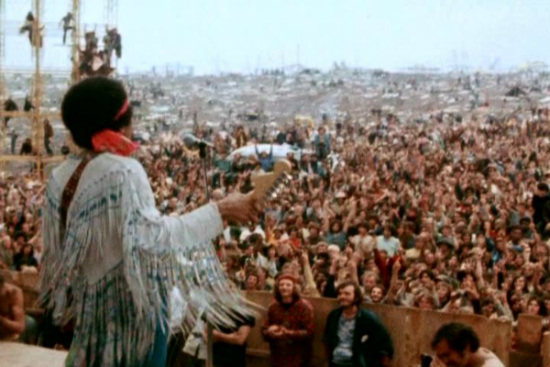 It was the end of an era, the literal end of a movement, and the end of what many would know as “Woodstock.” We never did see the Woodstock here in further decades, did we? We instead saw much more corporate interference, much more MTV generation, and in the last festival, ultimate destruction. At least we have what is one of the most riveting and unique concert movies ever filmed. It’s a chronicle of a generation thought of ancient now, and looked back on mostly with fondness, as a decade where there was hope for peace, and hope for a better tomorrow. It was before America gave in to the seventies, where it became all bout decadence and hedonism.