
 In a law office building with raising tensions and a myriad of issues, Derek Cho is wrongfully fired as a virus takes hold of the workers making them lose all inhibitions and moral barriers. During the CDC imposed quarantine, Cho and a soon to be homeless homeowner climb up the floors to get justice.
68 Kill (2017) [Fantasia International Film Festival 2017]
 A man living in an abusive relationship is put through the ringer and finds his inner strength to survive and move on following a wild and crazy night and day.
Based on the novel by Bryan Smith, written and directed by Trent Haaga, 68 Kill is an insane ride filled by crazy, lunatic characters. The whole thing seems completely nuts and ludicrous but it works. Somehow, Haaga took all the most ridiculous characters and situations and makes them work in a sort of white-trash opera. Here all the characters do dumb things for dumb reasons and they almost all are assholes and lunatics, yet the film is crazy fun to watch and has a story that moves at a good, fast pace and leads to a satisfactory ending. Haaga took all of the most unlikely elements to make one of those film that should not work yet does so beautifully.
M.F.A. (2017) [Fantasia International Film Festival]
 An art student has a switch in her painting style and inspiration following the accidental death of her rapist. Following this, she paints more and more inspired pieces and is inspired to do something about other college rapists.
You Only Live Once (Sólo se vive una vez) (2017) [Fantasia International Film Festival 2017]
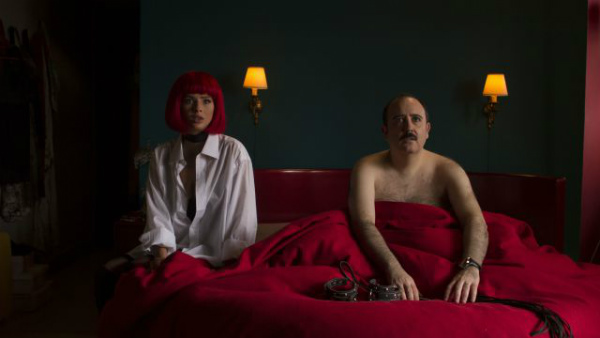 After witnessing a crime, a con man goes on the run and hides as an orthodox Jew, bringing his problems to an unsuspecting community.
Based on a story by Sergio Esquenazi, written by Esquenazi and Axel Kuschevatzky, and directed by Federico Cueva, You Only Live Once is one of those completely insane action comedy films that should not work but does. The film is filled with a series of crazy ideas and turns into a partial comedy of error while also being a good thriller-ish comedy. The story takes odd turn after odd turn until the very last frame to say the least. Oddly enough, the entire insanity works, which shows good writing and talented directing. Of course, a few jokes or attempts at jokes do fall flat and a few are offensive, but the film has so much going on that it’s easy to be entertained by it.
The Short Films of Izzy Lee [Fantasia International Film Festival 2017]
 Izzy Lee is a talented short filmmaker who some of us cannot wait to see a feature film from. Her shorts have been many and has one of them, For a Good Time Call…, played Fantasia International Film Festival this year paired with the feature Dead Man Tells His Own Tale. As her work should, more like needs to, be seen by all horror fans, here is a rundown of some of her recent shorts.
It Stains the Sand Red (2017)
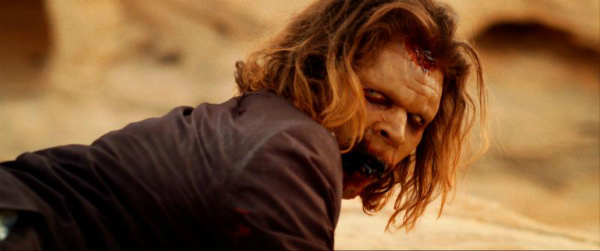 Colin Minihan’s “It Stains the Sand Red” is a movie that only has about an hour’s worth of story for its premise. Don’t get me wrong, it’s a neat and interesting idea for a zombie movie, but one that runs out of steam by the time the second act is introduced. You can literally see the wheels falling off mid-way, and what should have been the end, feels a lot like a ton of filler that belongs to another movie altogether. As with all zombie movies from indie filmmakers, there are a ton of George Romero nods and winks, and they’re a mixed bag. Some of them are neat, like the opening of the film, which is an homage to the opening of “Night,” while some induce eye rolls a la the newspaper with the headline “The Dead Walk” dangling from a police vehicle.
Better Watch Out (2017) [Fantasia International Film Festival 2017]
 Chris Peckover’s “Better Watch Out” is absolutely nothing like I thought it’d be. That might be a criticism by some when the movie makes its way to VOD this year, but walking in to it blind, I was stunned to find something different but still rather entertaining. “Better Watch Out” just might end up being a Christmas classic somewhere down the road, as it’s a pitch black comedy, and unusual horror thriller that derives great pleasure in its sheer sadism. I’m not usually a fan of horror movies filled with such a mean streak, but “Better Watch Out” is shockingly clever, and very slick in how it builds up its villain slowly and makes the menace in the movie more and more terrifying.