
 A Night watchman finds blood and camera equipment in an abandoned property on a land he was hired to patrol by developers. He turns these in to the local police who go through the hours of recorded evidence. On these, they find a group of campers being terrorized and picked off one by one.
The Love Witch (2016) [Fantasia International Film Festival 2016]
 A witch uses love spells to get men enamored with her. Things go well at first, until the men become too attached and overly needy, at which point the love witch has to find a way to move on.
The Inerasable (2015) [Fantasia International Film Festival 2016]
 A horror writer works on a serial using fan letters about paranormal activity in their lives. After receiving a letter about a haunting that rings a bell, she teams up with the student who sent it and they work to uncover where all the paranormal happenings in the area come from.

Red Christmas (2016) [Fantasia International Film Festival 2016]
 A mother wants to have the best Christmas ever with her family. During the traditional day, tensions come to a boiling point when a stranger shows up at their door and wants to kill them all. This sets the mother on a warpath to protect her brood.
This Australian horror film is written and directed by Craig Anderson who starts by building a family with lots of issues and strife between its members. Most of their issues are the same as a lot of families while others are more unique. This family cares for each other against these odds and when all hell breaks loose, their bonds are tested. The writing here develops this family well and then brings some original kills to the table but the characters are not the most likable so it’s hard to root for them. This is all well directed for most of the film so the few issues seen here and there are not entirely awful, but the film lacks a bit in fun. Sadly, the killer’s motivation feels a bit preachy at times, making his condition a bit of a case of one too many things in the story. The way the killer is portrayed is unfortunately a bit grating and not really menacing.
The cast does ok with the material but it’s hard to tell if their characters were written that way or if they were directed to do this or if the way they act leads to this, but almost all the characters come off as unlikable and just disagreeable, selfish people. From the looks of things, it seems to be a combination of the three with other factors added to those. Knowing that Dee Wallace can play mother so well, her performance here is not as expected which may be due to putting too much hope on her. She is good, but some angles of her character are so dislikable, it’s hard to look over those. The rest of the cast being less familiar, they did not have as much expectations put on them, yes they still come off as dislikable to despicable as well.
As Red Christmas is a slasher, the kills and their effects are of high importance. The kills here are good with some original ones. However, the effects are decent at best with some pieces being not so good to just bad. The make-up and prosthetics on the killer look a bit like Toxie, with a low budget look and even somewhat of a family resemblance. Also an odd choice is how the kill set pieces are shot. In some cases, the lighting makes it hard to see what is going; on while in other cases, the shaky cam is nauseating, making the viewer look away and miss out on the scene.
This film has a lot of potential, but does not go for it. It has good ideas for kills with effect that are just not good enough to support those ideas. The characters are not people the viewers can get attached to. The killer is one of those that could have been good but his background and reason to kill make him hard to get into or behind. This reviewer wanted to love this as the last few years have given us so many good holiday themed horror movies, but even after giving Red Christmas as much slack as possible, it’s not a movie that can be considered good. A few good scenes here and there do not a great movie make.
Fantasia International Film Festival ran from July 14th until August 3rd, 2016 and will be back in the summer of 2017.
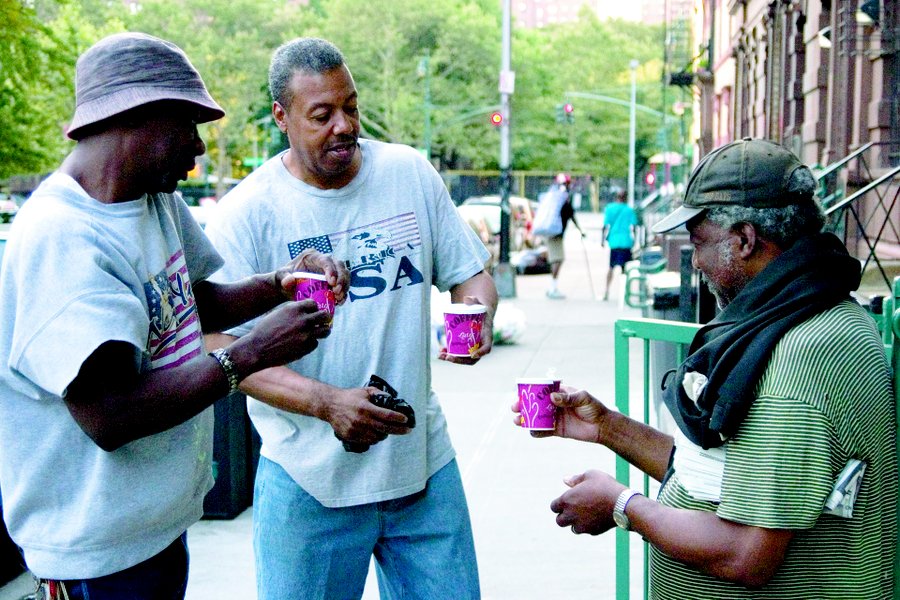
Changing Face of Harlem (2016)
Among New York City’s neighborhoods, Harlem has seen the most dramatic highs and harrowing lows: it was a cultural epicenter during the 1920s and a beacon for African-Americans seeking an escape from the Jim Crow South, but economic deprivations during the Great Depression and acute social inequalities in the post-World War II years saw the community’s standard of living rapidly decline.
L’Élan (2015) [Fantasia International Film Festival 2016]
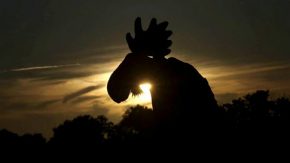
 In a small French village arrives an elk (élan in French) that walks on two legs, wears a trench coat, and communicates telepathically. Everyone he meets seems to accept him as if his presence is completely normal, except for a UFO fanatic who wants to meet and analyze him.
Director Etienne Labroue of Les Guignols de l’Info co-wrote L’Élan with Marc Bruckert and they created a marvelous fable here of a being on a quest to belong, finding a family ready to take him in and protect him. The story here is touching, funny, and sometimes sad. Bruckert and Labroue show a lot of talent in this sweet script that reminds the viewers of early Jean-Pierre Jeunet crossed with Quentin Dupieux. As this is Etienne Labroue’s first film, it shows a lot of promise and directorial talent.
The characters built by Labroue and Bruckert are a little cartoon-y but here it works given the story and the settings. The cast hired to bring those characters to life go for it with gusto and an impeccable sense of timing. The whole cast does this so well, it’s difficult to pick a stand-out. Aurelia Petit, Délia Espinat-Dief, Olivier Broche, Cyprien Dugas, et al deserve major kudos for fearlessly bringing their parts to life and not being afraid of looking a bit silly on screen. It all works in the end and brings a village of kooks to life for our entertainment. The narration is done in a way similar to Amélie but with a bit of a nuttier story which is told in a childhood story manner.
The way the film settings are and the way its shot ring out the ludique side of the story. Everyone and everything is brought together in a way that creates a fairytale-like atmosphere. The design of the élan himself is cartoonish with a touch of giant stuffed animal to the head’s look. His whole being is a bit disproportionate from itself, giving him a sweet disposition and style even though he could easily have been a bad guy. L’Élan is designed in a way to remind the viewers of childhood toys and TV shows, while his attitude and mannerism are quite child-like. He brings an outward innocence and allows the viewer to connect on a different level with the story through nostalgia and comfort.
L’Èlan is an entertaining comedy with a lot to offer. It takes a crazy, absurd idea and goes with it fully, giving the viewers a childhood fairytale but grown-ups. It’s almost innocent but not quite. It brings back a warm feeling while also reminding everyone of their need to belong.
Fantasia International Film Festival ran from July 14th until August 3rd, 2016 and will be back in the summer of 2017.
Embers (2015) [Fantasia International Film Festival 2016]
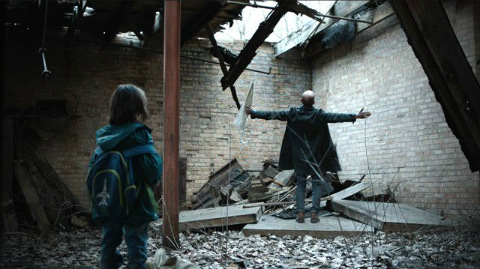 In the not too distant future, most of the population has been affected by a neurological disease robbing them of their memories. While a few people try to retain their minds and stay healthy, the rest of the population is trying to remember and reconnect.
Director Claire Carré co-wrote Embers with Charles Spano and they create a dystopian future where the majority of the population, what’s left of it anyways, has no memories but can function as adults. This leads to some scenes reminiscent of what it’s like to deal with someone with Alzheimer’s disease or dementia. These people still care about others but they simply do not remember each other or who they are themselves. This could have led to a film where it’s difficult to care about the characters or overly schmaltzy, but that is not the case here. Carré and Spano’s attention to detail and to creating humans and not simply characters brings forth people that are highly flawed yet trying to connect with each other which lead the audience to connect with them.
As the characters do not remember who they are, the two leads are credited as Guy and Girl. In these roles are Jason Ritter and Iva Gocheva, both of whom give their characters’ memory loss and loss of self a level of dignity as they search for who they are. Ritter shines in particular as a man lost while trying to help this girl he feels close to and wakes up near every day, not knowing if they are together or not. His performance shows care and love while being lost and fighting the despair of losing one’s mind. His performance steals most of the scenes he is in. Playing opposite Ritter in most of his scenes is Iva Gocheva who plays well with him, their performances complement each other. The ensemble of the cast does also quite well, but these two stand out the most.
The production design by Chelsea Oliver and art direction by Matthew Lackit and Wojciech Zogala create a future that is both dystopian and realistic. The environment in which most of the population lives is counter-productive to them figuring themselves out, in contrast, the rich, unaffected people’s places are filled with technology yet colder than the outside world. The dichotomy of both worlds is carefully calculated and built. These set or settings bring a lot to the story and the characters.
All of this is put together to create a film that shows a potential future for Earth, one that is not perfect or even all that good, but the good of people shines through. The representation of the mystery disease feels like something that could happen if humans do not kill each other first. The film makes its viewers think and does not take them for idiots. Some of the mysteries are never explained. It’s simply a slice of life with no explanation how we got there or of what comes after.
Fantasia International Film Festival ran from July 14th until August 3rd, 2016 and will be back in the summer of 2017.