
 Has it been twenty years already? Time just flies. I am not afraid to admit to you that once upon a time I was a big Spice Girls fan. What do you expect? I was just going in to my teens, my hormones were firing off at all pistols, and here were five incredibly beautiful and sexy British women singing entertaining and fun pop songs. I was the victim being led by sirens for a few years there.
Tag Archives: Music
You Have to See This! Roller Boogie (1979)
It’s really charming how much confidence UA Pictures seems to place on the fad of roller disco. I’m assuming what with the implentation of the disco scene for John Badham’s “Saturday Night Fever,” I guess someone naturally assumed UA Pictures could market on that success by featuring a coming of age drama in the same vein but with roller disco. The problem with “Roller Boogie,” though is that while it aspires for bigger things, the film falls squarely in the middle of mediocrity. “Roller Boogie” is not a bad film, nor is it a terribly cheesy one like “Breakin’.” It’s merely a depiction of a dance fad that didn’t have a real staying power, and the gimmick isn’t used to tell a very compeling tale when all is said and done.
Not even Mark Lester could breathe a sense of life or energy behind his film, as it suffers from too much plot and a narrative that’s much too formulaic for a film with the pretense of originality. That’s a shame since Linda Blair is a very solid actress who can pull off the girl next door protagonist whenever she really wants to. Considering the film is more for teens, Blair never really sheds her clothing, but that doesn’t stop her from running around in tight tank tops, hot pants, and short skirts. Blair’s own sex appeal drowns out anything else the movie tries to push in terms of character or sub-plot, and she only comes out ahead slightly above everyone else. Blair is Terry, a young privileged teenager who is on her way to college.
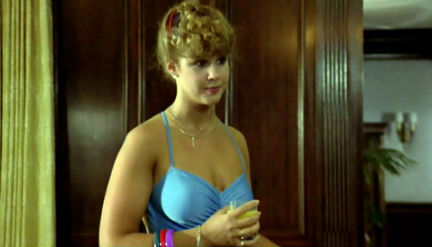 She is a gifted classical musician whose posh parents have gotten her in to an upscale college but, woe is her, she wants to be a roller disco dancer. Apparently there’s a massive population of roller disco dancers in California and on the boardwalk. They travel in packs and perform tricks for tourists while riding to their every day jobs, and Terry wants anxiously to be a part of it all. Bobby James is a fast talking hustler who is also the best roller disco dancer of them all and Terry hires him to teach her all of the best dance moves and skills.
Meanwhile, Terry wants to garner her affection and become her boyfriend while teaching her how to master dance moves on roller skates. The writers also feature a sub-plot involving Bobby’s group of friends which never has a major impact on the overall resolution of the film.
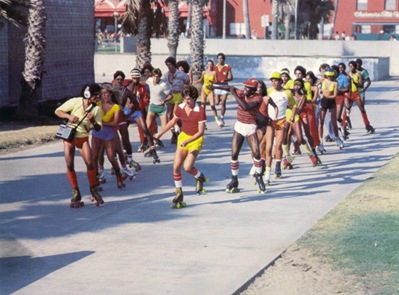 The main crux of the movie is that the roller disco club Jammers is being strong armed out of business by local thugs, and the owner of the club has decided to retire. The roller disco crew want to keep it opened, though, and decide to band together to help the owner. Because disco is forever, baby! Most of the film is centered around the relationship between Terry and Bobby, and how Terry is so not your normal rich girl. She loves him, then hates him, then loves him, and then loves him more because he wants her for her body and not her money.
“Roller Boogie” wouldn’t be so bad if it managed to dig up an interesting storyline and wasn’t so concerned with being more of a safe drama comedy, with dancers suddenly banding together to save their favorite hang out and battling evil land owners. It’s such a dull premise considering there could have been so much more developed around a fascinating form of dance. Look at “Roll Bounce,” a movie about roller disco that happens to be pretty fun since it draws an interesting conflict and channels the vibe of the seventies so much better.
 Here it’s less about the dancing and more about Terry rebelling against her upper crest wealth family. Which contradicts the tone as a whole since Lester spends a lot of time with montages of the roller disco dancers doing what they do best. For a film a little under two hours, if director Lester didn’t spend so much time filming various dancers flipping and rolling around the film would be much more compact and easier to endure. Lester has a clear idea of how to spotlight the unique dance form, but the writers have absolutely nothing to do with it. Terry wants to rebel, then she falls for her trainer, then she teams up with the other dancers to save her favorite club and there’s a very rushed climactic dance competition. Of course Terry and Bobby win the contest easily, since the lack of minorities in this movie is more frightenin than “Hell Night,” but that’s a whole other topic altogether. If anything, at least “Roller Boogie” sports a neat disco soundtrack, including a prominent playing of “Boogie Wonderland.”
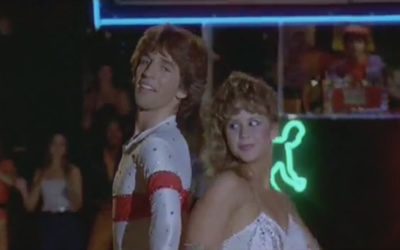 Plus there’s Lester’s nigh endless footage of dancers rolling around and flipping begins to feel like a documentary, screeching any attempt at momentum with the narrative to a grinding halt. With director Mark L. Lester directing, and Blair starring, you assume we’d have an instant classic on our hands, but “Roller Boogie” isn’t anything remotely special. It’s so plainly bland and forgettable, I’d just about forgotten everything I’d seen when the credits rolled. The movie is barely at the level of “Xanadu” concerning cheese and kitsch value, which doesn’t bode well for star Blair who likely hoped this would skyrocket her as a bonafide leading lady for more youth oriented films.
It’s too bad, too, considering Blair is a solid actress with a girl next door appeal that makes her worth watching in other kinds of films that aren’t horror oriented. And let’s face it, the only reason to watch “Roller Boogie” is because of Blair who looks insanely sexy during her performance and is pretty much off the charts in hotness.
Mark L. Lester’s goofy attempt to market on the Roller Disco craze is a very non-threatening and silly movie whose main crime is being so utterly forgettable. It’s not one of the worst movies ever made, but it also never achieves heights of cult infamy like “Xanadu” and “Staying Alive.” It’s just a brutally mediocre and middling sport drama comedy that you’ll forget about, even in spite of the incredibly vivacious Lindar Blair starring.

Heavy Metal Parking Lot (1986)

“Madonna can go to hell as far as I’m concerned! She’s a dick!”
If aliens ever came down to Earth and wanted to know what the eighties were like, they could look no further than the time capsule that is “Heavy Metal Parking Lot.” It is, as many have described it, the viral video before viral videos existed. I’d love to see a documentary about this film some day, or perhaps an actual feature made around the events that occur in the fifteen minute documentary. It’s a hilarious and often absurd look at a certain time period where everyone wore mullets, walked around without shirts, bragged about doing drugs, and women were often very proud to admit they wanted to “fuck” certain band members’ “brains out.”
We Like It Like That: The Story of Latin Boogaloo (2016)
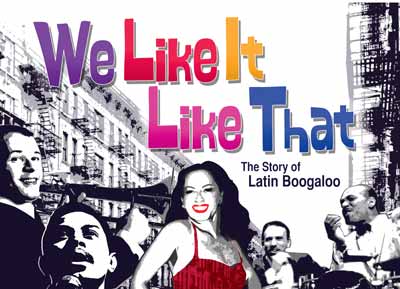
Director Matthew Ramirez Warren’s “We Like it Like That” is a masterpiece of musical cinema. It’s a long overdue exploration at the beginning and unfortunate ending of Latin Boogaloo, a musical hybrid that helped to shape a generation and has also lived on in the hearts of younger generations. It’s clear by Ramirez Warren’s enthusiastic direction and approach that he love Latin Boogaloo, and he instills within the subject a unique and bold energy that will educate eclectic music lovers on one of the major influences in modern latin influenced pop and hip hop. As a guy who grew up in the Bronx, I spent many parties sitting alongside relatives that grew up with Boogaloo, and it was always a guarantee that music would be played before the night was up.
Beat Street (1984)
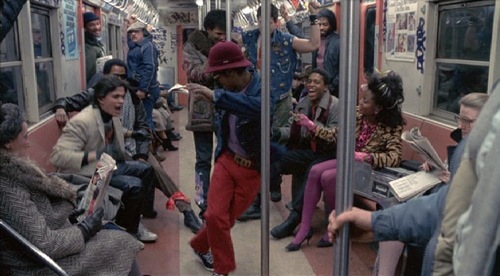
I liken “Beat Street” to “Saturday Night Fever” in where both films, set in the Bronx, feature very talented youths with troubled home lives trying to fulfill their promise and chase the American dream. While “Beat Street” is nowhere near as timeless as the former film, director Stan Lathan’s drama is an entertaining, if exaggerated look at life in the Bronx, and the culture that would eventually die with the decade. The film produced by Harry Belafonte doesn’t have the same committee constructed, consumer pandering aesthetic that the “Step Up” movies do. But for all intents and purposes it tend to shine the light on actual minorities living in the Bronx, some of whom can barely make rent, but still drive themselves on their love for their work.
Joe Bob Briggs: Dead in Concert (1985)

“Dead in Concert” is one of the rare comedy specials starring John Bloom as his iconic character Joe Bob Briggs. Briggs himself is a politically incorrect character who revels in embracing stereotypes for the purpose of ironically mocking them. He mocks religion, race, gender, politics, and even speaks about growing up in a small town where dirt was a way of life. Briggs is not one to shy away from being offensive and has a good time making his audience squirm and laugh at some of the most inappropriate jokes. In one instance he royally pisses of an audience member who gazes at him angrily.
Rest in Peace, David Bowie
Thanks for the Music, David. Rock on Ziggy Stardust. May you rest in peace.