post

Oklahoma! (1955)

The decision to hire Fred Zinnemann as the director of the film version of the Rodgers & Hammerstein musical “Oklahoma!” was peculiar – the director never helmed a musical before and was best known for his intensely riveting dramas such as “The Search,” “The Men,” “High Noon,” “The Member of the Wedding” and the Oscar-winning “From Here to Eternity.” One would imagine that bringing in a veteran musical director such as Stanley Donen or Vincente Minnelli would seem more logical for a vehicle like “Oklahoma!” – this would seem to be the job for an expert in the light and breezy, not in doom and gloom.

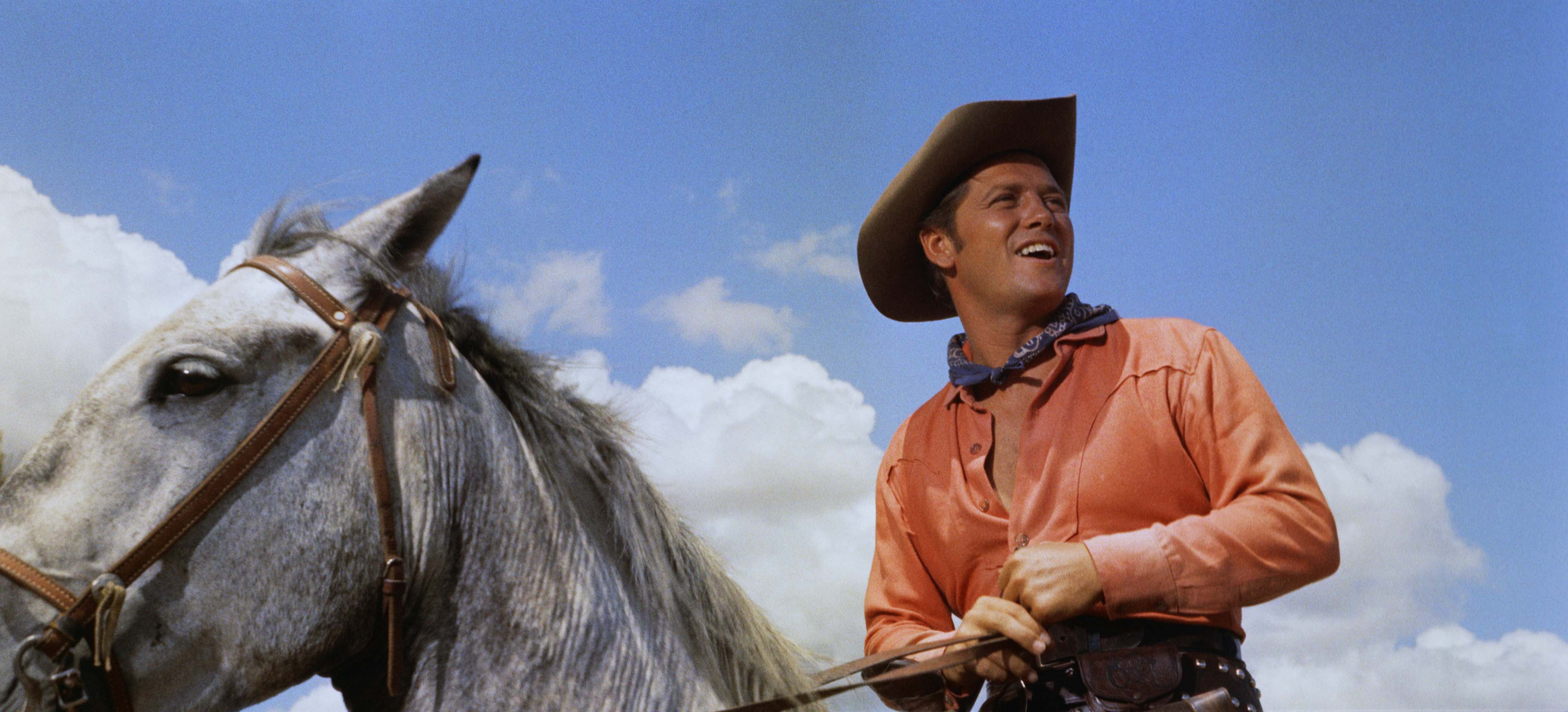
But Zinnemann’s predilection for the dramatic gave the frothy “Oklahoma!” a sense of complex gravitas that was absent from other mid-1950s musicals – not to mention the original Broadway production – and when viewing it today, it seems more modern when many of the other musicals of the decade seem badly dated. Part of this was achieved in the off-beat casting of Rod Steiger (who transformed the character Jud Fry from a stock villain into an emotionally tortured untouchable) and film noir diva Gloria Grahame (who played the comic relief Ado Annie without a trace of wink-and-nudge farce, thus making her character’s sexual cluelessness more humorously invigorating). Zinnemann might have taken the film into even darker territory, as witnessed in his unusual eagerness to audition non-musical young Method actors Paul Newman and James Dean for the Curly role. But under Zinnemann’s direction, Gordon MacRae, a usually bland musical-comedy performer, tapped into hitherto unknown dramatic abilities as he plumbed Curly to find an insouciant malevolence that clouded the character’s personality and motivation.

Still, “Oklahoma!” is a musical and not a melodrama, and Zinnemann responded to the material with an imaginative style that took full advantage of the widescreen format (the film was simultaneously filmed in the Todd-AO and CinemaScope processes) and vibrant rural locations (in Arizona, as Oklahoma proved oddly incompatible for the production). The classic score was wonderfully enhanced with boldly conceived outdoor sequences – “Oh, What a Beautiful Mornin’” and “The Surrey with the Fringe on Top” are playfully visualized while the complicated “Kansas City” dance number was staged with a large ensemble in an open air train depot. Zinnemann also provided expert framing for Agnes de Mille’s groundbreaking dream ballet, which offered an astonishing avant-garde sequence laced with psychosexual menace.

It also helped that the film brought in reliable performers to inhabit the broad roles with unapologetic hamming – Eddie Albert’s oleaginous Persian peddler, Gene Nelson as the handsome but dim cowboy and the sublime Charlotte Greenwood as the earthy Aunt Eller offer a jolly presence to keep Zinnemann’s edgier elements in check, creating the cinematic equivalent of a yin-yang balance. The biggest surprise was the film’s greatest gamble: putting unknown Shirley Jones in the central role of Laurey. The young actress was not lacking in photogenic charms and a fine voice, and Zinnemann carefully guided her through the role’s light comedy and difficult emotional turns, which resulted in one of the most startlingly effective film debuts.
Howard the Duck (1986)

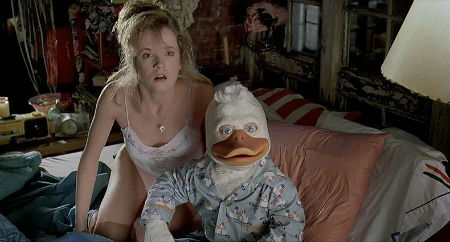
howard-the-duckLong before Marvel Cinematic Universes and James Gunn, there was the bastard child of the Marvel Universe “Howard the Duck.” Adapted from the comics during the decade of “ET” and other assorted attempts at cuddly cinematic creatures, “Howard the Duck” takes a dive at some of the good old “ET” buck, while also presenting itself as the anti-“ET” of a sort. “Howard the Duck” is a childhood favorite of mine; it’s one I watched over and over whenever it aired in all of its edited form on network television. There was just something about “Howard the Duck” that I loved. Whether it was the surreal nature, the actual talking duck from another planet, or Lea Thompson being devilishly sexy once again in a fantasy film, I loved “Howard the Duck.”

Continue reading

What The Fantasia?! 5 WTF Films from Fantasia’s International Film Festival

Fantasia International Film Festival is renowned for showcasing some of the best and weirdest of the film world.  As someone who started going their second year and started seriously going for multiple screenings per week in 1999, some of the weird films I’ve seen cannot be unseen.  So, just to bring some to attention and have a bit of fun, here are five of the most WTF films I’ve seen.

Continue reading

Streets of Fire (1984)

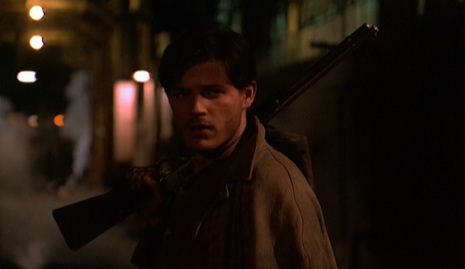
streetsoffireIt’s difficult to explain “Streets of Fire” to anyone and make it sound coherent. Walter Hill’s action film has just about everything, and ends up creating one of the most vivid and exciting amalgams of genres and themes I’ve ever seen. “Streets of Fire” is a film you just have to sit down, shut up, and experience. It’s a post depression, mid-fifties, action, crime thriller and romance noir with a rock and roll and soul beat. See? I can’t sum this movie up in one whole sentence, and I’m not going to try to. I’m ashamed I took so many years getting around to watching “Streets of Fire,” but goddamn I’m very glad that I did.

Continue reading

post

Bump in the Night: The Complete Series (DVD)

bumpRejoice “Bump in the Night” fans, Mill Creek has re-released the entire series of your beloved stop motion animated series on DVD. Every single episode is included in the new release, including the once rare episodes like “Night of the Living Bread” and “Twas the Night Before Bumpy.” Every single frame is included from every episode, so you can breathe easily, and pop in your DVD’s to celebrate one of the many misunderstood animated gems of the nineties.

Continue reading

post

An American Tail: Mystery of the Night Monster (2000)

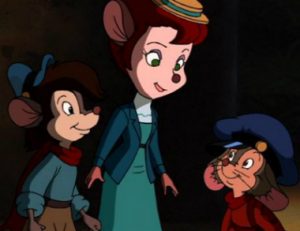
AnAmericanTail-4After doing research online I learned that these clumsy sequels to “An American Tail” are actually intended to be in-betweenquels. “Fievel Goes West” is, as many fans have debated, the final film in the chronological timeline. That doesn’t make much sense since the character Tony is nowhere to be found in “Fievel Goes West,” and the Mousekewitz’s only have two children, rather than two and a half. In either case, it’s probably best not to think about it, and just accept these movies however you want to.

Continue reading

post

An American Tail: Treasure of Manhattan Island (1998)

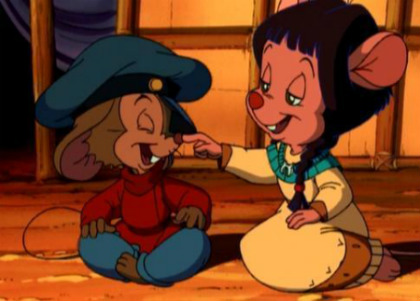
AnAmericanTail-3The globe trotting Mousekewitz family find themselves now living in Manhattan again, their new home after New York, and the West apparently didn’t quite work out for them. This new movie is set directly after the short lived animated series on television, so this is kind of a new continuity rather than the one after “Fievel Goes West.” I assume to understand why the Mousekewitz’s are back in New York, you’d have to have seen the series, but the least they could have done was inject a few lines to help the audience catch up.

Continue reading