All Girls Weekend (2016)

allgirlsweekend“All Girls Weekend” isn’t anything that the cool poster promises. It’s an ensemble, is set in winter, and is not really a slasher movie. Lou Simon’s horror movie is actually a film in the vein of “The Descent” and “The Ruins” where a group of young female hikers going away together for a fun weekend end up getting lost in the middle of the woods. Before long their hike turns in to an endless trip in to insanity where the woods are seemingly sentient, and hell bent on driving them mad. What keeps “All Girls Weekend” lackluster and the aforementioned movies white knuckled horror entries is simple: The characters.

While the all female cast seem to do their damndest to pull in great turns (and many of them look like they can potentially dominate horror down the road), the concept of being lost in the woods and going hungry and thirsty never seems to dawn on them. At all. When another of their friends is stabbed in the leg with a branch and is seemingly so wounded she can barely breathe, the friends do nothing but apathetically mock one another. When she dies, it has no punch dramatically and adds nothing. After leaving her corpse behind one of the characters literally asks aloud “Aren’t we all upset?” to which the other replies, “Of course. God I’m thirsty. Anyone have any water?”

Compare that with the devastating claustrophobia and the delirium of running around in a dark cave in “The Descent” and the difference is apparent. What should have been a mind fuck about falling victim to a sentient natural landscape comes off as a mere nuisance to the characters most times. By the time they realize they’re in deep dung, it’s too little, too late. It’s a shame since I really enjoyed Simon’s previous horror outing “HazMat,” and I love her idea of filling these genre entries with more minority characters of great importance to the narrative. Sadly, “All Girls Weekend” is filled with truly vapid and unlikable protagonists, feels stretched thin, and is under developed.

Available on VOD.

post

The Unseen (2016) [Fantasia International Film Festival 2016]

UNSEENIn a small Northern Canadian town, a man who left his family behind to protect them receives a call that his daughter needs him.  Risking everything and possibly exposing the fact that he is becoming invisible, Bob Langmore takes a job for the local drug dealer to be able to see his daughter and help as best he can.

The Unseen is writer/director Geoff Redknap’s first feature as such, having made himself an enviable career in special effects on projects like The Cabin in the Woods, Supernatural, and Deadpool.  His background in effects shows in how Bob’s progressive invisibility is brought up and showcased.  Rednap not only does this really well, but he also creates believable characters and situations within an “invisible man” scenario.  The broken family dynamic feels real and human while their reactions and interactions blending naturally with the situations that are anything but natural.  The story does take its time getting started, making the first act seem long but once it does get going, the pace changes and the story makes the wait worth it.

The lead actor chosen for the part of Bob Langmore is very important and so Aden Young was carefully chosen and does great with the conflicted character who want to stay hidden while making sure his daughter is safe.  Viewers can see his struggle between self-protection and his need to protect his child.  Young’s performance shows this inner conflict and worry, as well as care and determination.  Supporting him as Bob’s daughter Eva is Julia Sara Stone whose expressive doe eyes lend themselves perfectly to the part of a girl finding herself while finding out her father’s secrets.  Another good performance in the film is Camille Sullivan as Eva’s mother and Bob’s ex, Darlene.  Her performance of as a caring mother feels genuine and adds to the family dynamic.

These three, with the help from the support cast, bring the story to life in a realistic manner, as much as can be. The effects, as can be expected from a special effects artist turned film writer and director, are great.  They are not only CGI as one would expect lately, but a mix of traditional effects, animatronics, and visual effects.  This paired with the original take on a man who is becoming invisible creates a striking look for the titular “unseen” man.  The way this look is created and how it evolves is a new take on the subject and very interesting.  Yes, it’s gross at times, but it’s absolutely worth it.  The look is unique and interesting; the way it evolves keeps the attention.  The crew behind this does a fantastic job.

Framing the story and its effects is the cinematography by Stephen Maier which showcases the Canadian North, almost creating a new character out of the locations and making some scenes feel as cold as the weather.  To go with these images, director Rednap tasked Harlow MacFarlane with composing the music for the score which mixes typical score music and industrial sounds that fit the settings perfectly as it sounds organic in the woodmill environment and in the rest of the film.  The songs chosen to add to the score are sometimes haunting, beautiful, and well chosen.  Only one song felt out of place, but the rest of the songs quickly made up for it.

The Unseen is an interesting take on the invisible man trope, showing a new way for the invisibility to take hold as well as a new source for it.  The acting is very good and the story works on multiple levels.  It’s a fairly serious horror drama but not stuffy or heavy per sey.  It explores an original side to the often seen story of a struggling broken family amidst the invisible man aspects.

Fantasia International Film Festival runs from July 14th to August 3rd, 2016.

post

Dongju: The Portrait of a Poet (2016) [New York Asian Film Festival 2016]

dongjuIn 1940s Korea, Japanese colonialists were banning Korea culture and the use of the Korean language in an effort to unify their territories and become a stronger world power.  In this struggle, a young man named Yun Dongju starts writing poems in Korean while attempting to survive the assimilation of his people, reluctantly becoming a fighter in a battle to preserve Korea’s identity.

This historical film was written by Yeon-Shick Shin and directed by a new master of the genre, Joon-ik Lee.  They create here a subtle and fairly easy to understand representation of what is considered a hard period in Korea through the eyes of a talented poet.  The film takes its time showing the young life of Dongju as well as the societal shift that the Japanese colonizing brought.  The poems read on black and white images of Korea are personal and real, they create a center for the story, an emotional anchor.  These were carefully chosen amongst Dongju’s work to best suit the film and they bring a solemnity to the proceedings.

The casting for this film is pivotal as so much rests on how the lead of Dongju is interpreted.  Kang Ha-Neul takes this character and develops him into a fully fleshed out human being, giving a voice for his soft yet emotional poems.  He shows a wide range of emotions with subtle variations, giving life to this man whose story is mainly untold, especially to Western audiences.  Supporting this performance are Jeong-min Park as Dongju’s cousin Song Monggyu who is someone who likes to stir the pot and possibly cause trouble for himself and those around him.

His performance is less subdued and a bit more in your face as time passes and the character requires the actor to be bolder.  Also supporting Kang Ha-Neul is Moon Choi as Kumi, the girl who believes in him and does all she can to get him published,  Her performance is also held back but stands out amongst the mostly male cast, showing a calm and strong female presence in a time when women were still encouraged to take a backseat to men’s dealings.

Shot in black and white, the look of the film is very serious which fits with the story and its developments.  The way the Korean countryside is shot is absolutely beautiful, the images convey the seriousness of the situation the Koran people faced during that period.  The pairing of filmed sequences with the reading of the poems is perfect.  Unfortunately, a credit for cinematography could not be found online (in English or French) at the time this was written.

The black and white images and style in which the film is shot make sense for this film and its subject but they do make it feel slower and made it harder for this reviewer to concentrate on the story and the poems.  The style is hypnotic but can also be sleep inducing if reading a lot of subtitles on a calm series of sequences is not one’s passion.  The slowness here is deliberate to give the viewers time to absorb the emotions and pay attention to the poems.

Poet Yun Dongju led a tragic life, like most artists about whom movies are made, in the time period that was anything but easy.  His story is worth watching for the quality of the film and the emotionality of his poems.  Viewers will (should) also learn about a tumultuous time in Korea’s history, which can be considered a bonus.  It’s a bit long and slow, but absolutely worth looking for and watching.

Five Reasons Why You Should Buy “In Memorium”

inmemorium-1I am proud to say that ever since Amanda Gusack sent Cinema Crazed her found footage film “In Memorium” back in 2006, we’ve been fans and have tried to spread the word about it to everyone who would listen. Amanda Gusack’s found footage horror film is a brutally eerie and creepy take on the sub-genre. I received an email from Ms. Gusack recently that “In Memorium” can now be rented on Amazon. If you’re a fan of “Paranormal Activity” when it was still a creepy ghost movie with an air of mystery and mystique to it before the sequels bogged it all down, “In Memorium” is right up your alley. It’s a creepy, well directed ghost tale and one I still boast about, and these are five reasons you should give it a shot.

Continue reading

God’s Not Dead 2 (2016)

godsnotdead2“When you’re accustomed to privilege, equality feels like oppression.”

There’s a war on Christianity. Atheists are evil. Atheists lack hope. Atheists are atheist because they’re in a lot of pain. Atheists don’t want you to practice religion. It’s immoral to demand religion not be preached in public schools. “God’s Not Dead 2: Delusion Boogaloo” is the sequel to the painfully moronic surprise hit of 2014 where evangelical Christians bathed in the pools of their own martyrdom and victim complex for two hours. “God’s Not Dead 2” is another orgy of delusion and martyrdom that stretches the truth about evangelical Christianity, further depicting an alternate reality where evangelical Christianity is equivalent to being a Morlock. Evangelical followers of Christianity are misunderstood by a lost society littered with conniving atheists that just won’t let them say “Merry Christmas,” gosh darn it.

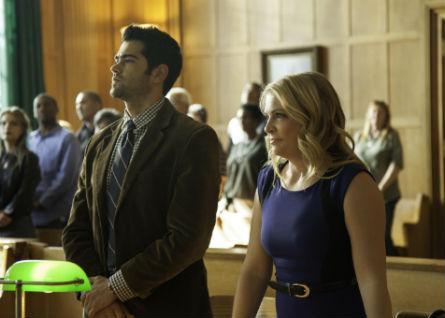
In one of many depictions of protests I could not help laughing at every time it popped up, Christian students of protagonist Grace silently sit outside the courtroom as a show of support. All the while a whole group of atheist protestors stand two feet away holding up signs and screaming at them. These atheist monsters are filmed with quick cuts and without sound, emphasizing how monstrous and evil they are for attacking young women displaying their right to protest. See? Complete alternate reality. Melissa Joan Hart plays Grace Wesley a well meaning history teacher who is chastised and crucified by her school for making a very quick literary comparison in class between Gandhi and Jesus Christ.

When she’s reported, the den of atheist vipers known as the PTA and ACLU begin to look for ways to strike her down for making a seemingly passive contrast of figures with similar ideals. When Grace won’t apologize for speaking he who shall not be named in a public school, she has to stand trial and put her faith to the test. “God’s Not Dead 2” is kind of a brilliantly manipulative movie that relies a lot on subliminal visual cues to sway their audience’s emotions. There are a ton of mentions of Salvation Army, there’s Jesse Metcalfe, who gives a piss poor performance as a young atheist lawyer assigned to defend Grace. When we first meet him, he’s disheveled, unshaven, and a bit slovenly.

And did I mention he’s a condescending ass? “You pitiful Christian maggot, I mock your value system and scoff in your direction conveying a sense of superiority. Pshaw.” But naturally as the film progresses he becomes more and more of a believer and by the time the film ends he’s a well dressed, clean shaven, and kept up lawyer. Ray Wise (known all over pop culture for playing slime balls on TV and film) plays the evil atheist/opportunist of the film who gazes deviously at everyone, considers every idea of morality as an opportunity to make money. He even wears a red tie most of the time. See… red is bad. Like devil, bad. Ray Wise played the devil once in a cult TV show, did I not mention that?

Not only is “God’s Not Dead 2” just stupid, but it’s providing its devout audience with information that could be potentially hazardous to their health. In easily the worst bit of nonsense depicted in the film, Amy, a character diagnosed with cancer in the first film finds out that she is in remission. She’s happy and the Christian rock band from the first film, are happy for her, because prayer helped. Forget the doctors, and medical science, but prayer helped ward her cancer away making her a true believer. So if it’s not made clearly enough in the film, if you or someone you love is dying from cancer, they’re just not a good enough Christian. You only have yourself to blame, all you small children in terminal wards across the world.

“God’s Not Dead 2” was released on April 1st, 2016. Without a hint of irony.

Sharknado: The 4th Awakens (2016)

Sharknado4At this point you kind of have to accept the “Sharknado” movies will never be as good as the novels, so going in to “The 4th Awakens” means embracing it as a movie, and a media experience. It has a slew of appearances and cameos from notable internet personalities like Andre “The Black Nerd” Benjamin, to character actors like Gilbert Gottfried. Yes, even the Chippendales dancers appear to thrust against some sharks. “Sharknado” is a virtual side show of a genre offering that holds its tongue firmly in cheek, even when turning hero Fin in to a basic rip off of Ashley Williams from “Evil Dead.”

Continue reading

post

The Laundryman (2015) [New York Asian Film Festival 2016]

thelaundrymanA hit man who works for a laundry company as a cover up grows a conscience.  He’s highly trained and excels at his job, however, for a while now, he is plagued by ghosts and he must find out what they want from him in order to restore some sort of peace to his life.  To do this, he enlists the help of a cute but possible clueless clairvoyant.  Through all of it, he finds out more about his victims, his boss, and himself.

The Laundryman is a hybrid horror/comedy/action film by director Chung Lee and written by Yu-Hsyun Chen and Chung Lee.  The tale built here fills the complex task of mixing multiple genres without going into parody or satire or become a send-off/homage to its genres.  Here the mix of the genres works very well and has the story evolves its elements just work.  However, the comedy levels are more present in the first third or so of the film and then occasionally throughout the rest of the film.  The comedy works because the viewer is not hit over the head with it.

That being said, some of the scenes are completely ridiculous in the best way possible.  The horror, mainly from the ghosts and not much blood outside of a few short scenes works here as well.  The ghosts here are not meant to scare but they work so well with the story.  The first fight sequence is fantastic, the way its written and shot make it really fun.  The rest of the fighting is also entertaining.  Getting all of these elements together creates a really fun whole.

The casting here feels rather perfect for the story and the style.  Hsiao-chuan (Joseph) Chang is an entertaining lead.  He has a charisma that helps carry the whole film.  His acting is just about perfect for the material.  It may not be the top performance seen at New York Asian Film Festival, but it’s still a damn good one.  Supporting him is Regina Wan as the clairvoyant and Sonia Sui as the boss, both opposites until the end.  Their performances show excellent talent as they both do extremely well.  The cast for the ghosts is fantastic too and they manage to keep a straight face through some truly ridiculous situations.

For a partially horror movie, the effects are not super prominent but what we’re given is well done.  The CGI is good and blends well in the scenes where it is present.  It’s not overly used which avoids it becoming an annoyance.  Outside of the effects, the film looks really good, it grabs the attention from the get go with its colorful representation of Taiwan and the life of a man who, by all accounts, could be living a very grim life.  Most of the film, besides the flashbacks, feels all so chipper.  In general, the film looks very good.

The Laundryman is a really fun, funny, and entertaining film.  It may be hard to find for a while being a festival title, however it’s absolutely worth checking out.  The story is good, the acting is on point, the fighting “punchy”, and the ending, all the way after the credits, will make you giggle.