
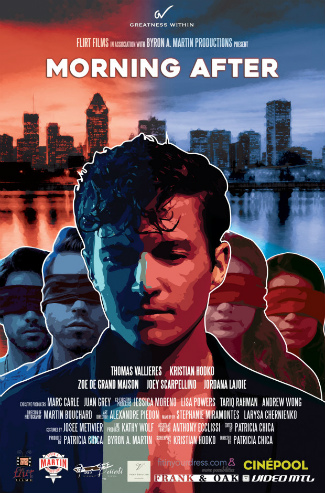
 After Michael comes back to Montreal, his good friend throws him a party when sensual games are played and exploration of sexual identity mixes in. As he and the others discover their likings and what they are opened too, things get interesting.
Captain Underpants: The First Epic Movie (2017)
 George and Harold have been best friends since kindergarten, pulling pranks left and right and having creative imaginations that lead them to create Captain Underpants. One thing leads to the other and their creation lives to save lives and cause chaos.
Wonder Woman (2017)
 Diana grew up to become an Amazon warrior. Little did she know, she was much more than that and when the time comes, she heads to war with a man who crashed near the island she lives on with only women. There she discovers her full potential as much more than a warrior, but also a hero.
You Have to See This! Summer School (1987)
As a kid I spent many a day watching movies on television edited for content. I spent most of my time watching WPIX Channel 11 in New York which was then considered “New York’s Number One Movie Station.” Every ad for movies they aired always garnered my attention, save for a select few here and there. A lot of those films became future favorites like “Animal House” and “A Christmas Story.” Like clockwork about every four months the channel would air the television trailer for 1987’s “Summer School”, and every time I avoided it like the plague. It just never seemed all too funny, especially in the light of films like “Fast Times at Ridgemont High.”
Alien: Covenant (2017)
 With “Prometheus” Ridley Scott met the other side of his “Alien” mythology by visiting the very early dawn of his universe that saw the very evolution of his xenomorphs. After it hit with a thud resembling a wet diaper smashing in to a garbage can, Scott hits the other extreme by delivering a movie in the vein of “Prometheus” that’s just as flat and just as stupid. Director Ridley Scott has lost the grasp of his own film and has really failed to learn how to deliver a well measured and compelling horror tale teeming with themes about sexuality and human biology. Instead now he gets to literally have his cake and eat it too, by offering up a ham fisted goofy prequel that feels like a glorified fan film. All the while also continuing his descent in to pseudo-intellectualist allegories and on the nose metaphors about God, the Devil, Heaven, Paradise, evolution and birth.
Ghost World (2001): Criterion Collection [Blu-Ray]
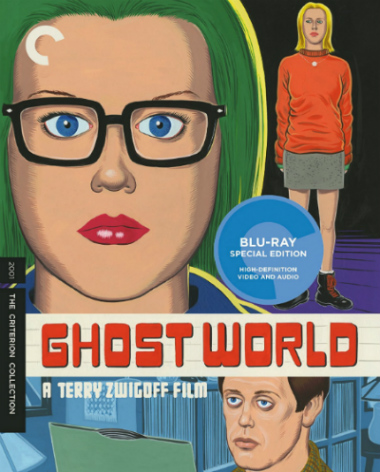 Terry Zwigoff’s adaptation of Daniel Clowe’s iconic coming of age tale “Ghost World” gets its due from Criterion for hardcore fans alike. Criterion tastefully disregards Scarlett Johansson’s mega star status in favor of advertising the essence of the very weird and unusual tale of a young girl learning about growing up and moving on. In one of her finest roles, Thora Birch stars as the odd Enid, a girl with peculiar taste for Bollywood musicals and off beat culture who is experiencing the end of high school with her best friend Rebecca (Johansson). Enid finds solace with her life through her unusual art where she draws colorful locals in her town.
Ben (1972) [Blu-Ray/DVD]
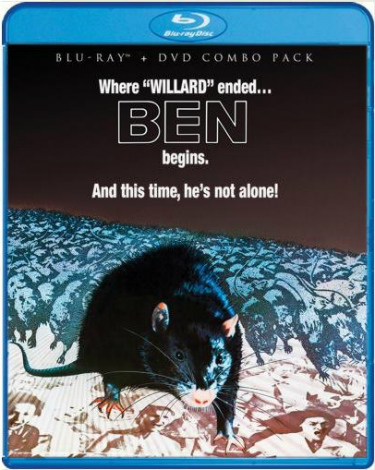 There aren’t many movies out there that offer audiences a sequel that is so drastically different in tone. The biggest comparison I can draw is the original horror thriller “Cat People” and dramatic “The Curse of the Cat People.” While “Willard” was basically a twisted thriller involving a dysfunctional young man’s self destructive relationship with rats, “Ben” is a more dramatic family film with elements of horror thrown in. It’s a very tonally confused and muddled melodrama that doesn’t do much to make Ben in to an interesting horror villain. To prove how utterly confused the movie is in terms of intentions, watch the final scene in which Ben stares in to the camera menacingly in the vein of the climax of “Willard” while the sappy “Ben’s Song” from Michael Jackson plays as the credits roll. So—what are we supposed to feel by this?