post

Creature Designers: The Frankenstein Complex (2016) [Fantasia International Film Festival 2016]

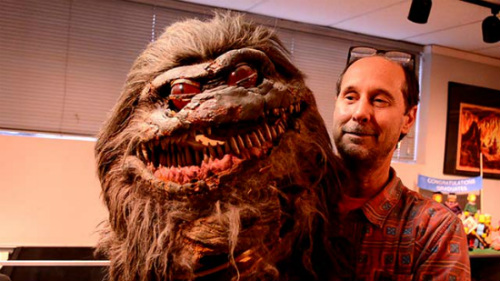
creturedesignersFilm buffs will be elated to see “Creature Designers,” a very technical cogs and gears documentary that spotlights the grueling process of creating creatures for movies. Directors Gilles Penso, and Alexandre Poncet mold a love letter to the classic master creature creators, as well as a very down to business film that shows the technology behind some of the most iconic creatures and monsters of all time. It’s a thrill to see how the directors have such a reverence for these artists, as we get to visit with a ton of unique artists and concept designers that are enthusiastic about their work. Since the beginning of film, special effects and creature have found a wonderful marriage with filmmaking.

That’s thanks in part to Lon Chaney who was able to use his make up kit to build some amazing monsters out of his face and own features. From there it’s been a rising tide of artists and creators that have added to the cinematic experienced and helped advance storytelling as a whole. Both filmmakers visit with iconic masterminds like Rick Baker, Joe Dante, and Guillermo Del Toro, all of whom explore their love for special effects, and convey the process of building creatures for some of their films. What becomes apparent within “Creature Designers” is that the advancement of special effects would lead in to less and less necessity for suits and machines, and more need for computer technology.

This darker period is chronicled in “Creature Designers” where we’re able to view a more vulnerable side of these individuals, all of whom had to adapt to the shift in technology or risk losing their livelihoods. Thankfully, the documentary doesn’t depict the introduction of CGI and motion capture as the bane of the special effects industry. Directors Gilles Penso, and Alexandre Poncet explore some of the amazing advancements made in computer technology, from motion capture, facial recognition, and how they’ve used this kind of programming to bring to life amazing characters like Golum from “Lord of the Rings” and the T-1000 from “Terminator 2.” No stone is left unturned, as every interview is informative, exciting, and filled with amazing anecdotes.

For folks that are seeking a career in the special effects industry, or for films buffs very invested in the special effects element of filmmaking, “Creature Designers” is a wonderful documentary that brings us up close and personal from the fan viewpoint and a technical viewpoint.

post

Yoani’s Trip (2016)

In 2013, a change to Cuban passport laws enabled the controversial blogger Yoani Sánchez to leave her country for a trip abroad – she had previously been rejected 20 times for an exit permit. This documentary by Peppe Siffredi and Raphael Bottino follows Sánchez on a February 2013 trip to Brazil, where she is greeted with a mix of praise and hostility.

While Sánchez’s schedule is packed with media interviews and guest appearances at special events, she is constantly shadowed by angry protestors that call her a traitor to her country and the spirit of the Castro revolution. Sánchez appears to be mostly amused by her detractors – it is never entirely clear who is organizing their efforts – and her presence in Brazil is overwhelmingly greeted with positive feedback from the reporters, government officials and students she encounters.

While the film offers disturbing insight on the extreme measures used the Cuban government to censor and limit Internet access among its people, Sánchez’s power as a writer is presented mostly by reputation than substance. Relatively little of the writing from her famous Generation Y blog is offered to the viewer. And what is presented – a relatively mild and vaguely academic criticism of the Castro regime and an inventory of the problems facing Cubans – seems rather tame by the roughhouse standards of American blogging.

Oddly, at 70 minutes the film feels a bit flabby – some tighter editing would have made it more effective. But as a consideration on the continued lack of free expression in Cuba, this production is a welcome arrival.

post

Planet of the Apes (1968)

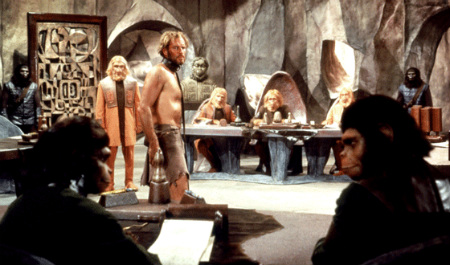
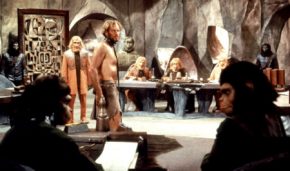
planetoftheapesIN LIMITED RE-RELEASE July 24th and 27th — It’s pretty exciting that two of the most important pieces of cinema ever released, “Night of the Living Dead” and “Planet of the Apes” would come in the same year and pack the same intellectual punch.  Written by non other than Rod Serling, “Planet of Apes” is like an extended episode of “The Twilight Zone” filled with terror, and social commentary. And much like the aforementioned George Romero horror film, “Planet of the Apes” garners an absolutely shocking ending that is still one of the best delivered finishers in film history. Though the title says it all, “Planet of the Apes” is still a rather unique genre experience, mainly for its willingness to avoid showing the apes until a good portion of the movie has passed.

Charlton Heston gives an iconic turn as Colonel George Taylor, an astronaut who crash lands on a distant planet after a space expedition and learns the hard way that apes are rulers of this world. Primitive and yet completely organized in class systems that are identified through the species of apes, much like the human race, Taylor is stuck in a world he’s completely unfamiliar with, and can barely muster the strength to rebel, as the sights startle him. Pierre Boulle’s source material is drastically different from the film adaptation, but none of the impact is lost, nor is the commentary on the way we relegate our animals to the lower echelons of our society.

There’s the irony of our primitive counterparts becoming rulers of a jungle land while humans are servants, pets, and test subjects for medical experiments. Meanwhile the various ape species garner their own system of classes and aristocracies, mulling over the structures of their own society. The gorillas are police officers, military, hunters and workers, and the orangutans are administrators, politicians, lawyers and priests, while and chimpanzees are intellectuals and scientists. As Taylor watches his friends die, he inevitably begins to fight back, and, much to the shock of the apes, speaks back defiantly. This sparks an immediate rebellion, and prompts the ape society to completely re-think the way they operate.

“Planet of the Apes” features a world and society that’s different from ours and yet perfectly similar, even alluding that the apes are still in their early stages of evolution as a species. Franklin J. Schaffner’s production from the Serling script is masterful, with a massive cast of brilliant performers offering great performances. Heston’s turn is immortal, all the while folks like Kim Hunter, Roddy McDowall, Maurice Evans, respectfully transcend their ape visages to convey very unique and complex characters all around. “Planet of the Apes” is a pitch perfect science fiction film, that still conveys sharp social commentary and will win over the hearts of science fiction purists old and new.

Buy Tickets now at Fathom Events.

post

Fanarchy (2015)

fanarchyFans get a really bad rap these days and for good reason. The fan community was once derided and ostracized and is now doing the deriding and ostracizing toward anyone that tries to integrate themselves in to a fandom. That said, being a fan or a part of a fan community isn’t always bad, and “Fanarchy” is merely an ode to the fans. Most of all it’s a tribute to how much influence the fan community has had on pop culture at large and how they can use their love for characters and properties to help fuel their lives and inspire hope and strength. No one has been harder on fans than I have this year, but Donna Davies offers up a look at how fans can also do great things and inspire one another to reach for creativity and aspirations.

Davies spans the globe looking at various fans and fan communities that have achieved some remarkable feats. Some of them have become massive pop culture phenomenon, while Davies also sets the light on more personal and touching stories. Some of the more interesting stories involve the career of beloved geek goddess Brea Grant, who is most recognized for her work in shows like “Heroes” and has spent a lot of her acting career producing the kind of work she wants to. There’s also the inspiring story of one of the first fan films ever made for “Raiders of the Lost Ark” which drew the attention of Steven Spielberg. It also became such a fan favorite at festivals that it garnered its own book and is currently being developed in to a movie.

The most inspiring story though is the tale of Maya Glick whose rabid fandom for X-Men character Storm helped her push through some really tough times in her life and helped her grow as a person and find a form of personal victory. It’s also interesting to see how Ms. Glick has absolutely no love for Storm’s depiction in the “X-Men” movies which prompted her to make her own fan film, with a strong and fierce version of her favorite character. In the end “Fanarchy,” is a very breezy and entertaining ode to being fan boy or fan girl. Sure, the fan community has been very dark and volatile over the last few years, Donna Davies does a bang up job of showing how fandom can entertain, benefit pop culture, and benefit the fans personally.

Howard the Duck (1986)

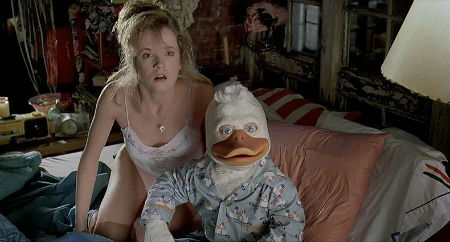
howard-the-duckLong before Marvel Cinematic Universes and James Gunn, there was the bastard child of the Marvel Universe “Howard the Duck.” Adapted from the comics during the decade of “ET” and other assorted attempts at cuddly cinematic creatures, “Howard the Duck” takes a dive at some of the good old “ET” buck, while also presenting itself as the anti-“ET” of a sort. “Howard the Duck” is a childhood favorite of mine; it’s one I watched over and over whenever it aired in all of its edited form on network television. There was just something about “Howard the Duck” that I loved. Whether it was the surreal nature, the actual talking duck from another planet, or Lea Thompson being devilishly sexy once again in a fantasy film, I loved “Howard the Duck.”

Continue reading

post

Day of the People (2016)

DayofthePeopleIt feels like there’s a little bit more gong on in “Day of the People” than a simple experimental short film. Based on the research I’ve done, director Philip Stainsby seems to have aimed for a short film reminiscent of “Night of the Comet,” but the visual cues seem to hint at something else entirely. “Day of the People” opens with a young man waking up at the very end of humanity and then begins traversing through the city and making his way through something of a business district where the sky is painted a dark shade of Red.

With only the discovery of a soda can, he walks through the streets looking for something, and finds it when he comes across a man walking around in a dark suit. Ultimately I interpreted “Day of the People” as something of a subtle commentary on the downfalls of a perfect Utopia and how some people are so committed to building a new world, they’re not likely to notice when something beyond their control is set to end their plans. Based on the small hints Stainsby adds, the people built this world and they also contributed to destroying it, thus making it a pretty open target for something else. Who knows?

Maybe I’m merely over thinking an experimental film, but Philip Stainsby’s short packs in a lot of nuance and complexity in only ten minutes time. The photography and direction are superb, with Stainsby committing to the dream like atmosphere and paints a grim look at what is the perfectly functioning society where all life isn’t quite present or even emotionally attached, for that matter. I gather “Day of the People” will leave many an audience debating about its meaning when it hits the festival circuit. Philip Stainsby’s short science fiction film is a remarkable short with unique and bold use of color and landscape. I hope to see more from him in the future.

post

The Babushkas of Chernobyl (2016)

In the 30 years since the Chernobyl catastrophe, a 1,000-square-mile Dead Zone surrounding the wrecked nuclear power plant is still one of the most highly radioactive places in the world. And while this section of Ukraine is guarded by the military and off-limits to most civilians, it is still home to roughly 100 elderly women that refused to leave their homes and successfully fought against evacuation from the area.

Filmmakers Holly Morris and Ann Bogart capture an extraordinary portrait of the resilience in the face of calamity. The eponymous babushkas happily go about their lives in their small homes in the woods around Chernobyl: they fish in a stream, collect rain water, grow fruits and vegetables in their gardens and make their own wine. Military scientists bring them bread while recording radioactivity levels as government welfare workers deliver pension payments—four months late, due to Ukraine’s political instability—as well as bags of food. Most of the women appear to be in vibrant physical and emotional health, despite the contamination to the water and soil, although one woman is evacuated after a painful fall left her incapacitated. (She later died in a nursing home.)

The film also presents insights on Chernobyl’s environmental legacy from Mary Mycio, author of Wormwood Forest: A Natural History of Chernobyl, as well as insight into the creation of a grand sarcophagus that will entomb the disabled reactor and prevent further radiation releases. The most unusual part of this film follows the clandestine antics of young rogues that call themselves “Stalkers” and slip into the Dead Zone to visit its abandoned structures and proclaim inanities such as “This is a post-apocalyptic romance” while viewing the ruined landscape.

This astonishing portrait of the three-decade-old residue of Chernobyl is utterly compelling. Even more amazing is the perseverance of the babushkas amid extraordinary circumstances—they are the funniest, brightest and most inspiring women ever captured on film. This production is one of the most fascinating and invigorating non-fiction films of the year.