post

Zinnia Flower (2015) [New York Asian Film Festival 2016]

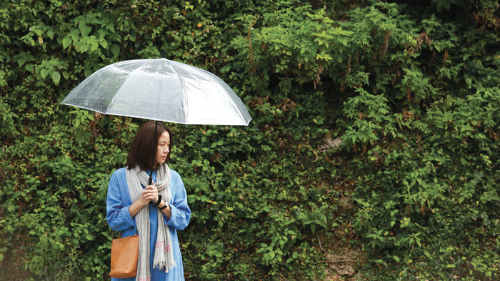
ZinniaFlowerDirector Tom Lin made the Taiwanese “Zinnia Flower” following the death of his wife in 2012 as part of his grieving process.  The film follows Ming who lost her fiancé and Wei who lost his wife and unborn child both in a major car accident.  Their loves ones get Buddhist funerals in which the departed’s loves ones come to the temple every 7 days for 49 days and are supposed to let go at the end of the grieving period of 100 days.  Ming and Wei’s paths cross a few times during this process but each goes through their grief their own way.

The film is co-written by its director Tom Lin and writer Wei-Jan Liu.  They craft a highly personal film about grieving, letting go, moving on, and remembering.  Lin puts all of his feelings and hope in this film which is filled with sadness and love.  The two mourners the story follows are complex and layered characters, each showing two very different ways of grieving with the victims’ families each taking different approaches to how to include them in the funeral process.  The film explores many angles to grief, none of them being better or worse than the other.  It also never judges or becomes schmaltzy; it’s a good study in its subject.  The director’s closeness to the subject, the fact that he has clearly battled with this, shows throughout the film.  He works with a hard subject delicately and gets his audience to share in the worse experience (most likely worse) of his life.

With a subject so close to his heart, the casting of the characters he created is so important.  The actors needed to be perfect for their parts.  In the part of Ming, the young woman who lost her fiancé in the accident, Karena Lam offers a subdued performance that hits all the right notes.  One of her scenes in particular should have every eye watching tearing up.  Her character goes through the grieving process without much support but how she decides to go through it on her own shows strength and courage.  She not only shows that her character is sad and mad, but you can also see the moment when she takes her life in her own hands, the moment her sadness changes , all of this through the actress’ soft, yet strong performance.  In the part of Wei, actor Shih Chintlang, a guitarist from the band Mayday, portrays a man in the worse possible period of his life, having lost both his wife and unborn child.

His performance embodies grief in a more classical way, with anger and the other steps up until acceptance.  His feelings are more expressed than Ming’s, thus the actor’s performance bounces back and forth between stronger feelings.  He makes the viewers feel with him in a more visceral way. For those who do not know much about Buddhism and its funeral ceremonies, the way grieving is handled is very interesting.  Over 49 days, the mourner goes to the temple to remember the dead and grieve.  After 49 days, there is also an important point at day 100 where the mourner is supposed to stop crying and learn to go on.

The way the religion is handled in the film doesn’t hit the viewer in the head; it makes sense and actually shows an angle to things that non-Buddhists may not know may not know very well. The temple scenes are shot in a very serene manner and are beautiful.  The rest of the film has a serious tone as well, but the temple scenes catch the eye in particular.  The scenes in Okinawa also do, but they are more comforting than serene.  This film is shot with such attention to details that it makes its runtime go faster and helps get the feelings through without becoming too heavy which is not an easy balance to achieve especially with such a subject.

Zinnia Flower is a film about death and the grieving process that works.  It’s not too heavy but shows the feelings and makes the viewer empathize with the characters.  It’s a beautiful and sad film, beautifully sad.  The title flower, the Zinnia, and what it represents is explained close to the end.  The story is touching and should make quite a few viewers cry.

Psychonauts, the Forgotten Children (2016) [Fantasia International Film Festival 2016]

PsychonautsI think audiences will enjoy the incessantly dreary and bleak tone of “Psychonauts, The Forgotten Children,” but for me it felt a step too heavy and morose and undercut a lot of the attempts at whimsy and absurd humor. “Psychonauts” is adapted from Alberto Vázquez’s independent Spanish language graphic novel “Psiconautas,” which featured the character Bird Boy, who starred in his own award winning short film from Vazquez. Bird Boy returns in the film as a side character who is relentlessly pursued by local officers, both of whom want him dead and will do whatever it takes to kill him, despite his seemingly innocent habit with “Happy pills” he’s dependent on to keep demons at bay.

Meanwhile mouse Dinky is desperate to run away from her adoptive family that pressures her to become an engineer, oblivious to the landfills outside of their town that involve rats. These rats look for copper to survive, and the tensions rise as the space for survival grows smaller. I had a love hate relationship with “Psychonauts.” Originally I was so excited to see it since the animation is absolutely beautiful, but it’s such a heavy handed and dire metaphor for poverty and conformity I was actually not entertained all that much. Granted, when I savored the brilliant animation style, I loved what Alberto Vazquez and Pedro Rivero had to offer audiences alike.

But once I dug in to the story, it was a pretty miserable experience with tales about scavenging rats, drug addicted bird boys, and young teenage mice with dark voices tempting them to murder their friends and family. Alberto Vázquez and Pedro Rivero’s “Psychonauts” is a haunting, very heavy animated film with stark political and social overtones. Those themes hobble it in some instances, sadly, muddying up the excellent animation, and richer more complex tale about madness, and looking for a purpose in a land where opportunity involves murder and or conformity.

Hunt for The Wilderpeople (2016) [Fantasia International Film Festival 2016]

WILDERPEOPLEDirector Taika Waititi has a keen and admirable understanding of humanity as well as the relationship with death and loss we have every waking moment of our life. Whether it’s a gory horror comedy like “What We Do in the Shadows” or a family drama like “Hunt for the Wilderpeople,” Waititi is never above examining our everlasting relationship with death that begins when we’re very young. “Hunt for the Wilderpeople” is destined to be a classic drama comedy that pits two men against the wilderness in their efforts to make sense of life and come to terms with death.

Continue reading

What The Fantasia?! 5 WTF Films from Fantasia’s International Film Festival

Fantasia International Film Festival is renowned for showcasing some of the best and weirdest of the film world.  As someone who started going their second year and started seriously going for multiple screenings per week in 1999, some of the weird films I’ve seen cannot be unseen.  So, just to bring some to attention and have a bit of fun, here are five of the most WTF films I’ve seen.

Continue reading

20 Past Films From Fantasia International Film Festival Worth Looking For

ichi-the-killerFantasia International Film Festival is having its 20th edition this July and I am proud to say I have only missed 4 of them, the first one, 2006, 2012, and 2014.  That being said, I’ve played catch up and seen some of the films from those years and can say without a doubt that Fantasia International Film Festival plays a fantastic selection of films from around the world, with a penchant for the odd, the weird,. And the often overlooked by mainstream movie goers.

Continue reading

post

Everybody Wants Some!! (2016)

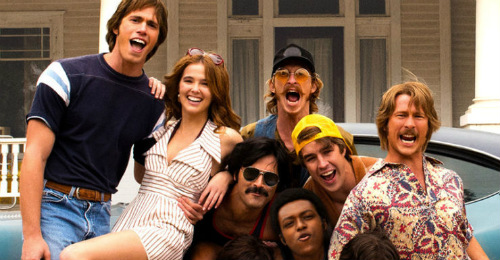
everybodywantssomeRichard Linklater is of the philosophy that life isn’t planned out or a sequence of fates colliding, and bad luck giving us misery. For him, life is a series of random events, major and minute that result in pure happiness or pure sadness. “Everybody Wants Some!!” is every bit the drama and comedy masterpiece that its predecessor “Dazed and Confused” was. Not only is it an amazing companion piece to his nineties comedy, but it’s also an examination at the turbulence of youth and how being young has a lot of surprising structure and pressures behind it that can often be so much worse than adults.

Its 1980, Texas, and three days before college. Freshman Jake arrives in his new dorm, preparing to share a house with a group of very rowdy guys. Like them, Jake is a baseball player intent on proving himself on the team. Before the school year begins, and daily practices start in an effort to mold the school’s only winning sports team, Jake is taken along with his team on a three day journey of parties, drinking, and beautiful women. Linklater, much like he did in “Dazed and Confused” follows around a group of young people as they navigate through life and use music and humor to connect with one another and find kindred spirits. Music is the life blood of Linklater’s movies.

If there is such a thing as a soul, music is as close as it gets to Linklater conveying what a soul is, and how crucial music can be to igniting it. Rather than focus on a group of teens at the beginning of the summer, Linklater now follows a group of young adults in their final days of the summer, before they have to accept adult responsibility and give up the carefree days of their teens. The future isn’t as bleak as it was in the finale of “Dazed of Confused,” but the film does act as a requiem to immaturity and just being young, before it all fades away in to careers, obligations, and old age. “Everybody Wants Some!!” is a subtle look at enjoying youth and bidding it a fond farewell, all set to a very random and chaotic comedy that unfolds in to one excellent piece of cinema.

Linklater doesn’t commit to plot twists, cheap deaths, goofy romance, or melodrama, and instead zeroes in on drawing a slew of truly engaging characters, all of whom are blind to race and class, and find a means of bonding three days before school. Like everyone in a Linklater film, they use music to keep each other at eye level, and Linklater celebrates the magic of music. Not only does the film have an incredible soundtrack, but the characters live and breath through whatever music is on in the background, from singing along to “Rapper’s Delight” in a crowded car (a scene that rivals the “Bohemian Rhapsody” scene in “Wayne’s World,” easily), to the group of baseball players seducing young women at a local club with disco music and pop.

Though many will argue that “Everybody Wants Some!!” has no narrative, Linklater’s wizardry is in the seemingly random events that devise bits and chunks of plot, narrative and themes about male bonding, competition, and the thrills summer can offer to anyone open to a new adventure. Like Linklater’s previous films, “Everybody Wants Some!!” is simple, and down to Earth in scope and vision, but brings with it an incredible series of rich and complex characters, wonderful conflict, and yet another bang up soundtrack. I really hope Linklater offers up another follow up to “Dazed and Confused,” completing an unofficial trilogy. Linklater is a mastermind of storytelling who understands youth, nostalgia, as well as seeing the world through a filter where music is the universal language.

Bulldog (2016)

bulldogSean is the definition of a self fulfilled prophecy. He’s a young man without a family, without a culture, and without much of an identity whose found that adapting other identities hasn’t worked for him nor has hating other identities, either. He doesn’t really find much to identify with his own culture, and can’t stand the current country he’s in. One especially poignant moment finds Sean being forced to recite the Pledge of Allegiance. This creates significant tension when he begins going to school and is mocked by some classmates for his Asian heritage.

This quickly becomes a point of anger since he can’t really relate to being Asian, thus some avenues are closed due to his race, already. Sean is a young man who has very little ambition and has become the result of the terrible death of his brother, which broke apart his family. Surely, they may not have been perfect before the movie began, but Sean at least had a foundation. Now with his mother committed to gambling, and his father drowning in his own company, Sean is consistently told he’s a punk and thug.

Without anyone to really guide him, and inviting all the wrong elements, Sean is at a point where he has no choice but to submit to his anger and frustration. Benjamin Tran’s drama is a compelling and unique take on the loss of culture and ambition and how lack of identity can cause confusion in someone in a foreign culture with its own ideas about growing up and earning respect. The cast give strong performances all around, including Vin Kridakorn who conveys the sense of confusion and frustration with his character well. “Bulldog” is a remarkable short drama and one I wouldn’t mind seeing turned in to a feature film someday soon.