
 Allegedly one of the many influences for Quentin Tarantino’s “Kill Bill” series, “Thriller” or “They Called her One Eye” is an awfully uneasy and chilling bit of savagery involving one of the primary themes for grind house cinema: Victimizing. Like many before and after it, we watch a simple girl terrorized by corrupt and violent forces that drive her to the brink of violence and revenge in a hail of blood and bullets. Sure, thanks to many of its fans, “Thriller” is hardly a rare movie anymore, nor are reviews of it hard to come by, but where else will you find my own wry commentary?
Tag Archives: Crime
Prison-A-Go-Go! (2003)
 I have no aversion to women in prison movies. No, sir, I do not. I happen to enjoy good schlock when it’s done well, and I happen to enjoy flicks like “Cellblock Sisters.” When I caught wind of “Prison A-Go-Go!”, I was utterly intrigued. It’s not often you get a movie that’s intended to be schlock these days. Some directors just make bad movies and pretend its schlock, and many attempt schlock but fail miserably. “Prison A-Go-Go!” gets it right most of the time. “
Brick (2005)
 Like much of the neo-noir that has graced our screens both in a contemporary, and period setting, “Brick” begins at the end. As we’ve seen in the device exemplified in “Sunset Boulevard,” we begin right at the tail end of the mystery. Where is Brendan’s ex-girlfriend Emily (Emile DeRavin is both unlikable, and heartbreaking)? What I can tell you is that most audiences for this film won’t even realize that Johnson is paying homage to some of the greatest noir films ever made. From outright nods to Humphrey Bogart, and films like “The Maltese Falcon,” there are many elements with the same basic premise. Johnson never fills his audience in, but they’re watching noir set in modern times.
Firewall (2006)
 For shame, it’s finally come down to this. It’s time to admit Harrison Ford’s prowess as an action star has past. How he plans the ever continuous shoot of “Indiana Jones 4” I’ll never know. “Firewall” is a healthy indicator that Ford just can’t handle it anymore. And it’s a pretty good indicator that Ford also hasn’t made a watchable film in a good while. The worst aspect of “Firewall” is that we’ve seen this a thousand times. And a thousand more times. There’s your poor workaday shlub taken hostage in his own home. And the checklist: Family disharmony, check! Spunky oldest daughter, check! Wise doting wife, check! Wide eyed youngest child who plays a big role in the climax, check!
Harvey Daggit and the Devil's Olives (2007)
 One thing about comedy is that there are so many different dimensions of the art form to explore, and it takes a lot of time and patience to discover what’s right and what doesn’t work. “Harvey Daggit” is a new approach from directors Larry and Aaron Longstreth, more of a dark and demented comedy. About olives. You have to give to the Longstreth’s for taking such a ridiculous concept and adding a sense of menace, and utter confusion to it. It’s not often you see a crime mystery that revolves around gardening. Well, there’s “The Godfather,” but you get the picture.
Death Note (Desu nôto) (2006)
 I admit to never having seen the original anime of “Death Note,” but now I feel compelled to. “Death Note” is an excellent horror film about self-righteousness, and what lengths people are willing to go through to ensure that justice is served when the law fails. Light Yagami is a boy seeking to become a police officer with his girlfriend, but after a frightening confrontation with a child killer who had just been excused of his crimes in a trial, he decides the law doesn’t work. One night, after walking home, he discovers the black book called “The Death Notebook,” a mysterious notebook that kills anyone with the name the holder prints.
Light then secretly becomes an angel of death codenamed Kira, who destroys criminals, and earns a countrywide following of folks who believe him to be a sign from god striking down the wicked. But Light knows better, after being confronted with a twisted winged demon named Ryuuk who explains the intent of the book. “What is the price for this book?” Light asks Ryuuk who responds with a wicked laugh. That’s the question, isn’t it? What price will Light Yagami ultimately pay? But Kaneko simply doesn’t make it a film about a sad little boy killing criminals. He then inserts many other folks into the fold, including many, many plot twists. When it seems Light has fate at his control, a mysterious investigator simply named L enters, and explains that they are on the hunt for Kira.
Light, a pure genius, now attempts to outwit L, who has also narrowed down the list of suspects, killing times, and is intent on finding Kira once and for all. “Death Note” turns then from a horror film, to a murder mystery as L attempts to investigate Kira, while Light attempts to outwit L, who has yet to ultimately reveal his identity to confused officials. But, as the power corrupts Light, he learns that power in the wrong hands is pure evil. Teamed with his wicked accomplice Ryuuk who watches with great interest, Kaneko directs a beautiful horror mystery, introducing many elements and questions. Why the focus on the TV star Misa Misa? How did L figure Kira’s identity? Who is L’s accomplice? Is Ryuuk merely an observer?
Why does he seem so interested in this mystery? Kaneko hopefully answers much of those questions in the last two sequels, but “Death Note” alone is a wonderful elaborate horror film about power and fate. The direction is dark often sleek, with Tatsuya Fujiwara giving a memorable performance as Light, while Ken’ichi Matsuyama is twisted and entertaining as the sugar fiend, L who watches and waits with sheer patience. I enjoyed this film immensely, even if it was a gamble to buy it blindly. Ultimately power corrupts, and Kaneko’s “Death Note” is an entertaining, creepy, and beautifully written horror film about the power of death placed in the hands of someone with the best of intentions. I can’t wait to check out the sequels.
The Departed (2006)
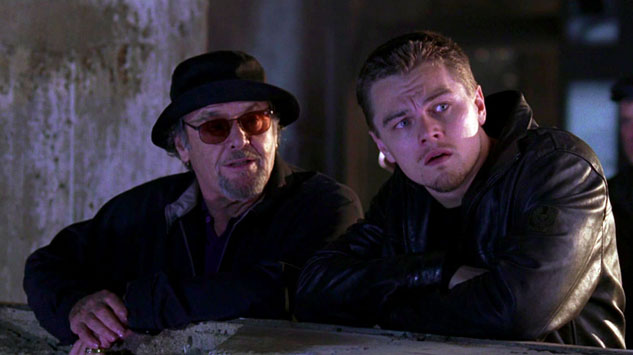 Martin Scorsese’s “The Departed” is in fact a remake of the Hong Kong Crime Thriller “Infernal Affairs” which has basically the same plot line, and sense of dread. Scorsese approaches the crime thriller yet again, with his version of the exceptional crime thriller, now set in the mean streets of Boston, and not the murky landscape of Korea. The narrative is basically the same, and Scorsese doesn’t seem to think he can do better than the original film, so he copies the original film verbatim, save for the ending. One big crime syndicate, one big police department. Both are at war. In both teams, the plot slowly unveils and we learn that in the syndicate there is a mole from the police department feeding information back to HQ, while there happens to be a mole from the syndicate in power at the police department distorting information