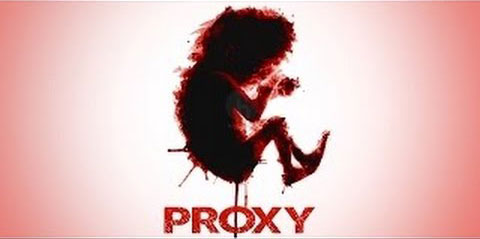
It’s a long road to go before “Proxy” ever really gets to the point of the entire narrative, and though director Zack Parker is very good at handling multiple sub-plots, “Proxy” is almost too crowded with them. “Proxy” is a seemingly simple thriller that over complicates itself with twists and turns that don’t really amount to much. It’s not many horror movies that revolve around the very disturbing psychological condition Parker highlights as a means of moving the narrative ahead, but “Proxy” often feels like it’s just jumping from shocking moment to shocking moment without much cogency or complexity. None of the characters are likable or empathetic, thus much of the movie feels cold and listless.
Tag Archives: Drama
Girls Against Boys (2012)
Director Austin Chick’s “Girls Against Boys” is not just a polemic about the crime of rape and gender inequality, but is never afraid to depict men as anything but horny monsters that prey on women, when they’re not degrading them. Never has a movie been so hell bent on making men feel bad about their danglers. “Girls Against Boys” is a typical rape revenge movie, that’s also a mopey, whiny, and very homophobic thriller that can never seem to decide if it’s exploitation or melodrama. Sometimes it’s “Thelma and Louise,” sometimes it’s “I Spit on Your Grave,” and sometimes it’s “Ms. 45.” And never remotely as good as the aforementioned titles.
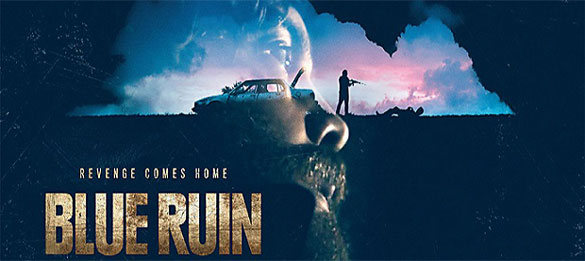
Blue Ruin (2014)
“An eye for an eye only ends up making the whole world blind.”
When we meet Dwight, he’s already defeated. He has a beard and long hair, he’s homeless, he digs through trash behind a carnival for dinner, he sneaks in to people’s houses for baths when they’re out for the day, and he sleeps in his old shelled out car on the side of the beach. One night Dwight is picked up by the police, and informed that the man that ruined his life is being released from jail after a court acquitted him. And now Dwight has made a decision that will decide the rest of his life. Director Jeremy Saulnier’s “Blue Ruin” is one of the least glamorous revenge films ever made. It’s an ingenious and brilliant look at the actual repercussions of vengeance and how it can create a ripple of unintentional consequences and violence that eventually spirals out of control.
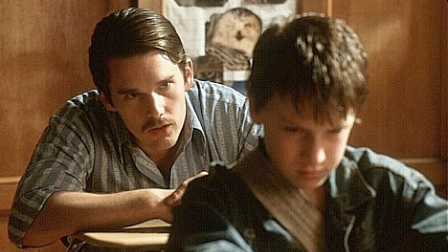
The 400 Blows (1959)
Director Francois Truffaut’s picture about a young boy with absolutely no direction in his life is one of compelling storytelling topped by incredible filmmaking. Truffaut explores the aimlessness and joy of youth, as well as the ticking hands of time that accompany youth as our protagonist Antoine Doinel realizes all too early he’s becoming a man, and the innocence he’s savored for so long is doomed to come to a bitter end, very soon. Hence the haunting and enigmatic closing scene where he scampers on to the beach, one of his favorite locations in the world, and looks out on to what almost feels like a blank slate.
Joe the King (1999)
Interesting enough, fans of Truffaut seem to still compare Frank Whaley’s “Joe the King” to the former director’s “The 400 Blows.” It becomes very clear time and again that Whaley doesn’t just love the movie, he expresses it by cribbing from many moments in said film, and uses this semi-autobiographical film as an opportunity to stage many scenes in the vein of “The 400 Blows.” The only difference is that while Truffaut staged some moments of hope and whimsy that could at least offer his character a glimmer of hope, “Joe the King” is a sour and bitter film from beginning to end, with no idea how to finish its arc.
Her (2013)
It would take Spike Jonze and only Spike Jonze to be able to grasp the more awe inspiring subtleties of “Her.” It’s an incredible technological tale about love, human connection, and a question of a higher power. Though usually I’m not a big fan of films about higher powers, “Her” doesn’t sermonize so much as postulate the idea of a higher power that was once very devoted to their servants and then evolved over time to where they eventually left them to fend for themselves, altogether.
Breaking Well: Why Walter White is Better Than Dexter
Breaking Bad is the best television show of the 21st century (so far). It managed to offer week after week of not only compelling stories, but enough symbolism and alternate character interpretations to keep even the most snobby English-Lit major interested, while distracting less intellectually focused viewers with instances of “bad ass” behavior.
Vince Gilligan used to write for The X-Files (in fact, Bryan Cranston appeared in the episode directly before the first episode Gilligan wrote) a show I haven’t watched regularly since the nineties, but proves to me that he has a lot of talent. He knows how to tell a good story, obviously. His real genius with Breaking Bad is in how he draws characters, especially television characters. On TV, people don’t really change. There is an illusion of change, but very little actually occurs.