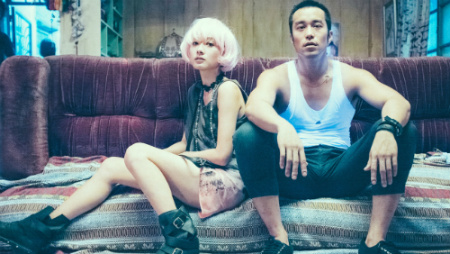
Sing Street (2016) [Blu-Ray/Digital]

SingStreetVery few films can manage to understand how music is a very important aspect of life and can sometimes drive us and move us in to aspirations, inspiration, and love. The other great music film released in 2016 was “Everybody Wants Some!!” While Linklater explored how music is the soundtrack of our lives, John Carney’s masterpiece “Sing Street” is about how music can launch us in to realms we never knew were there. Music can open up doors and allow us to see things about ourselves that are incredible, and sometimes very ugly. A beautiful amalgam of “Almost Famous,” and “Say Anything,” with a hint of “Once,” John Carney is again at his top conveying a musical drama centered on more impoverished characters.

Carney sets his film in the middle of 1985 in Dublin where our trio of protagonists is obsessed with music. For them music seems to be the only salvation in the drudgery that is their everyday lives. Conor is a teen approaching high school who manages to ignore his parents’ dying marriage and the failure of role models like his big brother and father with music. When we first see him he’s playing his guitar in his room attempting to tune out his mother and father arguing with one another, and then uses their rage to fuel his creativity. He reaches an epiphany when his older brother Conor helps him realize that music is what’s keeping the world in motion, as music videos cover the general stratosphere of local television.

Conor decides to form a band of his own as a means of coping with going to a public school run by his local church. The seams almost come together at once for Conor who begins to come of age through musical expression, all the while falling head over heels for unique beauty and aspiring model Raphina. “Sing Street” brings us through the journey of Conor and his band, as they try to create their own style of music all the while steering through a school that openly promotes conformity and is run by a very abusive head priest. Carney taps in to the magic of the eighties beautifully, revealing how they influence Conor and his friends to concoct their own unique style of music, while doling out the hits from bands like Duran Duran and The Clash.

Everything from the performances, to the narrative, right down to the music is incredible, while Ferdia Walsh-Peelo is pitch perfect as the awkward Conor who begins to blossom the more he embraces his individuality. Despite blunt violent rebuttals from the school bully, and the school’s staff, Conor inspires others to flash their individuality proudly. This helps him cope with the startling realization that failure and lack of fulfillment surround him, and he has to find a way to escape before he’s eventually dragged down in to the slums. Along with Walsh-Peelo, Lucy Boynton is excellent as enigmatic Raphina who becomes Conor’s virtual muse, and Jack Reynor the older brother and mentor to Conor who represents everything he could be, for better and for worse.

John Carney just continues impressing with brilliant, beautiful tributes to the magic of music and how much is represents the language of life. “Sing Street” is an absolute masterpiece. Featured in the release from Anchor Bay is the Digital Copy for consumers. There’s “Making Sing Street” a five minute exploration of the film’s story, how John Carney used his own experiences in the film, and how the film conveys his own wish fulfillment. Writer/Director John Carney & Adam Levine Talk Sing Street is a three minute discussion about the movie mixing music and film together and the realistic depictions of the 80’s. Finally, there is the Cast Auditions, which feature a slew of audition reels from the cast. There’s an introduction from John Carney, and footage featuring Ferdia Walsh-Peelo, Lucy Boynton, Mark McKenna, Ben Carolan, and more.

post

The Sound of a Flower (2015) [New York Asian Film Festival 2016]

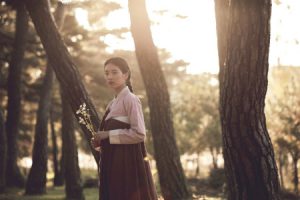
soundofaflowerDuring the Joseon Dynasty in South Korea, Pansori opera was only sung by men as women were forbidden by law to sing.  It was believed that a woman’s body was too weak to sing.  Against those odds, Chae-Sun decides she wants to become a Pansori singer, going as far as dressing as a man to be allowed to sing.  With much reticence, Pansori Master Shin Jae-hyo takes her under his tutelage and makes a great singer of her.  When it’s found that the young man is in fact a woman, the master is imprisoned and the student makes a deal with the ruling Father-King Heung Seon Daewongun to save him.

The Sound of a Flower was written by almost a half a dozen people and still feels cohesive which means this is a great team and the director brought all of their work together with talent.  Director Jong-pil Lee co-wrote the film with Ah-Young Kim, Jae-eun Jeong, Hye-rim Park, and Mi-na Chung.  This team created a beautiful period piece and historical fiction where the history of Pansori opera and its first female singer is explored in a way that flows well and includes classic songs that most people outside of its country of origin have probably never heard. As the singing is very important in this film, the casting of a singer for the lead is not stunt casting as it often is but necessary.

In the part of Chae-Sun, the first female Pansori singer, is Bae Su-zy a member of the KPop group Miss A.  Here she takes the part of Chae-Sun and disappears into it, becoming this other person, this sweet and timid, yet determined woman who takes on incredible odds to achieve a dream even the law forbade.  From the get go, she gets the viewers to root for her and just keeps impressing them throughout the film, her subdued moments are contrasted by moment of pure courage and boldness and her performance shows great nuances and that she knows how to bring the right levels of emotions to each scene which makes her performance absolutely shine.

Playing opposite Bae Su-zy are Seung-ryong Ryu as the Pansori Master Shin Jae-hyo and Nam-gil Kim as Prince Daewon the King’s father.  Shin Jae-hyo shows a calm determination for most of the film as well as a lot of care for Chae-Sun.  His performance is subtle and strong, with emotions clearly held back most of the time, showing so much even in silent scenes.  The man’s expressions talk for him many times, his eyes say so much.  His emotions at times come through so well, they will break viewers’ hearts.  Nam-gil Kim plays devilish with a passion, abandon even at times.  His performance is less subtle and more extravagant with is entirely called for here with his more flamboyant character.

The attention to details in The Sound of a Flower is incredible.  The costumes by Yoo-jin Kwon and Seung-hee Rim are beautiful and so well made.  The production design by Jong-gun Lee looks stunning.  These are showcased by cinematography by Hyun Seok Kim in scenes and sequences that linger on just the right things for just the right time.  The balance in colors, brights, and darks is well thought out and gives room for the other visual aspects to shine.  Of course, in a film about opera, the music is of high importance.  Here the music by Tae Song Kim is subtle and adds perfectly to the classic Pansori songs and numbers.

The Sound of a Flower is a beautiful movie, well cast, well acted in stunning settings, with high quality costumes.  Fans of historical dramas will love this musical and most viewers should learn a few things about Pansori opera.  In all of this, it’s also a tragic love story based on historical facts that tugs at the heart.

post

Zinnia Flower (2015) [New York Asian Film Festival 2016]

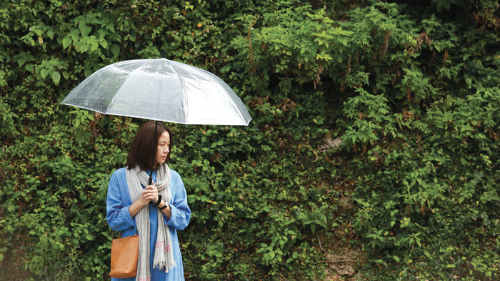
ZinniaFlowerDirector Tom Lin made the Taiwanese “Zinnia Flower” following the death of his wife in 2012 as part of his grieving process.  The film follows Ming who lost her fiancé and Wei who lost his wife and unborn child both in a major car accident.  Their loves ones get Buddhist funerals in which the departed’s loves ones come to the temple every 7 days for 49 days and are supposed to let go at the end of the grieving period of 100 days.  Ming and Wei’s paths cross a few times during this process but each goes through their grief their own way.

The film is co-written by its director Tom Lin and writer Wei-Jan Liu.  They craft a highly personal film about grieving, letting go, moving on, and remembering.  Lin puts all of his feelings and hope in this film which is filled with sadness and love.  The two mourners the story follows are complex and layered characters, each showing two very different ways of grieving with the victims’ families each taking different approaches to how to include them in the funeral process.  The film explores many angles to grief, none of them being better or worse than the other.  It also never judges or becomes schmaltzy; it’s a good study in its subject.  The director’s closeness to the subject, the fact that he has clearly battled with this, shows throughout the film.  He works with a hard subject delicately and gets his audience to share in the worse experience (most likely worse) of his life.

With a subject so close to his heart, the casting of the characters he created is so important.  The actors needed to be perfect for their parts.  In the part of Ming, the young woman who lost her fiancé in the accident, Karena Lam offers a subdued performance that hits all the right notes.  One of her scenes in particular should have every eye watching tearing up.  Her character goes through the grieving process without much support but how she decides to go through it on her own shows strength and courage.  She not only shows that her character is sad and mad, but you can also see the moment when she takes her life in her own hands, the moment her sadness changes , all of this through the actress’ soft, yet strong performance.  In the part of Wei, actor Shih Chintlang, a guitarist from the band Mayday, portrays a man in the worse possible period of his life, having lost both his wife and unborn child.

His performance embodies grief in a more classical way, with anger and the other steps up until acceptance.  His feelings are more expressed than Ming’s, thus the actor’s performance bounces back and forth between stronger feelings.  He makes the viewers feel with him in a more visceral way. For those who do not know much about Buddhism and its funeral ceremonies, the way grieving is handled is very interesting.  Over 49 days, the mourner goes to the temple to remember the dead and grieve.  After 49 days, there is also an important point at day 100 where the mourner is supposed to stop crying and learn to go on.

The way the religion is handled in the film doesn’t hit the viewer in the head; it makes sense and actually shows an angle to things that non-Buddhists may not know may not know very well. The temple scenes are shot in a very serene manner and are beautiful.  The rest of the film has a serious tone as well, but the temple scenes catch the eye in particular.  The scenes in Okinawa also do, but they are more comforting than serene.  This film is shot with such attention to details that it makes its runtime go faster and helps get the feelings through without becoming too heavy which is not an easy balance to achieve especially with such a subject.

Zinnia Flower is a film about death and the grieving process that works.  It’s not too heavy but shows the feelings and makes the viewer empathize with the characters.  It’s a beautiful and sad film, beautifully sad.  The title flower, the Zinnia, and what it represents is explained close to the end.  The story is touching and should make quite a few viewers cry.

Psychonauts, the Forgotten Children (2016) [Fantasia International Film Festival 2016]

PsychonautsI think audiences will enjoy the incessantly dreary and bleak tone of “Psychonauts, The Forgotten Children,” but for me it felt a step too heavy and morose and undercut a lot of the attempts at whimsy and absurd humor. “Psychonauts” is adapted from Alberto Vázquez’s independent Spanish language graphic novel “Psiconautas,” which featured the character Bird Boy, who starred in his own award winning short film from Vazquez. Bird Boy returns in the film as a side character who is relentlessly pursued by local officers, both of whom want him dead and will do whatever it takes to kill him, despite his seemingly innocent habit with “Happy pills” he’s dependent on to keep demons at bay.

Meanwhile mouse Dinky is desperate to run away from her adoptive family that pressures her to become an engineer, oblivious to the landfills outside of their town that involve rats. These rats look for copper to survive, and the tensions rise as the space for survival grows smaller. I had a love hate relationship with “Psychonauts.” Originally I was so excited to see it since the animation is absolutely beautiful, but it’s such a heavy handed and dire metaphor for poverty and conformity I was actually not entertained all that much. Granted, when I savored the brilliant animation style, I loved what Alberto Vazquez and Pedro Rivero had to offer audiences alike.

But once I dug in to the story, it was a pretty miserable experience with tales about scavenging rats, drug addicted bird boys, and young teenage mice with dark voices tempting them to murder their friends and family. Alberto Vázquez and Pedro Rivero’s “Psychonauts” is a haunting, very heavy animated film with stark political and social overtones. Those themes hobble it in some instances, sadly, muddying up the excellent animation, and richer more complex tale about madness, and looking for a purpose in a land where opportunity involves murder and or conformity.

Train To Busan (Bu-San-Haeng) (2016)

traintobusan“Train to Busan” is very much steeped in the idea of humans using the warped concepts of segregation and isolation as a means to survive, not only from the menaces lurking outside our doors, but inevitably from one another. Sook-woo is a hopelessly disconnected workaholic who is confined to his office desk and is still reeling from a bad divorce. Trying to rebound from a bad business deal with a local corporation, and re-connect with his estranged daughter Soo-ahn, he submits to her birthday plea of taking her to Busan on train to see her mother. Despite protesting against it initially, he accompanies her to see her mom. But much to his, and everyone’s surprise, a viral outbreak has exploded on to the train station turning the infected in to rabid, running, flesh eating zombies.

Continue reading

Hunt for The Wilderpeople (2016) [Fantasia International Film Festival 2016]

WILDERPEOPLEDirector Taika Waititi has a keen and admirable understanding of humanity as well as the relationship with death and loss we have every waking moment of our life. Whether it’s a gory horror comedy like “What We Do in the Shadows” or a family drama like “Hunt for the Wilderpeople,” Waititi is never above examining our everlasting relationship with death that begins when we’re very young. “Hunt for the Wilderpeople” is destined to be a classic drama comedy that pits two men against the wilderness in their efforts to make sense of life and come to terms with death.

Continue reading

post

Day of the People (2016)

DayofthePeopleIt feels like there’s a little bit more gong on in “Day of the People” than a simple experimental short film. Based on the research I’ve done, director Philip Stainsby seems to have aimed for a short film reminiscent of “Night of the Comet,” but the visual cues seem to hint at something else entirely. “Day of the People” opens with a young man waking up at the very end of humanity and then begins traversing through the city and making his way through something of a business district where the sky is painted a dark shade of Red.

With only the discovery of a soda can, he walks through the streets looking for something, and finds it when he comes across a man walking around in a dark suit. Ultimately I interpreted “Day of the People” as something of a subtle commentary on the downfalls of a perfect Utopia and how some people are so committed to building a new world, they’re not likely to notice when something beyond their control is set to end their plans. Based on the small hints Stainsby adds, the people built this world and they also contributed to destroying it, thus making it a pretty open target for something else. Who knows?

Maybe I’m merely over thinking an experimental film, but Philip Stainsby’s short packs in a lot of nuance and complexity in only ten minutes time. The photography and direction are superb, with Stainsby committing to the dream like atmosphere and paints a grim look at what is the perfectly functioning society where all life isn’t quite present or even emotionally attached, for that matter. I gather “Day of the People” will leave many an audience debating about its meaning when it hits the festival circuit. Philip Stainsby’s short science fiction film is a remarkable short with unique and bold use of color and landscape. I hope to see more from him in the future.