
 Lee Van Cleef is a man who makes it look easy to dominate the screen with his presence, no matter what the film. “The Big Gundown” is purely a western thriller for the Lee Van Cleef fans that want to indulge in the sheer finesse and charisma of Van Cleef when he takes turns as the hero. Or in this case, the anti-hero. Van Cleef takes on the role of John Corbett, a man who is not afraid to gun down people that threaten him, but is never trigger happy. He is one of the best bounty hunters in the west, and is a man devoted to his duties. As Corbett, he’s asked by an aristocrat to hunt down a vicious criminal named Cuchillo. He’s wanted for raping and murdering a young girl, and is currently on the run in the west, giving the law a difficult time of finding him.
Tag Archives: Western
Wanted: Dead or Alive – The Complete Series – Special Edition (DVD)
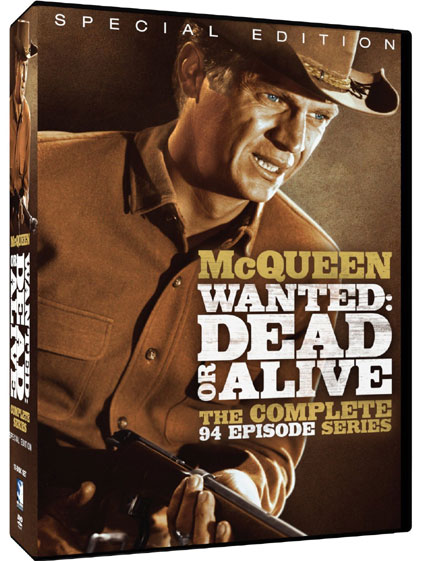
From Mill Creek comes the complete collection of the Steve McQueen star making television series “Wanted: Dead or Alive.” Easily one of my favorite Western action series of all time, Steve McQueen plays the complex and often swift anti-hero and bounty hunter Josh Randall. Brandishing his trademark sawed off shotgun named “The Mare’s Leg,” Randall travels across the country capturing his latest bounties and being forced to often travel alongside them.
Assault On Precinct 13 (1976): Collector’s Edition [Blu-ray]
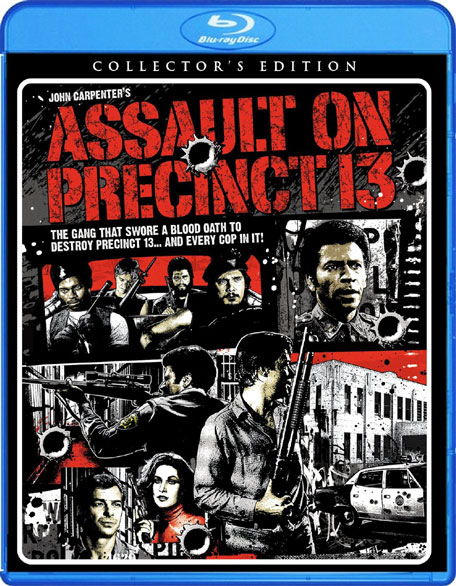
Almost forty years later, director John Carpenter’s “Assault on Precinct 13” is still an excellent and mean contemporary western that never lets up on its audience. Director Carpenter has a knack for lensing the world to look like an alien habitat filled with despair and evil, and “Assault” is no exception. What begins as moving day for a local precinct descends in to violence, chaos, and murder with an enemy that will stop at nothing to quench its thirst for vengeance.
From Dusk Till Dawn 3: The Hangman’s Daughter (2000)
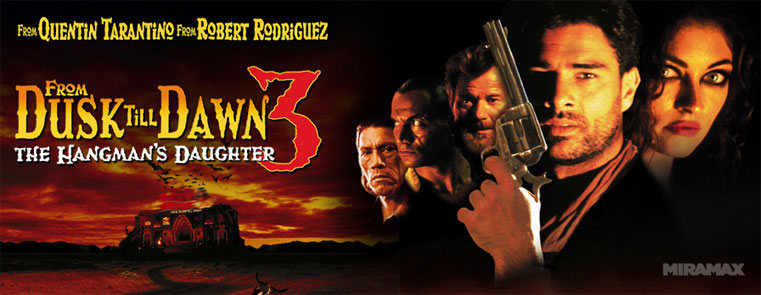
There is still no explanation as to the origin of the strip club/temple. Not that I really cared, mind you. In the final shot of “From Dusk Till Dawn,” it was a great final blow to the audience to show how these vampires have likely been committing these slaughters since the mid-1800’s. I didn’t need to know how they got together and devised this idea to lure bikers and truckers to feast on them, but I assume if they’re going to continue the series with a prequel, you might as well give it a shot and explain how the temple came to be. Maybe an 80’s montage set to “Our House” with the vampires building the club and painting it at night or something.
The Lone Ranger (2003)

Back in 2003, Warner had the bright idea to pretty much take the “Smallville” concept and apply it to the Lone Ranger. Rather than featuring a very young superhero, we were given a very young pulp hero. Except, they changed everything about the original hero. And tried their best to pass off a white cowboy hat and black mask as cool for modern audiences. There’s even a guitar version of the William Tell Overture in the closing credits. Guitars are cool, right? There’s a reason why Lone Ranger is a pulp character. He’s a wonderful superhero, but adjusted to contemporary style is not going to work.
Assault on Precinct 13 (1976)
 John Carpenter is perhaps one of my favorite task masters of the cinematic realm. He’s a man who can change form and tone on a dime, and loves film so much he creates his own tribute to certain genre tropes without relying on them as a crutch. Much as I love Quentin Tarantino, he can force much of his inspiration for his films down audiences throats. Carpenter has always been so much more subtle in his love for the classic films he adored. He never quite had the budget to make westerns nor the studio backing, so he opted to make his own Westerns but in their contemporary settings. Hence, Snake Plissken. John Carpenter is the type of director I’d love to be should I ever lens a film someday. His films garner a style all their own and deliver in action and entertainment.
Bikini Round-Up (2005)
 As softcore schlock goes, director Fred Olen Ray’s wild west romp is only sub-par, and not as entertaining as his previous bikini films. I mean how do you film a girl on girl on girl scene without even showing any of them chewing on rug? Hell, in one moment Beverly Lynne and Nicole Sheridan literally begin fighting over Belinda Gavin’s betweens, but we never actually see any of the good stuff. But I digress. While “Bikini Round Up” is just sub-par, what I really enjoy about the movie is that everything, from top to bottom is implied.