
 In the eighties if it was popular it had to have a tie in to something that involved merchandise. It didn’t matter what it was, whether it was Rubiks Cubes, Mad Balls, or even the Garbage Pail Kids, companies were always thinking about new ways to squeeze as much money out of their products as possible. In the eighties, My Pet Monster was a very popular kids toy that was simple in premise. It was a cute horned monster with plastic cuffs that kept its claws secure. The monster was gross enough for kids that loved monsters, but cute enough to warrant being a bed time toy. So naturally Hi Tops gave us an animated series for “My Pet Monster” and a much derided straight to video movie that reeks of a cash grab.
Category Archives: Movie Reviews
Girl House (2015)
 If you can accept that Nick Gordon’s “Girl House” is a digital age version of “Slumber Party Massacre,” you might be able to make it through the so bad it’s good horror film just fine. I feel like punching people that use the term “Hate watch,” but “Girl House” is the very definition of a Hate Watch. It’s stupid, tedious, and makes no sense, but is saved miraculously by a very mean spirited and intense second half. It’s not often a movie starts out as a cheesy thriller about an internet stalker and transforms in to Leatherface: The Handy Man in “California Power Tool Massacre.” Actor Slaine does as grand job as monstrous villain “Loverboy.”
All Through the House (2015)
 Todd Nunes takes “Black Christmas” and wraps it in the Santa slashing madness “Silent Night, Deadly Night” for what is a pretty wonky slasher film. I appreciated the humor and inherent mean spiritedness of it all, as Todd Nunes definitely has a love for slasher films. He and his crew even seem dead set on creating their own iconic slasher with our silver faced Santa who has a knack for mutilating his victims with garden sheers. There’s also his habit for turning his male victims in to eunuchs, which is of shocking importance once the finale rolls around. I really like that Todd Nunes stuffs the film with more Latin and Hispanic actors, providing a very welcome diverse cast.
The Last Man on Earth (1964)
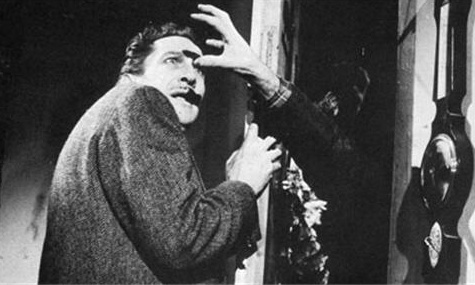 Currently on the public domain hit list, “The Last Man on Earth” is one of the first and finest adaptations of “I Am Legend” that while not perfect, is infinitely better than most of the successors to follow. Set in 1968, Robert Morgan is a doctor who finds society at the mercy of a mysterious plague. Everyone in the world is gradually dying out from this disease, and he soon discovers that those who die inevitably return from the dead. Unless burned, the bodies will re-animate and look for the closest blood source. Cue director Ubaldo Ragona’s awfully gruesome imagery of a humongous pit of fire where bodies of the recently deceased have been dumped to burn.
The Hollow (2016)
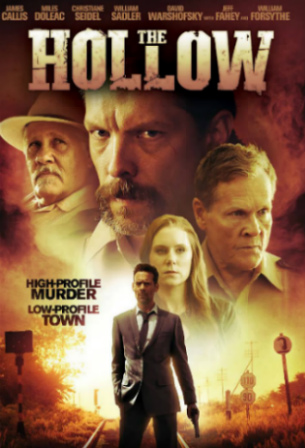 In a small town in the Deep South, a young local is killed along with a couple of young tourists. One of these tourists being a congressman’s daughter from out of state, the case is assigned to the F.B.I. who sends agents Vaughn Killinger and Sarah Desoto to investigate. As Killinger battles his demons and Desoto tries to keep things together, a tangled web of connections and secrets is unraveled. Writer/director Miles Doleac builds an effective suspense thriller murder mystery. The characters he creates are complex with no one being good or truly bad. His characters are very human with different flaws of varying gravity, none fully hate-able.
Night of the Living Deb (2016)
 Ever since “Shaun of the Dead,” many filmmakers have been intent on delivering their own horror comedies about self obsessed thirty somethings thrust in to the zombie apocalypse. Kyle Rankin’s “Night of the Living Deb” is not a masterpiece by any definition of the word, but it ends up being a decent diversion that has a good time using zombies as a means of emphasizing the dynamic between our main characters. Set on the fourth of July, awkward Deb awakens in the apartment of her love interest Ryan. Though she’s in love with him, Ryan isn’t entirely interested in her and is anxious to get her out of his life as soon as possible. Little do either of the pair know that overnight their small town of Maine has been consumed by a zombie apocalypse and everyone they known are now flesh eating zombies.
The Conjuring 2 (2016) [Blu-Ray/Digital]
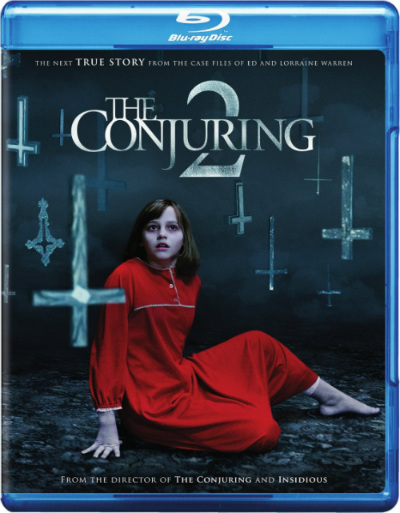 After the blundering misfire that was “Annabelle” I was a bit scared that “The Conjuring 2” would be a bland follow up to what was one of the best contemporary horror films ever made. Thankfully James Wan not only outdoes himself, but builds on the mythology of Ed and Lorraine Warren. “The Conjuring 2” follows the tradition of the original film, putting the Warrens in to an impossible situation where they have to do battle with a powerful evil. What’s more is that the evil has chosen to pick away at a vulnerable lower class family once again, prompting the Warrens to risk everything for the sake of one victim’s soul.