
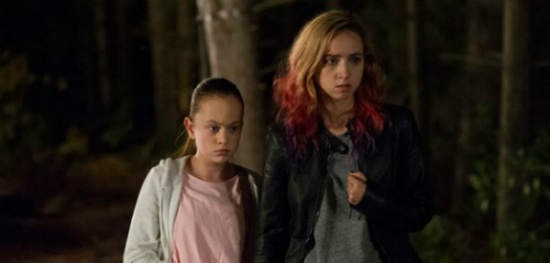
 For “The Monster,” director Bryan Bertino who debuted with the excellent “The Strangers,” channels “Cujo,” exploring a family in disarray and what happens when they’re tested by a force of nature that’s unstoppable and deadly. “The Monster” is two parts a family drama and one part horror movie. The film’s monster serves as something of a metaphor for family dysfunction and the potential for character Lizzy to end up the victim of her rage-aholic father. Zoe Kazan and Ella Ballentine work beautifully together as a mom and daughter Kathy and Lizzy who spend more time arguing with one another than working for a goal. When Lizzy decides she wants to move with her father, Kathy begrudgingly takes her. After hitting a wolf on the road, they’re left stranded, and stuck in a rain storm. Sadly the wolf has managed to lure a monstrous beast from within the heart of the woods, leaving Kathy and Lizzy vulnerable and incapable of diving to safety.
Tag Archives: Drama
Last Girl Standing (2015)
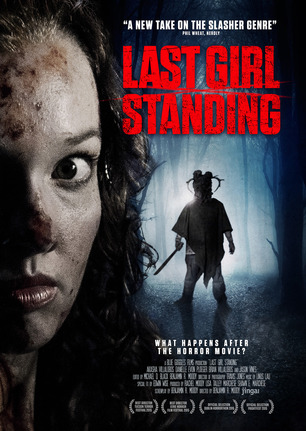 In writer/director Benjamin R. Moody’s film, the lead character is one hell of a fighter, but her trauma may be having the best of her as she sees signs of her attacker throughout her life and can’t quite let go. Camryn, the only survivor of a massacre in the woods is trying to live with PTSD and survivor’s guilt. As she is taken in by a new group of friends, the killer from her past may be haunting her. The lead character he creates here is a strong young woman but she does not have much of a back story outside of being the only survivor from a massacre during a camping trip to the woods. The other characters, her new friend and potential love interest Nick and his roommates have more set up than she does almost. They are presented and explained quickly but it gives them connections and personalities.
Black Sabbath (I tre volti della paura) (1963)
 Boris Karloff is deliciously spooky as the narrator who unfolds a trio of stories in Mario Bava’s immortal “Black Sabbath*.” Each tale involves people whose demons come back to haunt them in one way or another. Mario Bava is excellent in depicting various shades of terror, devoting bold and stark palettes of colors to each segment that add to the EC Comics vibe that Bava inadvertently conveys. “The Drop of Water” is the best and arguably most iconic of segment in horror movie anthologies, involving the classic comeuppance of a grave robber. In the early 1900’s, nurse Chester is called to a large house once owned by an elderly woman who was also a medium. After the elderly woman dies while seemingly in a trance, Nurse Chester arrives to discover the gruesome visage of the woman and helps to dress up her corpse alongside her incredibly terrified house maid.
The Witch (2016)
 Robert Eggers’ debut “The Witch” is a marvelous and absolutely mesmerizing film. It’s not just an incredible horror film, but a fantastic examination of how a family basically tears itself from inside out due to ideas of resentment, sexual repression, and pure isolation. Not many directors debut with a bang, but “The Witch” is a slow burn horror film that begins with the fuse burning and burning until Eggers delivers something of a humongous explosion that will leave audiences speechless. Eggers sets his film on 17th Century New England, where a patriarch of a small family named William is threatened with banishment by a puritanical plantation with his wife, daughter Thomasin, younger son Caleb, and fraternal twins Mercy and Jonas. Vowing to free himself of the puritanical village, William builds a secluded farm at the edge of the woods, swearing to thrive with his family at his side.
Boo! A Madea Halloween (2016)
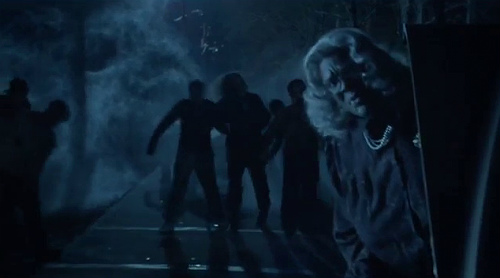 It’s too bad we get a Halloween comedy, but it’s a man who’s based his entire career around a character tailored for religious audiences. I’m not saying the religious can’t celebrate Halloween, but Tyler Perry seems to center his movie on the holiday for absolutely no reason other than grabbing October crowds. “Boo! A Madea Halloween” isn’t a bad movie by any stretch, but it is Tyler Perry’s most unfocused and tonally inconsistent. Perry has no idea how to handle the aesthetic of Halloween. He can’t even use it as a means of conveying what could have been a very touching story about a dad who is trying to gain control of his increasingly out of control daughter. Halloween is more of an after thought here.
The Windmill Massacre (2016)
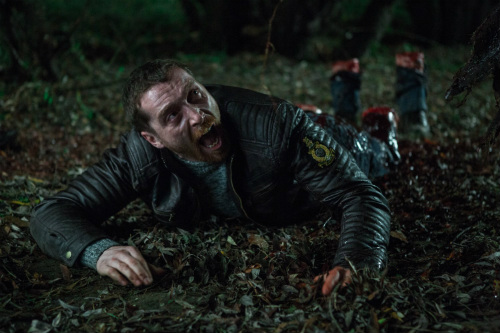 Known as The Windmill Massacre or the The Windmill depending on the country and release, this supernatural slasher set in Holland follows Jennifer who is running from her past and goes on a tour of the countries beautiful windmills. Once in the countryside, the bus breaks down and the passengers start getting picked off one by one. Director Nick Jongerius creates an effective slasher with a twist written by Chris W. Mitchell and Suzy Quid, based on a story by Jongerius. The characters here are varied which gives the film an edge over the usual slashers where high school or college students are the only one being picked off.
The Unspoken (2015)
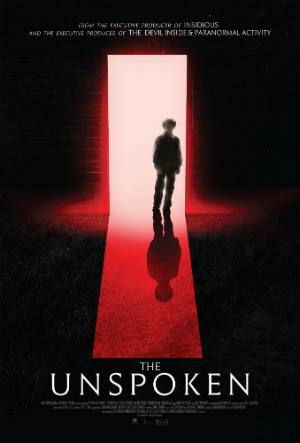 Written and directed by Sheldon Wilson, The Unspoken is a pretty tame horror film. It follows the tropes of haunted housed films well without adding a whole lot that is new until the very end when a twist changes the whole story. A single mother and her son move into a house that has been abandoned for seventeen years following multiple deaths. Angela, whose single father has been laid-off for a while, is hired to look after Adrian, the non-speaking new child in town. The script up until then is fairly routine: a scare here, scare there, jump scare, lots of set up. Unfortunately, this formula falls a little flat for this big horror fan. However, this does not mean that it won’t scare of unnerve the casual horror fan, or the ones looking for their yearly scare.