
 “Train to Busan” is very much steeped in the idea of humans using the warped concepts of segregation and isolation as a means to survive, not only from the menaces lurking outside our doors, but inevitably from one another. Sook-woo is a hopelessly disconnected workaholic who is confined to his office desk and is still reeling from a bad divorce. Trying to rebound from a bad business deal with a local corporation, and re-connect with his estranged daughter Soo-ahn, he submits to her birthday plea of taking her to Busan on train to see her mother. Despite protesting against it initially, he accompanies her to see her mom. But much to his, and everyone’s surprise, a viral outbreak has exploded on to the train station turning the infected in to rabid, running, flesh eating zombies.
Batman: The Killing Joke (2016)
 DC And Warner have at their hands one of the most iconic Batman narratives of all time, a narrative that asks the question if the Joker is truly someone too weak to endure a really awful life, or if he can submit someone to so much pain they can become exactly like him. All it takes is one bad day, he insists. “The Killing Joke” is surprisingly only seventy six minutes in length and still manages to feel way too long. For an iconic story with such a meaty premise, DC and Warner obviously have absolutely no idea how to put it to screen, and manage to botch this adaptation big time. With “The Killing Joke” we have to endure what is one long winded and dull prologue that leads literally to nowhere, just to allow the viewer to connect to heroine Batgirl.
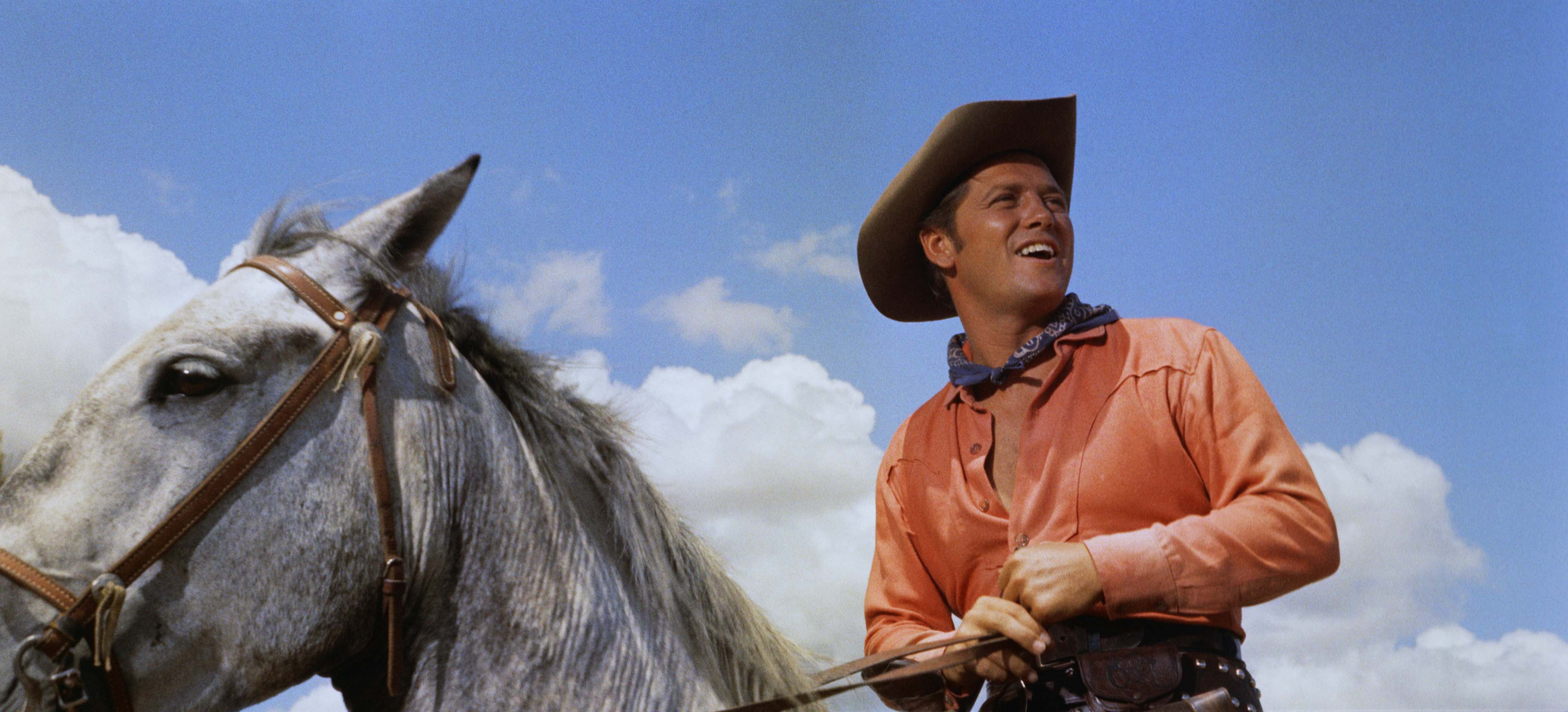
Oklahoma! (1955)
The decision to hire Fred Zinnemann as the director of the film version of the Rodgers & Hammerstein musical “Oklahoma!” was peculiar – the director never helmed a musical before and was best known for his intensely riveting dramas such as “The Search,” “The Men,” “High Noon,” “The Member of the Wedding” and the Oscar-winning “From Here to Eternity.” One would imagine that bringing in a veteran musical director such as Stanley Donen or Vincente Minnelli would seem more logical for a vehicle like “Oklahoma!” – this would seem to be the job for an expert in the light and breezy, not in doom and gloom.
But Zinnemann’s predilection for the dramatic gave the frothy “Oklahoma!” a sense of complex gravitas that was absent from other mid-1950s musicals – not to mention the original Broadway production – and when viewing it today, it seems more modern when many of the other musicals of the decade seem badly dated. Part of this was achieved in the off-beat casting of Rod Steiger (who transformed the character Jud Fry from a stock villain into an emotionally tortured untouchable) and film noir diva Gloria Grahame (who played the comic relief Ado Annie without a trace of wink-and-nudge farce, thus making her character’s sexual cluelessness more humorously invigorating). Zinnemann might have taken the film into even darker territory, as witnessed in his unusual eagerness to audition non-musical young Method actors Paul Newman and James Dean for the Curly role. But under Zinnemann’s direction, Gordon MacRae, a usually bland musical-comedy performer, tapped into hitherto unknown dramatic abilities as he plumbed Curly to find an insouciant malevolence that clouded the character’s personality and motivation.
Still, “Oklahoma!” is a musical and not a melodrama, and Zinnemann responded to the material with an imaginative style that took full advantage of the widescreen format (the film was simultaneously filmed in the Todd-AO and CinemaScope processes) and vibrant rural locations (in Arizona, as Oklahoma proved oddly incompatible for the production). The classic score was wonderfully enhanced with boldly conceived outdoor sequences – “Oh, What a Beautiful Mornin’” and “The Surrey with the Fringe on Top” are playfully visualized while the complicated “Kansas City” dance number was staged with a large ensemble in an open air train depot. Zinnemann also provided expert framing for Agnes de Mille’s groundbreaking dream ballet, which offered an astonishing avant-garde sequence laced with psychosexual menace.
It also helped that the film brought in reliable performers to inhabit the broad roles with unapologetic hamming – Eddie Albert’s oleaginous Persian peddler, Gene Nelson as the handsome but dim cowboy and the sublime Charlotte Greenwood as the earthy Aunt Eller offer a jolly presence to keep Zinnemann’s edgier elements in check, creating the cinematic equivalent of a yin-yang balance. The biggest surprise was the film’s greatest gamble: putting unknown Shirley Jones in the central role of Laurey. The young actress was not lacking in photogenic charms and a fine voice, and Zinnemann carefully guided her through the role’s light comedy and difficult emotional turns, which resulted in one of the most startlingly effective film debuts.
Ghostbusters (2016)
 If you subscribe to the idea of multiverses (where there are various universes for TMNT, DC Superheroes, and Marvel superheroes alike), I like to think of “Ghostbusters” 2016 as an Elseworlds tale, where the concept of Ghostbusters exists, but on its own plain and on its own terms. The Ghostbusters we know from the eighties are also existent, but in their own personas and fulfilling their own purposes. “Ghostbusters” 2016 even as its own horror comedy is just mediocre. It’s not as great as the original “Ghostbusters” but is definitely a notch above “Ghostbusters 2.” Melissa McCarthy is her usual wry self as Abby Yates, a once paranormal researcher who has spent many years trying live down co-publishing a book about the paranormal.

The Secret Life of Pets (2016)
 The best way to describe “The Secret Life of Pets” is “Toy Story” meets “Looney Tunes.” In fact the “Toy Story” comparisons are never far off, as the film’s formula is most derived from Pixar’s film where we view the secret lives of everyday household elements when their owners aren’t looking. This time we set down on a random apartment complex in the middle of Manhattan where a slew of household pets commune and indulge in their own hobbies when their owners are out for the day. Louis CK does a wonderful job voicing Max, the hero of the film who is a terrier and loyal friend to his owner Katie. While Katie is gone for the day, Max gets together with the pets of the building to talk over the day and discuss what they think happens when their masters are gone.
Eliie Kemper as Katie is a single working woman with a heart for dogs who bonds with Max, and then suddenly brings home a new dog one day. Max is horrified and angry when Katie brings home big fluffy dog Duke, a well meaning adopted pet who tries to make friends with Max and then forms a rivalry when he realizes Max is trying to get him kicked out of the house. While being walked one day, Duke tricks Max in to going on to a construction site, prompting the pair to get lost in the city. With dog hunters and vicious cat on their tail, the two have to work together with the help of anti-owner revolutionary leader, the bunny Snowball. Meanwhile puffy dog and neighbor Gidget goes looking for Max and Duke, hell bent on bringing them back home.
“The Secret Life of Pets” is a subtle celebration of New York City, where our animal characters travel all throughout New York in an attempt to get hack home. The movie doesn’t attempt too much emotional complexity or adult themes, but instead revels in its silliness, ace animation, and often laugh out loud comedy. One particular scene involving an old woman’s reaction to a baby in its carriage is quite hysterical. The animation opts for a very unique and fun style in the vein of Chuck Jones and Tex Avery. Despite the movie injecting a lot of heart at the core of its narrative about animals and their devotion to their humans, the animation is decidedly exaggerated with a lot of the characters presented in over the top animated forms.
Even tough heroine Gidget is presented as something of a barking and talking puff ball throughout the film. At a little over seventy minutes, “The Secret Life of Pets” has no room for filler or flab to its story, providing a brisk and hilarious adventure with a genuine sense of emotion to it. It’s a fun, funny, and simple animated film, and one of the better animated entries to come to theaters. While yes it can be accused of taking from “Toy Story,” Max and Duke are genuinely entertaining heroes I hope we can see more of soon.
Never Tear Us Apart (2016) [Fantasia International Film Festival 2016]
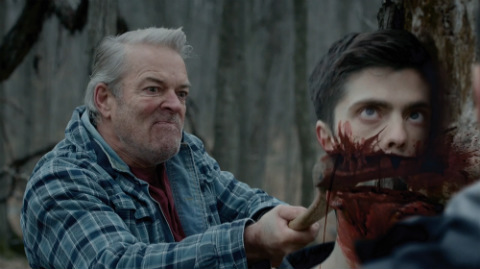 Sid Zanforlin’s short horror comedy is a fantastic bit of gruesome, grue, and slapstick comedy that will definitely strike a nerve with folks that like HG Lewis. I am shocked how much Zanforlin is able to squeeze in to in only seven minutes in length. And considering this is a proof of concept for a potential feature film, I think Zanforlin has enough material for a potentially bonkers splatter horror comedy down the road. Filled with amazing special effects by Justin Tripp, Zanforlin centers his film on two young men traveling to meet their family who stop alongside the road.
Midnight Movie Madness 50 Movie MegaPack (DVD/Digital)
 For movie buffs and collectors looking to gather up some classic schlock and silly horror films, “Mill Creek Entertainment” brings us a 50 Movie MegaPack DVD Set of some their worst and most infamous horror films. Thrown in to the mix, there are some science fiction, juvenile terror movies like “I Accuse My Parents,” and even the George Hamilton starring “Evel Knievel.” Further digging in to the selection of fifty titles, there’s 1944’s “Delinquent Daughters,” the Francis Ford Coppola horror classic “Dementia 13,” the slasher “Driller Killer,” and 1977’s “Drive In Massacre.”
There’s the deliriously bad but hilarious science fiction action film “Future Hunters” starring Robert Patrick, and Bruce Le, William Castle’s fun “House on Haunted Hill,” the early Brandon Lee starring stinker “Laser Mission,” the classic MST3K spoofed “Manos-The Hands of Fate,” the so bad it’s great drug hysteria movie “Reefer Madness,” the goofy science fiction film “Slipstream,” the classic dwarfsploitation movie “The Terror of Tiny Town,” and the Fred Williamson post apocalyptic science fiction film “Warriors of the Wasteland.” All movies come packed in a cardboard box by Mill Creek and in paper sleeves. I have to say I miss the plastic clam cases, but maybe it’s a cost thing.
This year movie collectors might enjoy knowing that Mill Creek Entertainment has taken to the digital world, allowing their consumers to redeem their fifty megapack purchases for digital libraries for their laptops, cell phones, and Ipads. Much like every other home release, the consumers will be given a unique code with their purchase, allowing them to redeem their movie packs in digital form at Mill Creek’s new service Watch.MillCreekEnt.Com where they can watch them, stream them, or download them.