
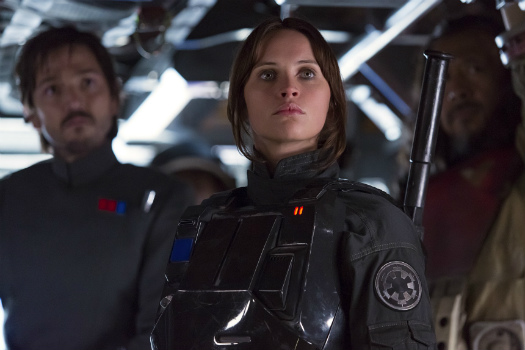
 While I wasn’t keen on Disney and Lucasfilm approaching the prequel so quick in to the rebooting of the series, “Rogue One” really serves us one of the most important chapters in the fall of the Empire beautifully. While “Rogue One” certainly isn’t a perfect film, it sure is a fantastic action adventure that attempts to break the mold. Gareth Edwards transforms his tale of the stealing of the plans of the Death Star in to a last stand mission in the vein of “Saving Private Ryan” and “Inglorious Basterds.” Though director Edwards offers up the usual nods to “Episode IV: A New Hope,” thankfully “Rogue One” also manages to stand firmly on its own. It’s a compelling tale of the rebellion, and pure evil trying to maintain its strangle hold on the galaxy.
Tag Archives: Drama
Mon Roi (My King) (2015)
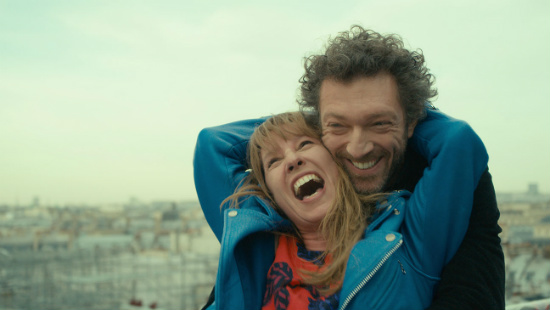 A woman finds herself in physical rehab after a major skiing accident; there she heals from this accident and from her past relationship with her wild ex. Written by Etienne Comar and Maïwenn with the latter directing as well, the story of “Mon Roi” follows a woman going through a good part of her life led by her love and passion for a man who may very well be quite destructive. As she works on being able to walk again, literally and metaphorically, her past is seen through a series of long flashbacks. This is handled in a way that works perfectly here, showing her life basically from the moment she met him and keeping these long flashbacks in chronological order. This actually leads to almost forgetting that the main character is thinking back on these moments until these scenes at the rehabilitation center become longer.
David Brent: Life on the Road (2016)
 What makes David Brent the ultimate creation of Ricky Gervais is that we can all relate to him. We have all at one time in our lives been David Brent. All of us want to be liked, and accepted, and appreciated. We all want friends, and family, and some place to call home. We all have something we want to offer the world, and some kind of unfulfilled desire that we wish we could bring out for everyone to see. Ricky Gervais’ “Life on the Road” is a great sequel to the original BBC “The Office” but thankfully it’s not a movie you have to have seen the show to understand. While there are a ton of mentions of the original series, “Life on the Road” is about Gervais’ anti-hero, the man known as David Brent who has spent most of his life chasing the idea of being liked and accepted, but has no idea how to achieve it.
My Big Fat Greek Wedding 2 (2016)
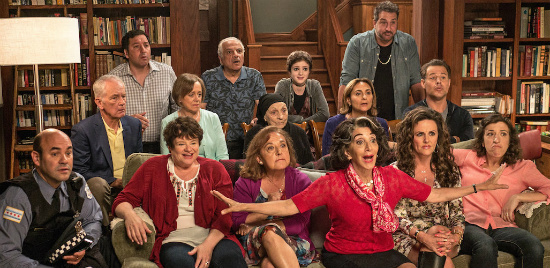 It’s about time Hollywood started admitting that Nia Vardalos is a one trick pony. After her wildly successful vanilla sitcom romantic comedy in 2002, she returns to the original premise fourteen years later. After many more failed cinematic vehicles, and a really embarrassing attempt to turn her movie in to an actual Television sitcom, Vardalos goes back to the well to deliver what feels like a pitch for another sitcom. Or maybe a TV drama comedy, since sitcoms are so passé and old fashioned. “My Big Fat Greek Wedding 2” is a painfully contrived and moronic sequel that takes everything that was likable about these characters and turns them in to shrill and obnoxious plot devices.
Turnabout (2016)
 If Richard Linklater and Neil Labute got together to write a movie, you’d pretty much get E.B. Hughes’ stellar drama “Turnabout.” While E.B. Hughes sums up the film quite simplistically in most of the press materials, “Turnabout” will very much surprise anyone going in to it expecting a drama about a suicidal man and his long lost friend. “Turnabout” feels a lot like Linklater’s “Tape” except so much wider in scope, in the end. While director Hughes starts “Turnabout” like something of a man experiencing a revelation, he injects small doses of menace here and there to completely undercut every expectation we have when the film begins.
The Devil’s Dolls (2016) [Blu-Ray]
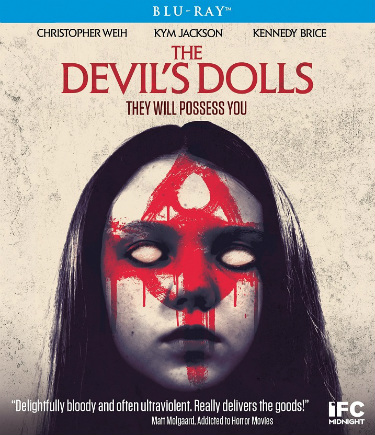 It’s a shame that people still think there’s some horror fodder to be mined from worry dolls, because so far I’m not seeing it. “The Devil’s Dolls” plays out like a gory TV movie, or an extended episode of some supernatural series. There are a lot of bland characters trying to stop what is a pretty convoluted and goofy plot device involving a murderer and evil dolls. Director Padraig Reynolds’ film isn’t a complete misfire as it achieves some level of eeriness in some instances. I really do like how our characters look when they’re possessed by evil worry dolls that turn them in to psychopathic maniacs, but that’s lost in a haze of pretty mediocre melodrama and a hazy sub-plot about voodoo.
Two Lovers and a Bear (2016)
 In the very Northern part of Canada, where not much happens and people do as best they can to survive and entertain themselves, two damaged but passionate souls in love are trying to make it and better their lives. Written and directed by Kim Nguyen, based on an original idea by Louis Grenier, the film follows the lives of two young adults fighting inner demons and rough past and trying to love each other and do what is best for each other. Their struggles feel rather real and the way they push and pull at each other grabs the viewer and brings them in. The characters built feel like actual people, filled with issues and difficulties, self-loathing and worries.