
 Allegedly one of the many influences for Quentin Tarantino’s “Kill Bill” series, “Thriller” or “They Called her One Eye” is an awfully uneasy and chilling bit of savagery involving one of the primary themes for grind house cinema: Victimizing. Like many before and after it, we watch a simple girl terrorized by corrupt and violent forces that drive her to the brink of violence and revenge in a hail of blood and bullets. Sure, thanks to many of its fans, “Thriller” is hardly a rare movie anymore, nor are reviews of it hard to come by, but where else will you find my own wry commentary?
Tag Archives: Revenge
Stan Lee Presents: The Condor (2007)
 What Stan Lee has basically done here is create his very own Spider-Man. With the Condor, we have a basically privileged young man whose life is really in need of a boost. When his parents die, he is rendered basically crippled after being attacked, and becomes a superhero. One that talks the villains to death to piss them off. The Condor is basically the equivalent of the Spider-Man rogue Rocket Racer with a mixture of that lame superhero from the nineties: MANTIS.
The Grudge 2 (2006)
 The curse gathers in the next place of death, says the opening subtitles. You just have to love how such a nice house is considered a place of death. Give me a nice house with a ghost over my current apartment any day of the week. Now that’s a horror movie. While “Ju-On” was a pleasant horror flick, I am one of many who thought “The Grudge” was simply a horrible movie. Void of any atmosphere, and completely missing the point of the original, turning Kayako into a run of the mill monster, as opposed to her actual purpose in the original. Well, here’s the sequel, and it’s actually no different. It’s repetitive, it feels like three hours, and there’s really no character you can root for.
Death Note (Desu nôto) (2006)
 I admit to never having seen the original anime of “Death Note,” but now I feel compelled to. “Death Note” is an excellent horror film about self-righteousness, and what lengths people are willing to go through to ensure that justice is served when the law fails. Light Yagami is a boy seeking to become a police officer with his girlfriend, but after a frightening confrontation with a child killer who had just been excused of his crimes in a trial, he decides the law doesn’t work. One night, after walking home, he discovers the black book called “The Death Notebook,” a mysterious notebook that kills anyone with the name the holder prints.
Light then secretly becomes an angel of death codenamed Kira, who destroys criminals, and earns a countrywide following of folks who believe him to be a sign from god striking down the wicked. But Light knows better, after being confronted with a twisted winged demon named Ryuuk who explains the intent of the book. “What is the price for this book?” Light asks Ryuuk who responds with a wicked laugh. That’s the question, isn’t it? What price will Light Yagami ultimately pay? But Kaneko simply doesn’t make it a film about a sad little boy killing criminals. He then inserts many other folks into the fold, including many, many plot twists. When it seems Light has fate at his control, a mysterious investigator simply named L enters, and explains that they are on the hunt for Kira.
Light, a pure genius, now attempts to outwit L, who has also narrowed down the list of suspects, killing times, and is intent on finding Kira once and for all. “Death Note” turns then from a horror film, to a murder mystery as L attempts to investigate Kira, while Light attempts to outwit L, who has yet to ultimately reveal his identity to confused officials. But, as the power corrupts Light, he learns that power in the wrong hands is pure evil. Teamed with his wicked accomplice Ryuuk who watches with great interest, Kaneko directs a beautiful horror mystery, introducing many elements and questions. Why the focus on the TV star Misa Misa? How did L figure Kira’s identity? Who is L’s accomplice? Is Ryuuk merely an observer?
Why does he seem so interested in this mystery? Kaneko hopefully answers much of those questions in the last two sequels, but “Death Note” alone is a wonderful elaborate horror film about power and fate. The direction is dark often sleek, with Tatsuya Fujiwara giving a memorable performance as Light, while Ken’ichi Matsuyama is twisted and entertaining as the sugar fiend, L who watches and waits with sheer patience. I enjoyed this film immensely, even if it was a gamble to buy it blindly. Ultimately power corrupts, and Kaneko’s “Death Note” is an entertaining, creepy, and beautifully written horror film about the power of death placed in the hands of someone with the best of intentions. I can’t wait to check out the sequels.
The Departed (2006)
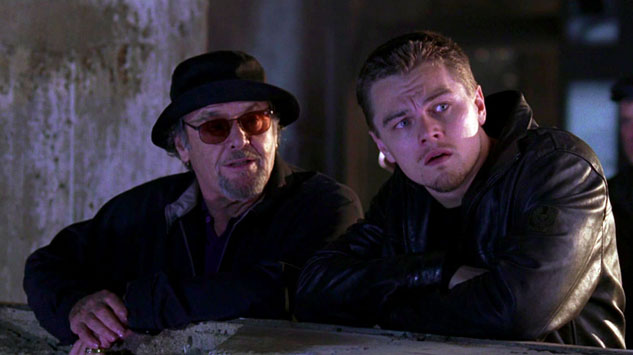 Martin Scorsese’s “The Departed” is in fact a remake of the Hong Kong Crime Thriller “Infernal Affairs” which has basically the same plot line, and sense of dread. Scorsese approaches the crime thriller yet again, with his version of the exceptional crime thriller, now set in the mean streets of Boston, and not the murky landscape of Korea. The narrative is basically the same, and Scorsese doesn’t seem to think he can do better than the original film, so he copies the original film verbatim, save for the ending. One big crime syndicate, one big police department. Both are at war. In both teams, the plot slowly unveils and we learn that in the syndicate there is a mole from the police department feeding information back to HQ, while there happens to be a mole from the syndicate in power at the police department distorting information
Balance (2007)
 Chris Sparling’s “Balance” reminded me a lot of one of my favorite revenge films “In the Bedroom.” That’s a film many have written off as a blatant grab for Oscar attention, but I consider it one of the best revenge films ever made. Possibly one of the most original as well. “Balance” is in the same vein of the aforementioned title, yet it’s also almost as good as “In the Bedroom,” too. Sparling’s truly good short film explores the sheer wrath of loving parents on anyone that inflicts pain on their children.
The City of Violence (Jjakpae) (2006)
 Imagine “Stand By Me,” combined with “Four Brothers,” and a hint of “The Warriors,” and what you’ll get is “City of Violence,” a stunning send-up of seventies actioners that makes no bones about its attitude. It doesn’t take itself seriously, and its never too sentimental, but the relationships are felt, and that invokes enough incentive to care about the characters involved in the plot. Ryoo’s action thriller is a fantastic piece of Korean cinema that combines themes of friendship, betrayal, and family into a beautiful piece of gangster action. Tae-Su, an officer, emerges back into his home town after his best friend Wang Jae is killed in a back alley.